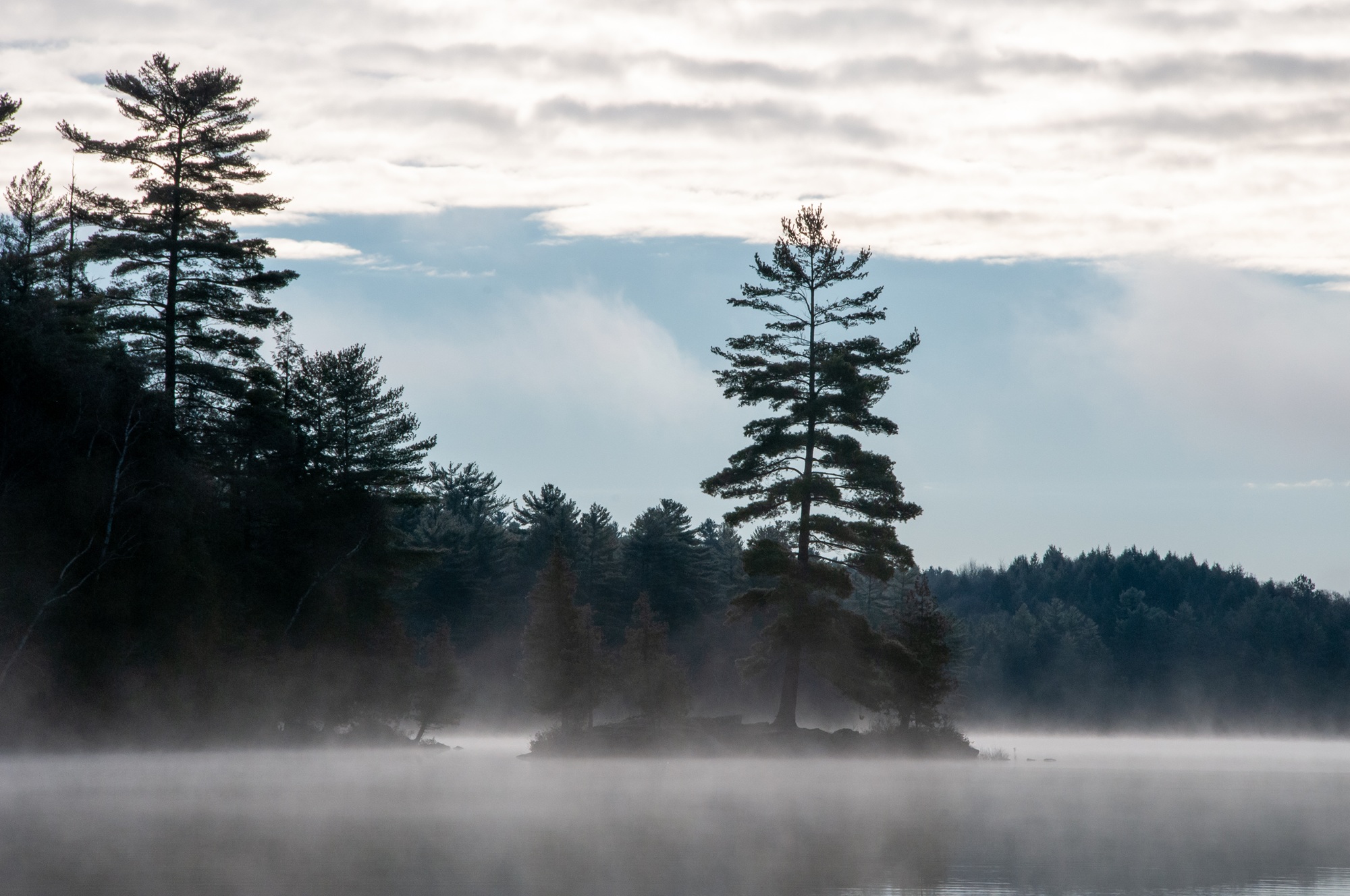
A big, beautiful lake with big fish, trails winding through boreal forest, and glimpses of ghostly Moose…
Ivanhoe Lake Provincial Park lies on the eastern shores of the lake it’s named for, in the heart of Ontario’s boreal forest.
Find this park just off Highway 101 between Timmins and the town of Chapleau, and a few hours north of Sudbury.
Here are five reasons you should visit:
1. Big water
Ivanhoe Lake is big — more than 10 square kilometres in area.
That’s a lot of water to swim in, boat on, fish on, and paddle on.
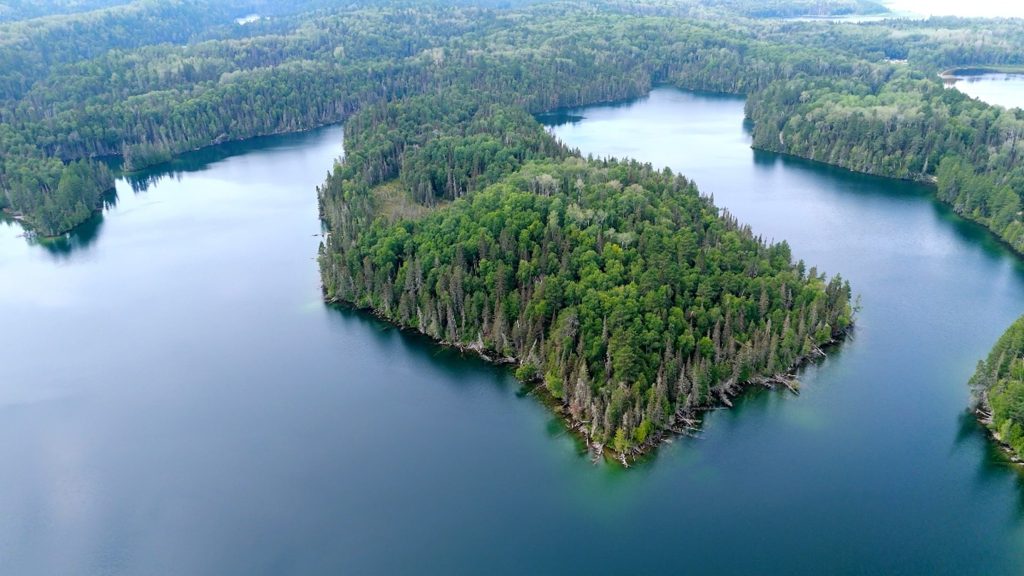
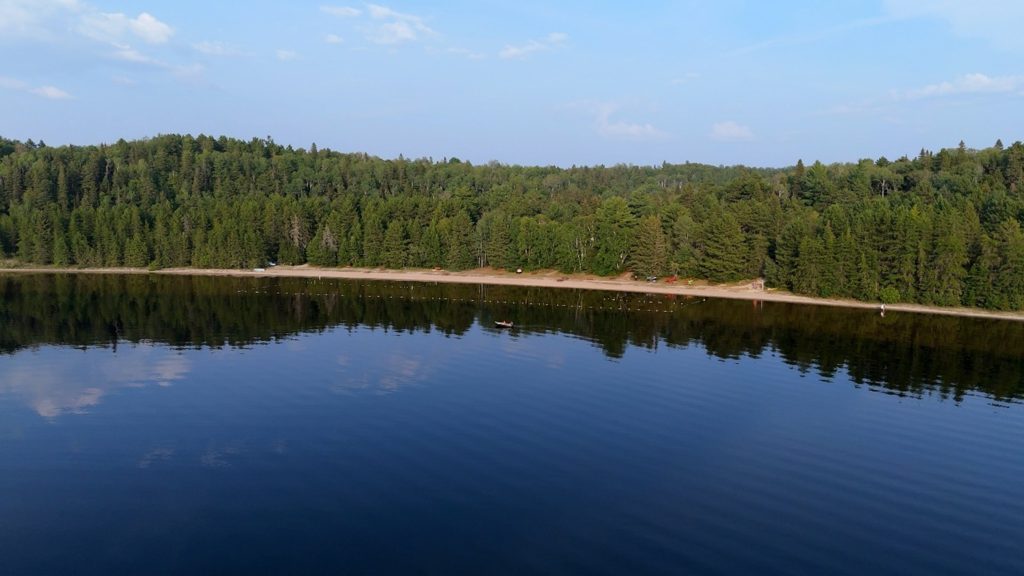
Wrapping around the eastern shores of Ivanhoe Lake, the park itself contains a long sandy beach with shallow waters, several small lakes and a campground, all surrounded by lush forest.
Much of the park’s shoreline along Ivanhoe Lake is sandy, which means most campsites in the park are a short walk from the beach.
The park also contains 20 kilometres of the Ivanhoe River, all boatable and fishable.
2. Big fish
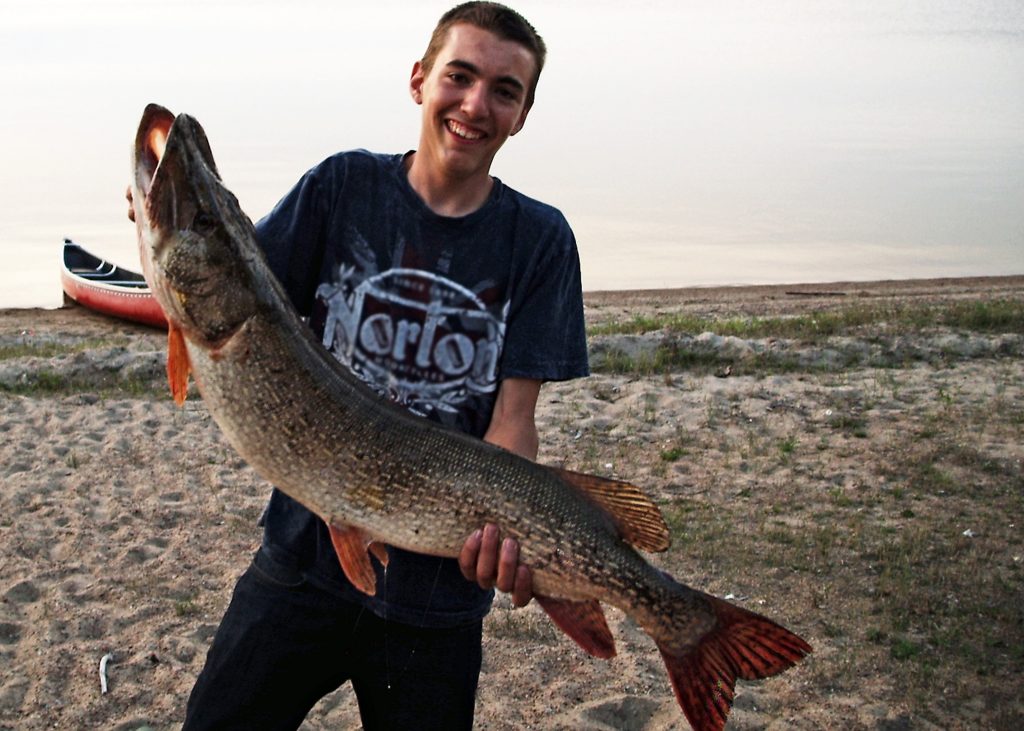
Ivanhoe Lake is known for its big Northern Pike, Walleye and lunker Yellow Perch, but also contains Lake Whitefish.
The Ivanhoe River is a good spot to fish for Walleye and Northern Pike.
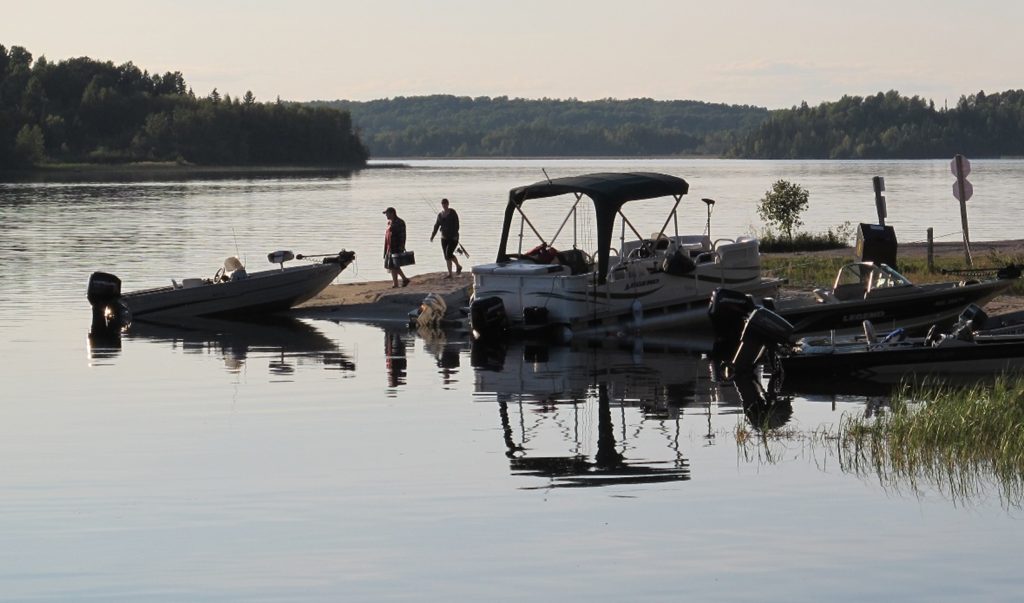
Don’t discount fishing from the beach! Anglers can cast from the sandy bottom shallows into a sudden drop where lunkers sometimes lurk. Park staff who like to fish have often caught big ones from a canoe not far from shore.
Anglers are often seen out on the lake after dinner, taking in the beginnings of a great sunset while they fish.
The park rents motorboats for visitors who want to get further out on the water. Motorboats can be reserved ahead of time. To reserve, please call ahead at (705) 864-3137.
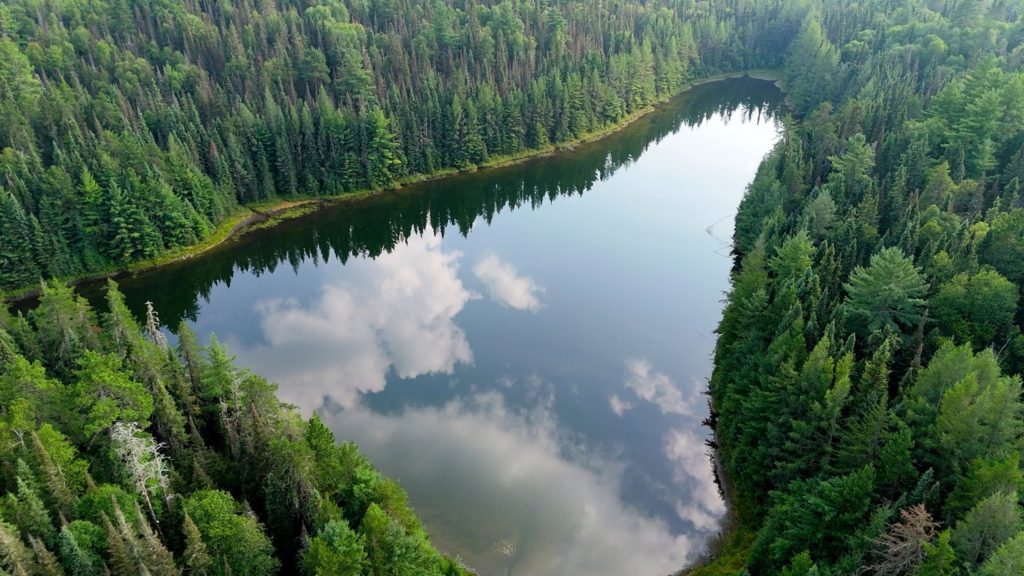
If you prefer your boat motorless, some of the park’s smaller lakes like Teck and Saw contain Brook Trout and can be caught from a canoe.
3. Big skies
Lying on the eastern shores of Ivanhoe Lake, the park looks west. That unobstructed view to the west makes for some great sky watching.
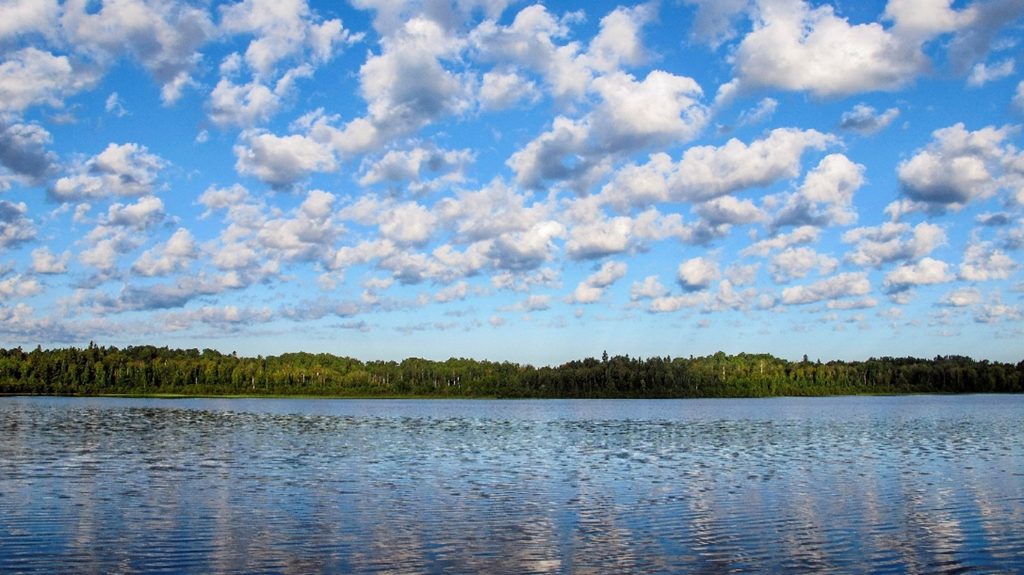
Regular visitors to Ivanhoe Lake know that they’re going to see some spectacular skies during their visit.
Lines of white puffy clouds reflect on a still blue lake on a lazy summer afternoon. Brilliant sunsets paint clouds above with an artist’s pallet – purples, oranges, and crimson – in the early evening.
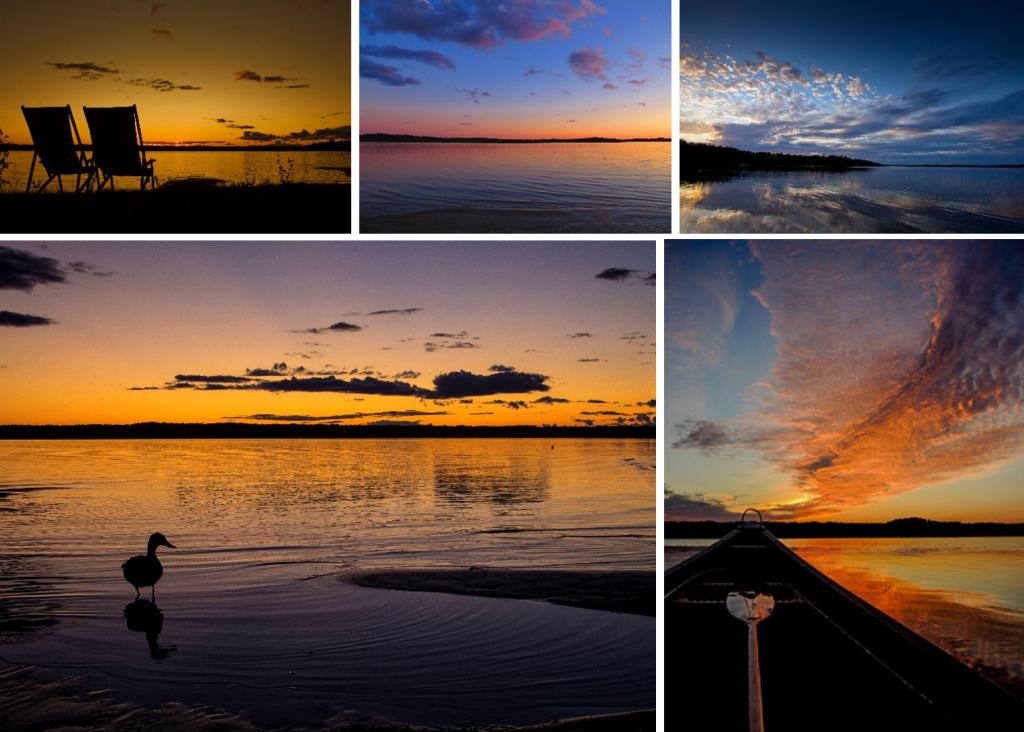
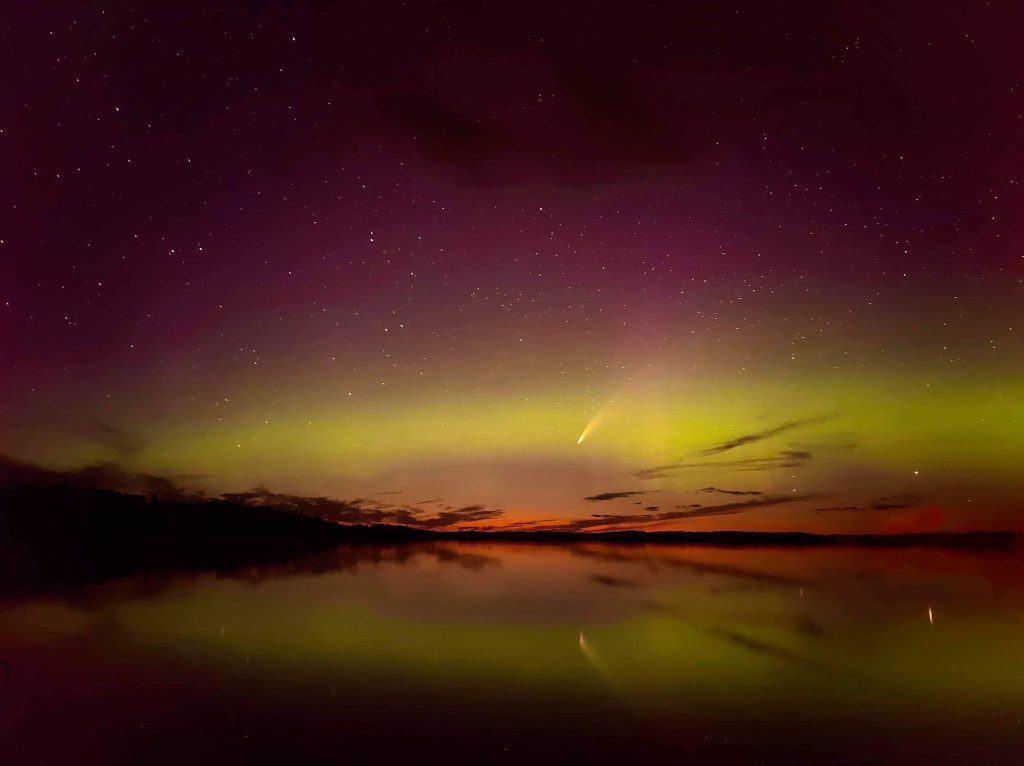
The stars twinkle overhead as the colours of the sunset fades. And some nights, the rippling curtain of Northern Lights inspires awe!
4. Big landscapes
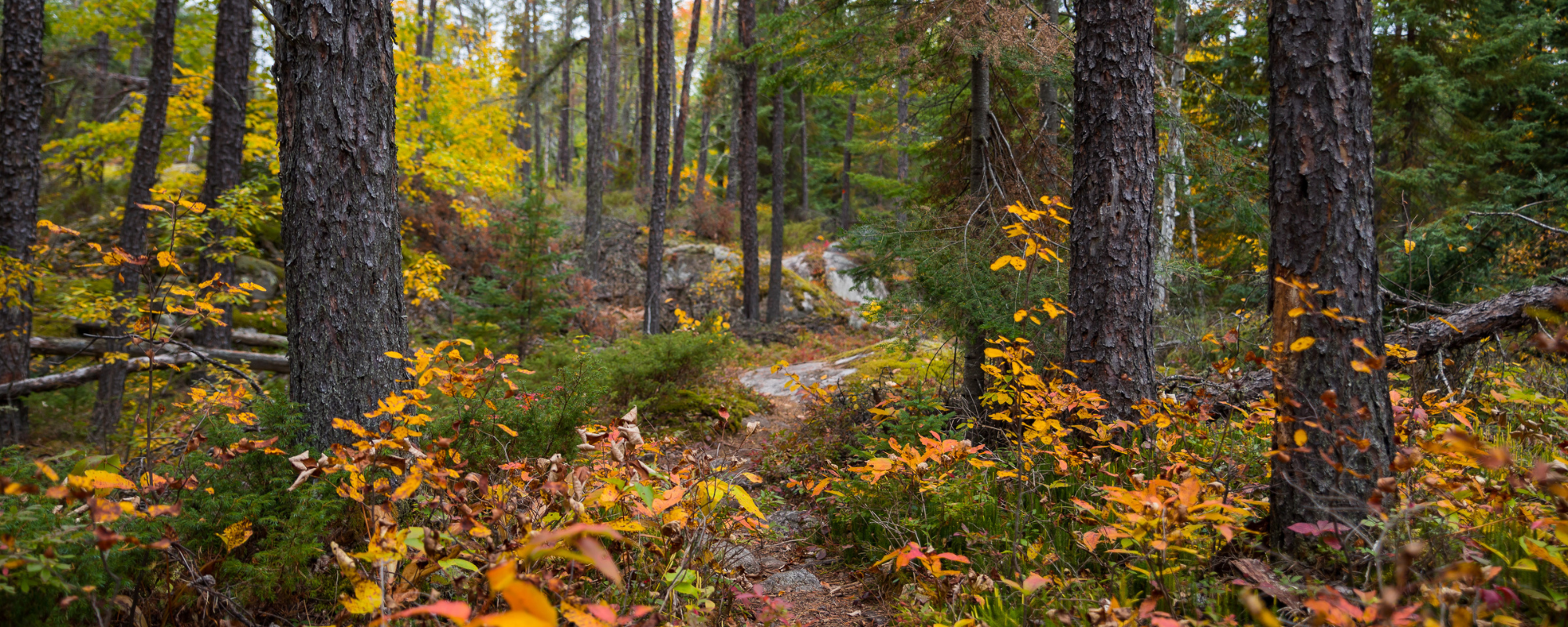
The park contains a sizable piece of Ontario’s Boreal Forest.
The boreal forest is vast, spanning the globe across much of Canada, Northern Asia, and Europe.
This is a northern forest, with plants and animals adapted to cold northern winters and the long days of a hot northern summer.
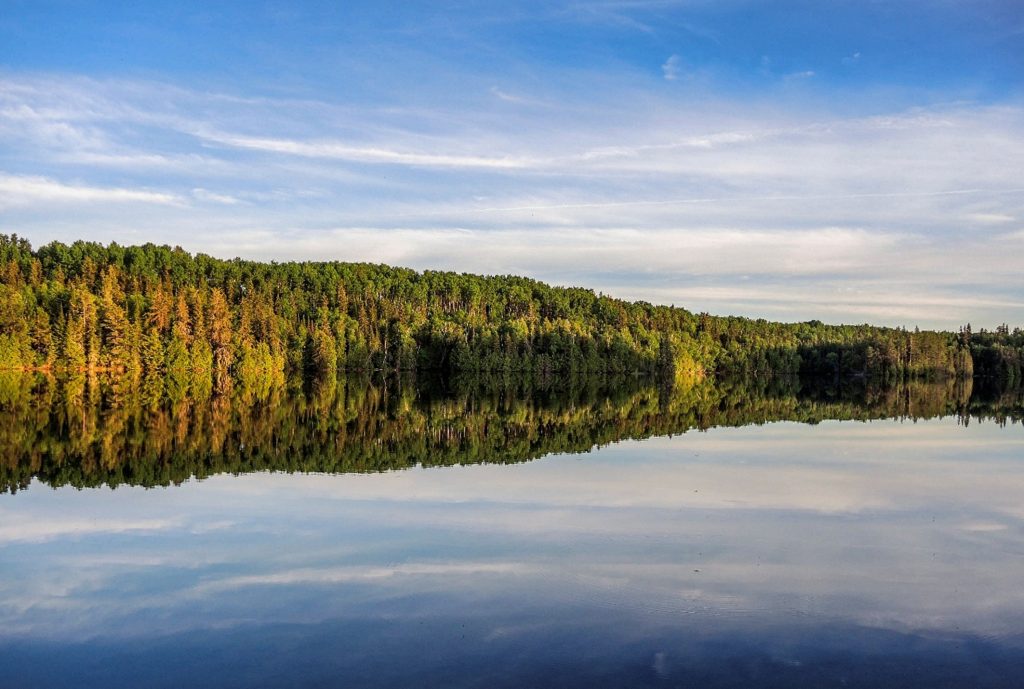
With its spiky Black Spruce, tall Q-tip-like Poplar, and the sometimes-scraggly Jack Pine, the boreal forest looks a lot different than the forests where most people in Ontario live.
Visitors to Ivanhoe Lake can explore this cool habitat on foot or on the water.
Four trails wind through the forest here, from under a kilometre to more than eight kilometres, providing plenty of opportunities for exploration.
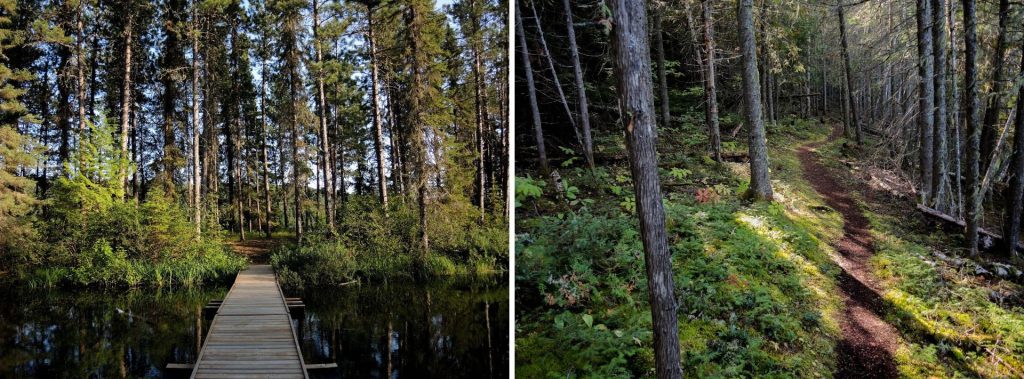
Discover a bog that was once a small lake, hike over an esker that was once the bed of a glacial river, or bring your binoculars and look and listen for some of the many migratory birds that make their summer home in the boreal forest.
Ivanhoe Lake is a great place for paddling and boating. Extend your adventures by exploring 20 kilometres of the Ivanhoe River.
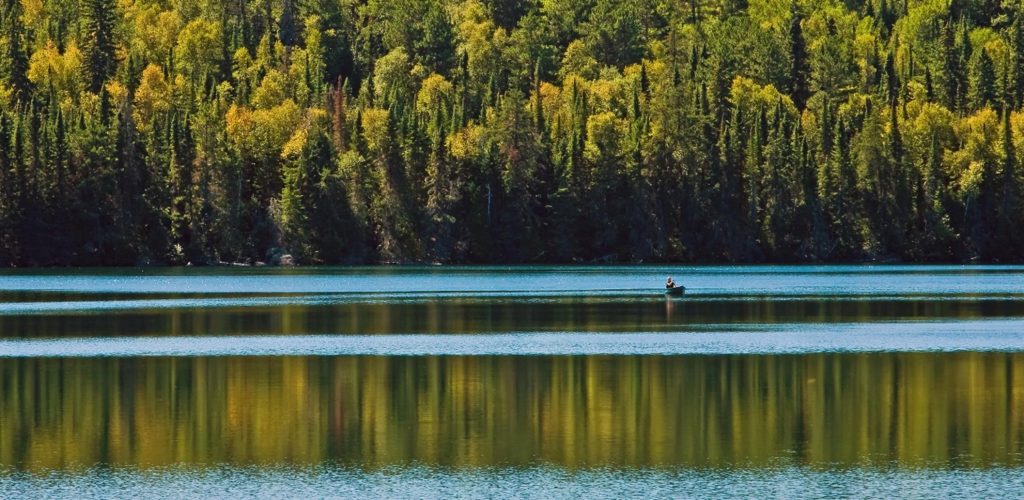
Saw Lake is a smaller lake within the park that’s perfect for paddle by canoe, paddleboard or kayak. The park rents canoes, paddleboards and kayaks – visit the gatehouse to find out more.
5. Big wildlife
As with most northern parks, Ivanhoe Lake has lots of opportunities to spot some wildlife during your visit.
Most are of the small variety. As mentioned previously, bring your binoculars and hike the trails for some good birding. The boreal forest is also called Ontario’s “Songbird Nursery” — there’s a reason birds migrate hundreds and even thousands of kilometres to spend the spring and summer in Northern Ontario! It’s food and lots of it.
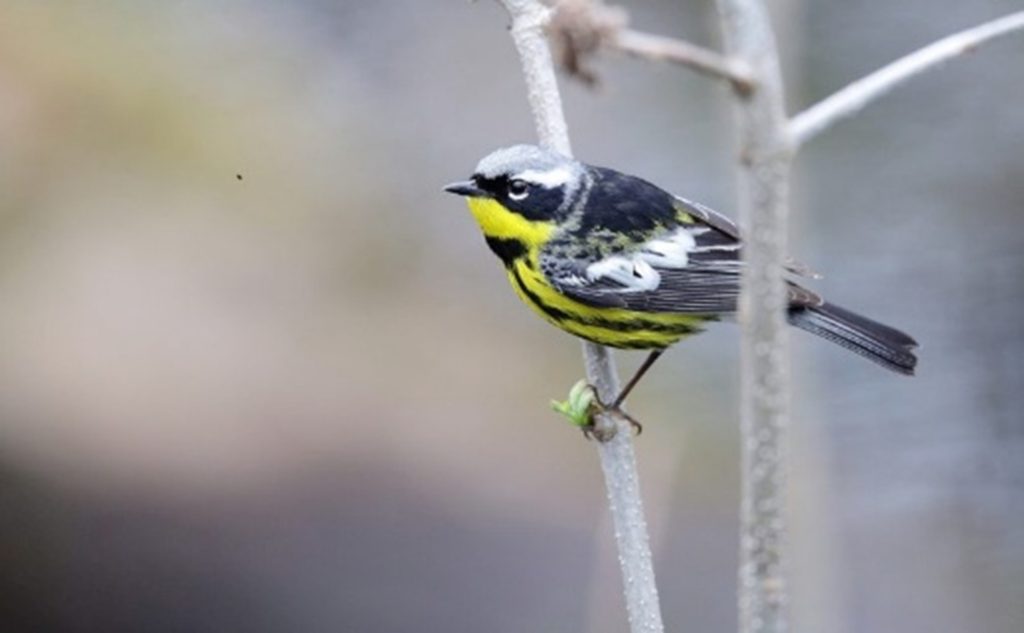
A tiny colourful warbler, like the Yellow-rumped or Magnolia, can raise two sets of chicks before starting its journey back to the tropics by August.
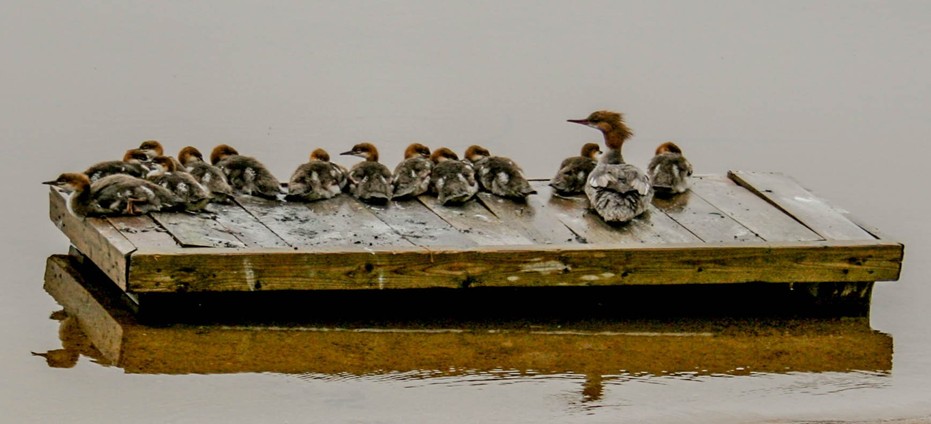
Ivanhoe Lake is also a good place to watch for waterfowl like Mergansers and other ducks, as well as birds of prey like Ospreys and Bald Eagles.
For those looking to see some larger wildlife, the park lies within the “Spirit Moose” or “White Moose Forest” where residents of the nearby town of Foleyet and park staff occasionally see completely white-coloured Moose, especially in the spring.
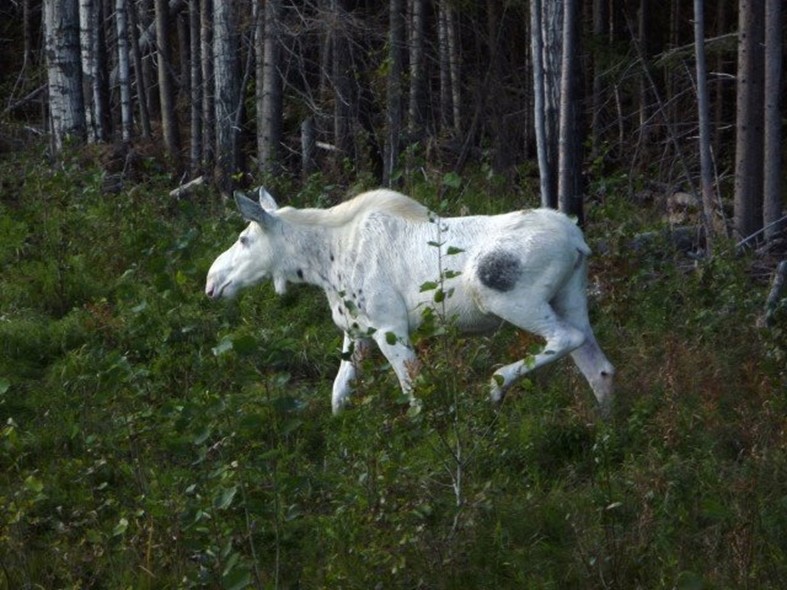
These Moose are not albino animals, as they have brown eyes. The gene to make their hair brown has been “turned off” so the hairs have no colour at all and look white.
Bonus: learn something new!
Visiting Ivanhoe Lake in July and August? Weekly Discovery programs are given by the park’s Discovery guide.
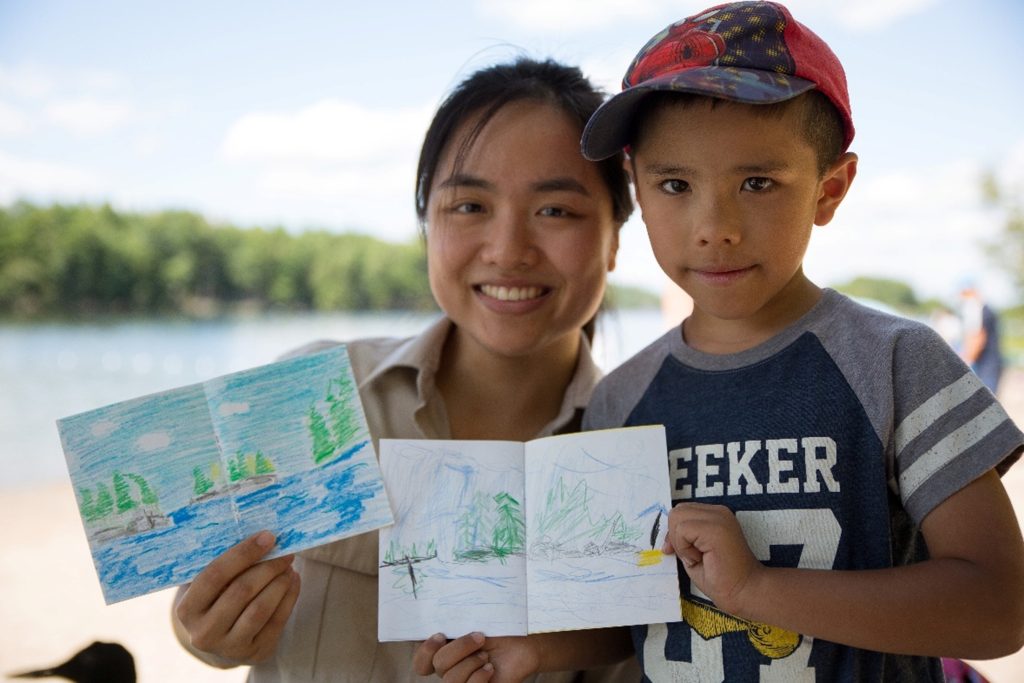
These programs are great for families looking to discover more about the park and its nature.
Planning a visit?
Ivanhoe Lake’s campground is located just off Highway 101, a little over an hour West of Timmins.
It has electrical sites, comfort stations with showers, and laundry facilities.
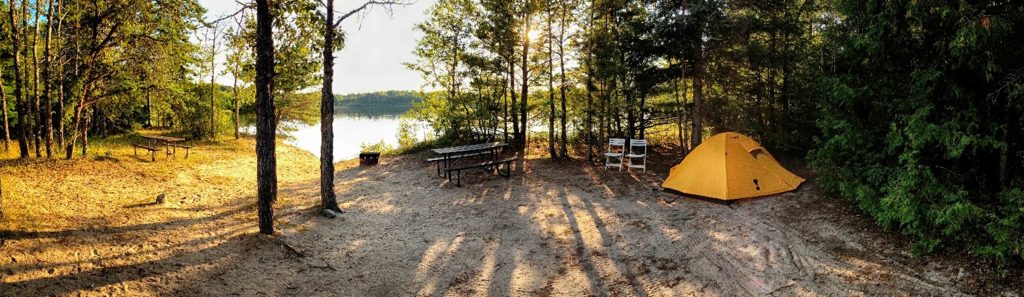
Boats and motors are available for rent, as well as canoes, kayaks and paddleboards, and a fish cleaning station is available for visitors’ use.
The town of Foleyet is located conveniently just off Highway 101, 8 km from Ivanhoe Lake and on the way to the park. It has a general store, which carries essential groceries, snacks, camping supplies, propane, and gasoline, among other services. There is a restaurant is located conveniently across the road from general store.
One stop along the beautiful Boreal Driving Route
If you’re looking for a big adventure, you can follow the Ontario Parks Boreal Driving Route, which links a number of other northern parks that share the boreal forest habitats with Ivanhoe Lake.
Find out more about this classic Northern Ontario road trip here: Explore Ontario’s north on the Boreal Driving Route