Today’s blog comes from Kayley Breslin, senior park interpreter at Bronte Creek Provincial Park.
Stepping out onto a forest trail in late summer and early fall? You might notice a few things.
The air is cooler and the ground softer, with fallen leaves clinging to it after a recent rain. If you slow down (and I mean, really slow down), you’ll see them.
Silent, little, and frequently overlooked, mushrooms are everywhere.
They push up through leaf litter, cluster along fallen logs, and grow at the base of trees.
The mushrooms you see are only a small glimpse into a hidden world beneath our feet. Underground, a vast network of fungi is at work recycling nutrients and supporting life.
This Mushroom Month, we’re taking a closer look at these hidden treasures and the essential role they play in the forests of Ontario.
Nature’s recyclers at work
Every fallen log, pile of leaves, and old tree stump has a story to tell, and fungi are the ones helping to write the story.
Fungi are some of the forest’s most important recyclers.
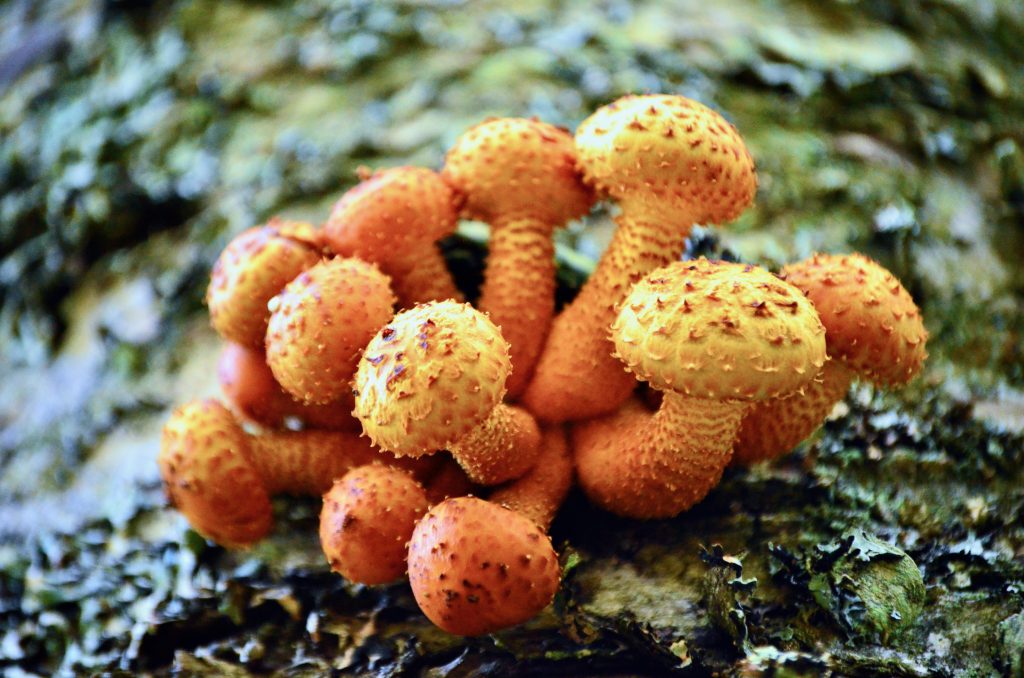
By breaking down dead organic material, such as wood and leaf litter, fungi return nutrients to the soil, making them available for new growth.
Without this process, forests would accumulate layers of undecomposed material, and essential nutrients would remain locked away.
Look closely! You might notice their work:
- soft, crumbly, “punky” wood
- small mushrooms tucked under damp piles of leaves
- shelf-like fungi growing on logs and trees
- white, stringy material weaving through decaying wood
It might not sound very glamorous, but this process keeps the forest healthy and thriving. It’s what helps create the vibrant, living landscapes that draw us back to parks again and again.
What are fungi, anyway?
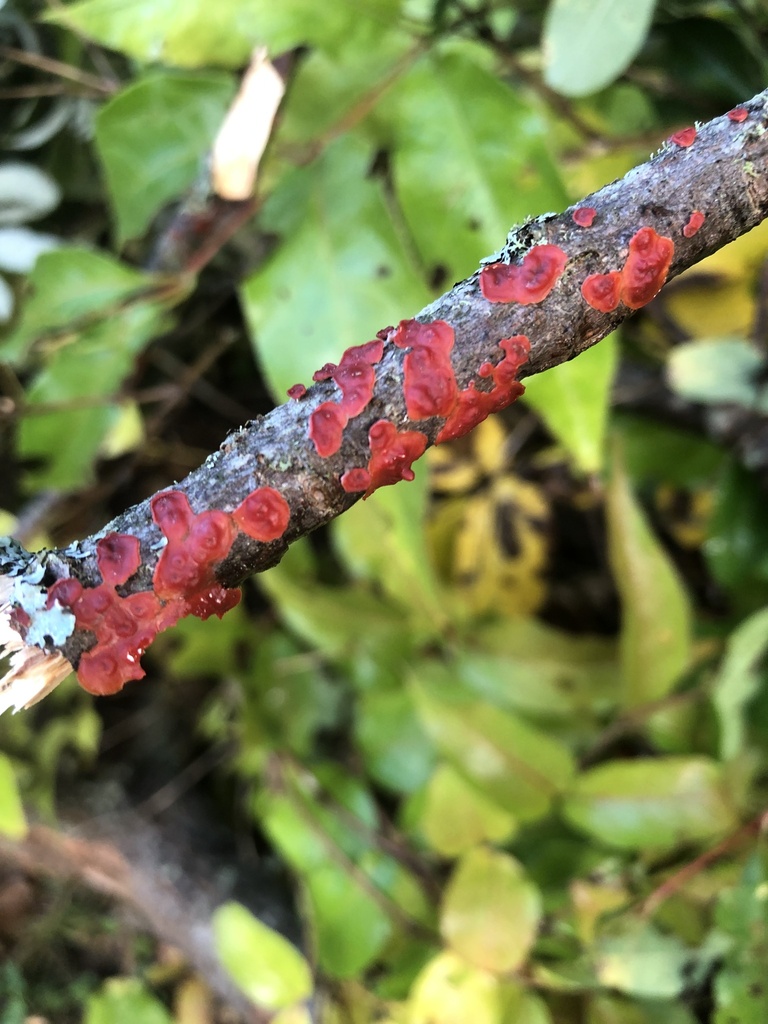
At first glance, you might think fungi seem like plants. They grow from the ground, stay rooted in place, and often appear in the familiar “mushroom” shapes we all know (and love).
But fungi are something totally and entirely different from plants.
They don’t use sunlight to produce energy like plants do.
Remember, fungi get their nutrients by breaking down organic material in the environment. The mushroom itself is the only visible part of the organism.
Beneath the ground surface lies mycelium, a network of fine, thread-like structures that spread through the soil and wood. This network is where most of the fungus lives and functions.
When you see a mushroom on the trail, what you’re really seeing is the reproductive structure of a much larger organism that’s hidden underground.
Mushroom spotting: what might you notice on the trail?
One of the best parts of Mushroom Month is seeing how many different fungi you can find along the trail!
Autumn is one of the best times to observe fungi at Ontario Parks.
Some are colourful, bright, and attention-grabbing, while others are camouflaged perfectly into their surroundings.
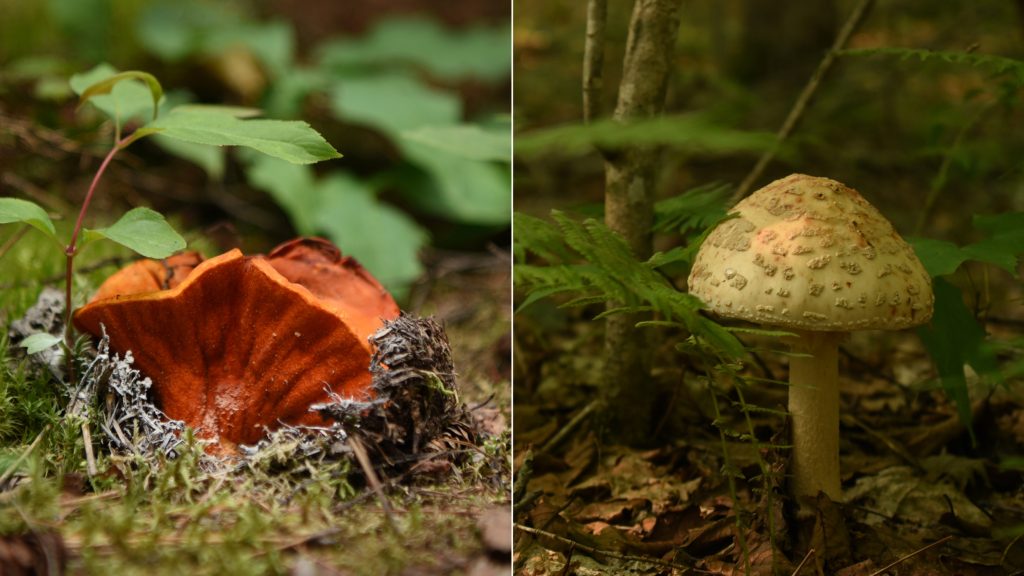
Some are giant, bigger than soccer balls, and some are tiny and delicate, even microscopic.
Different species appear in different places, depending on moisture, temperature, and available habitat. As you walk, keep an eye out for:
- layered, fan-shaped fungi growing along fallen logs
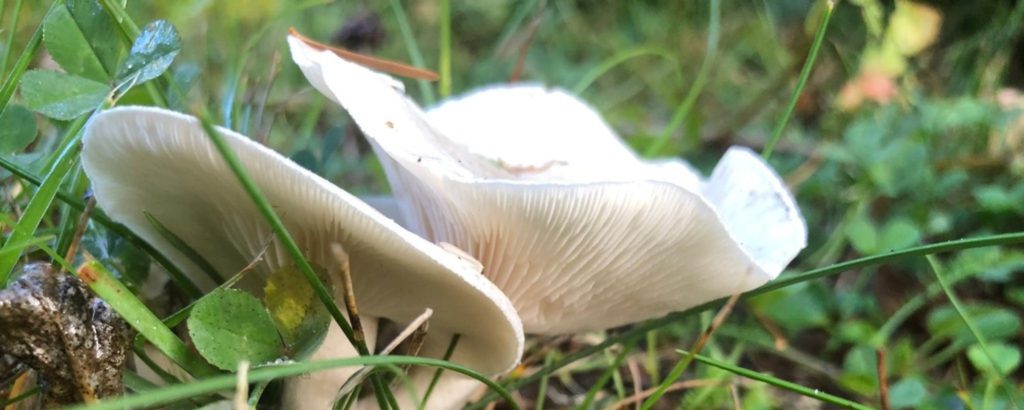
- rounded fungi emerging from grassy areas or forest edges
- gel-like, wrinkly fungi clinging to damp wood after rainfall
- distinct umbrella-shaped mushrooms near tree roots
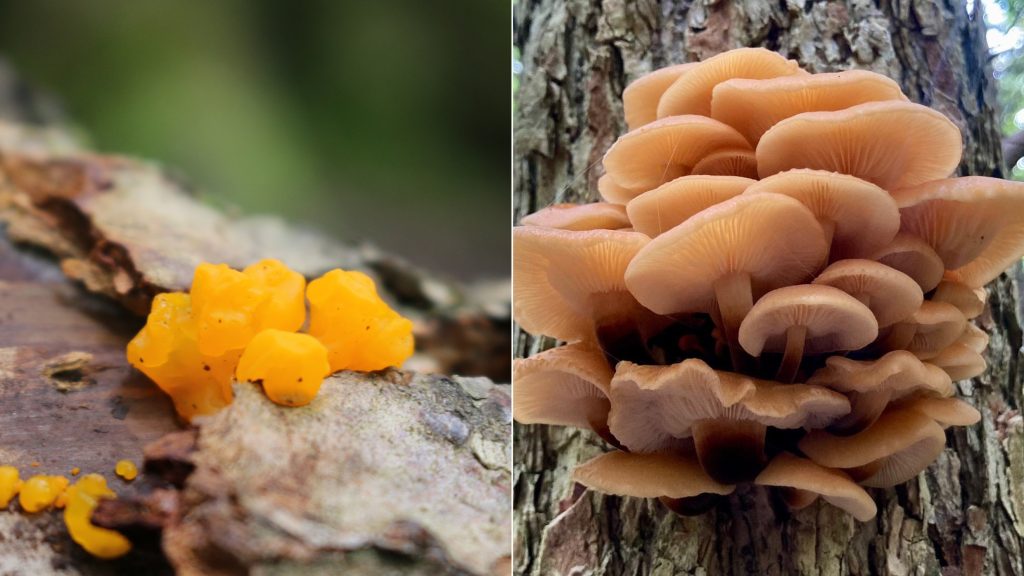
Each of these forms reflects a different strategy for survival and plays a unique role in the ecosystem.
Spotting fungi often requires slowing down and shifting your perspective. Instead of scanning the horizon, look closely at the ground. Pause near logs, stumps, and shaded areas, especially after a rainfall, when conditions are ideal for fungal growth.
You may notice patterns: fungi appearing in clusters, certain species associated with specific trees, or how quickly they emerge and disappear.
Bring a camera or notebook to record your findings. It can help you capture your observations and deepen your connection to the landscape.
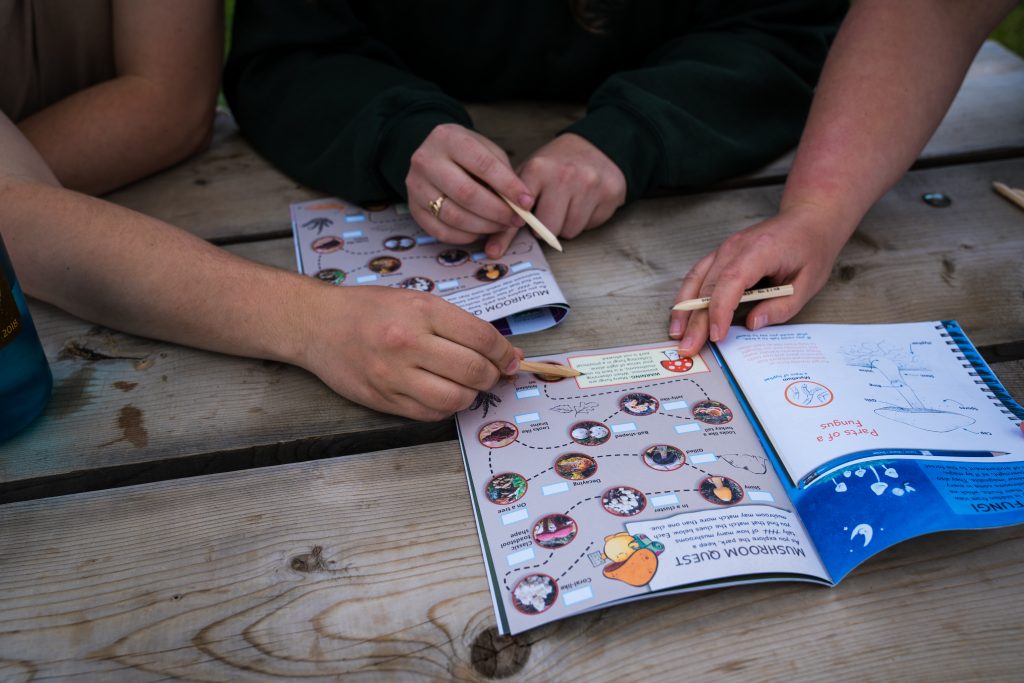
Please remember to only take photos of your fungal finds, as foraging for mushrooms is prohibited in provincial parks. Fungi play important ecological roles and can be difficult to identify safely.
Ready to explore the forest?
Fungi may be small and easily overlooked, but their impact on our ecosystems is anything but.
They recycle nutrients, support plant life, and contribute to the resilience of Ontario’s ecosystems. Without them, the landscapes we enjoy would be very different.
This September, we invite you to head out on the trail, take your time, and discover the hidden treasures beneath the trees.
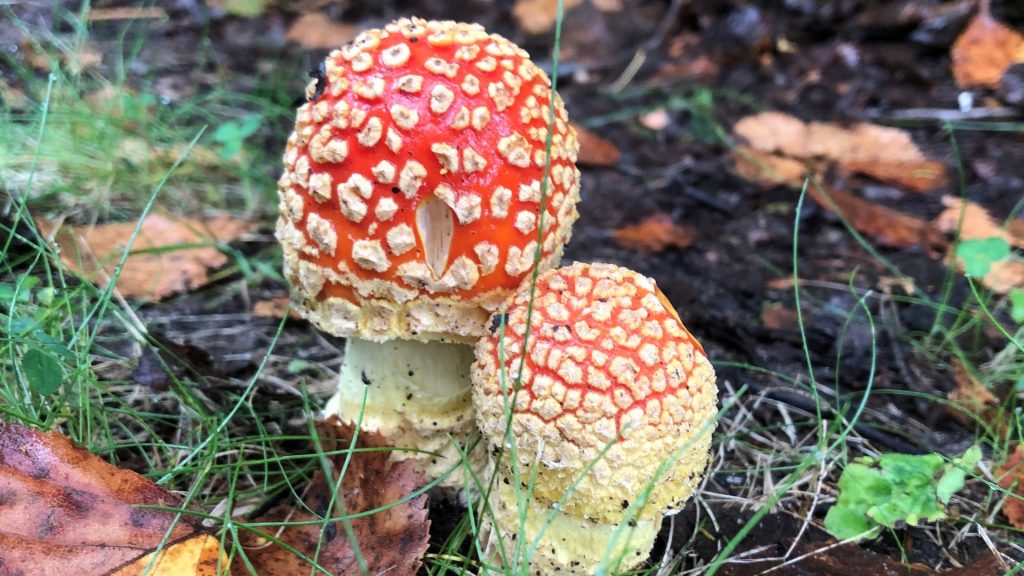
The forest has more going on than meets the eye, and some of its most important work is happening just out of sight.
And remember: mushrooms are important food sources and habitat for wildlife; leave them exactly as you find them.
Share your mushroom discoveries with us by tagging @OntarioParks on social media. We’d love to see what you spot out there!