Today’s blog is written by Elora VanDerLoo, Discovery leader at Blue Lake Provincial Park.
When peering over a pond, it may seem still and peaceful, but beneath the surface lies a lively and intricate ecosystem.
These waters are teeming with lifeforms all the way from the sunlit surface to the murky bottom.
Piqued your interest? Let me introduce you to some of the hidden residents in Blue Lake Provincial Park’s pond:
Plants: the green architects
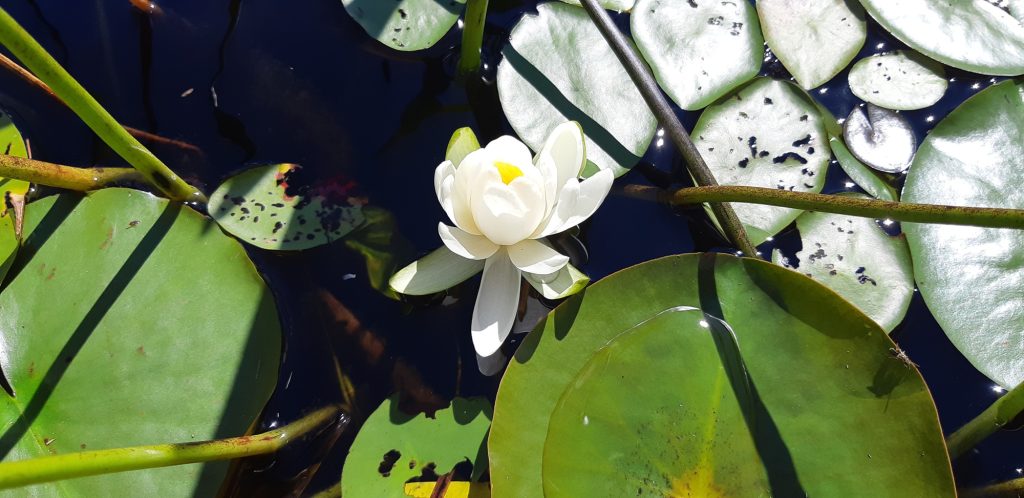
Plants add incredible pops of colour, sweet scents, and interesting textures to the landscape.
Picture lily pads gently floating on the surface of a pond, cattails and reeds lining it, and the water creating vibrant green swirls with the submerged grasses.
These plants stabilize sediment, filter water, create oxygen, and provide critters with shelter and food sources.
Without our plants, very few creatures could survive in the pond!
Invertebrates: the silent majority
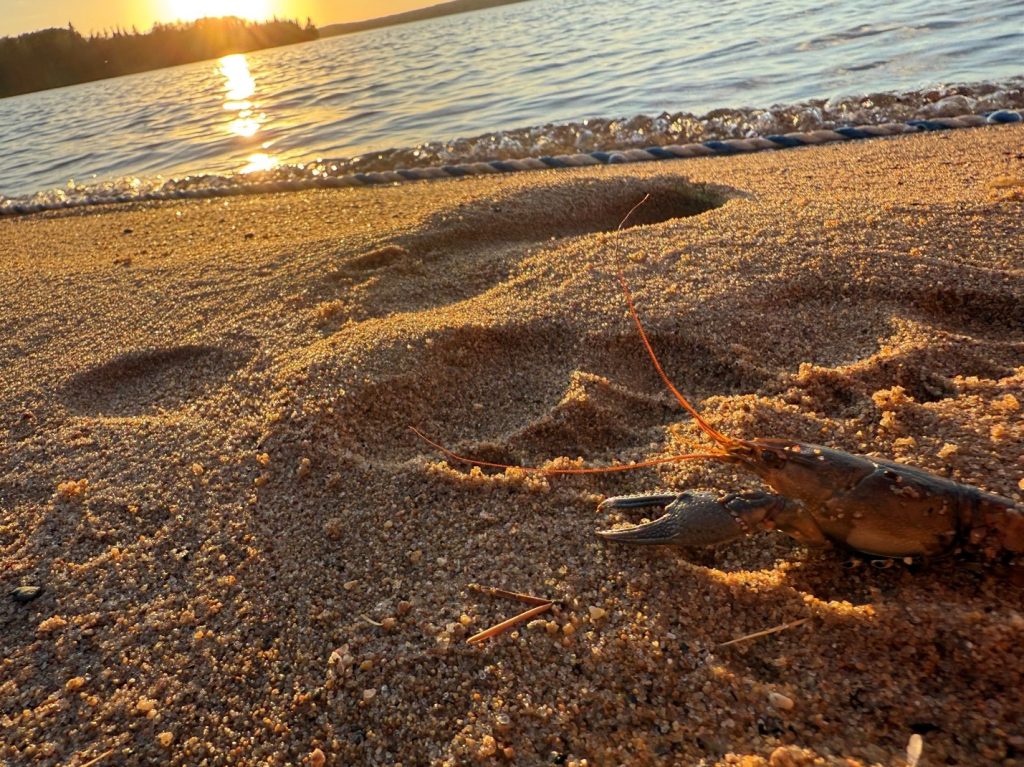
Ever dipped a net into the pond and pulled up a squirming, wriggling mystery?
Chances are you’ve just met one of the pond’s unsung heroes, an invertebrate. These spineless wonders are everywhere, quietly keeping the ecosystem humming.
Whether it’s bright blue crayfish, ghostly dragonfly nymphs, worms, leeches, water beetles, or more, invertebrates come in all shapes and sizes, each playing a backstage role in the pond’s daily drama.
They clean up the mess, recycle nutrients, and serve as the buffet line for hungry frogs, fish, and birds.
So the next time you spot a ripple or a twitch beneath the surface, tip your hat to the silent majority. They’re working overtime, and they don’t even ask for applause.
Fish: the angler’s prize
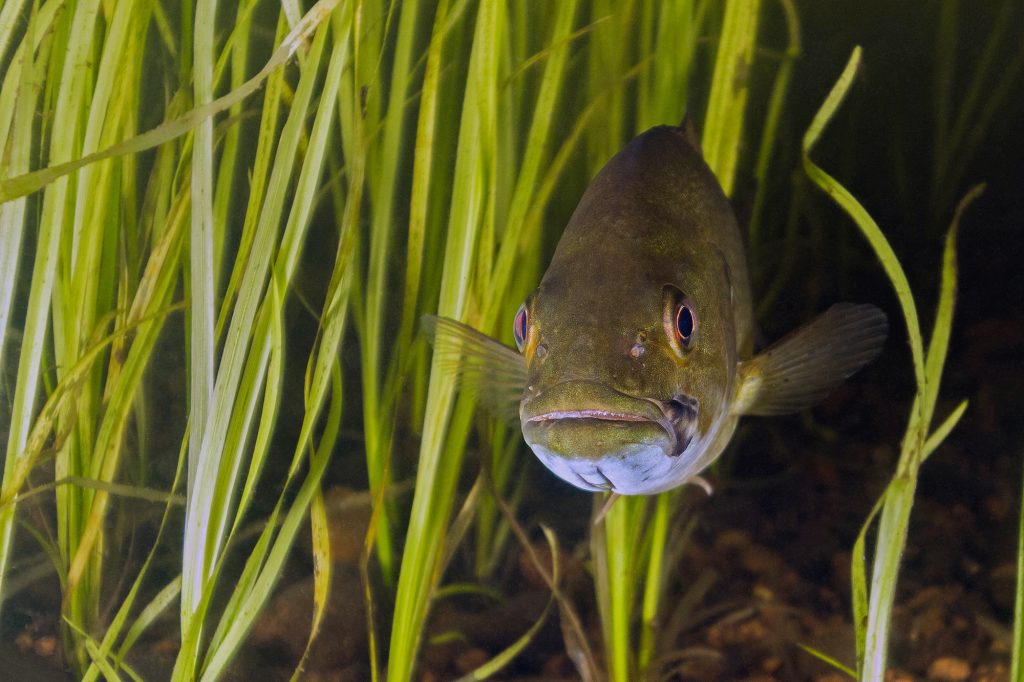
Whether you’re out fishing or just taking a few moments to watch them shimmer and dance in the water, fish are a treat to see.
Some common fish in Blue Lake’s pond include Smallmouth Bass, Northern Pike, and a variety of minnows.
These fish are fun to cast for, but also play a key role in the food web, providing food for birds and mammals and helping keep insect and invertebrate populations in check.
Amphibians: the familiar serenaders
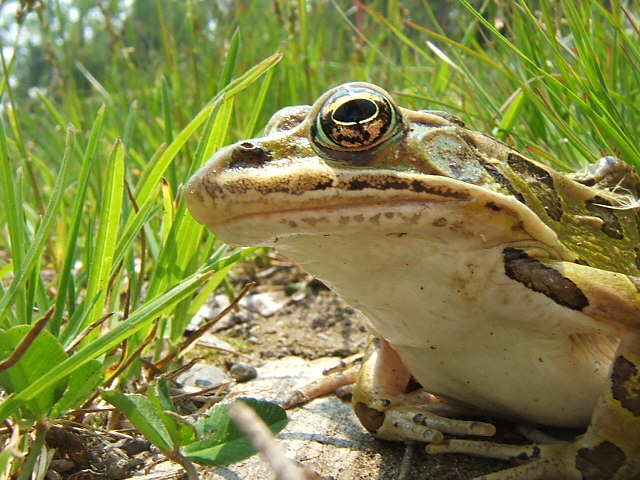
Ever seen two googly round eyes poking out of the water blinking up at you?
Chances are you’ve spotted a frog, one of our most recognizable amphibians.
Frogs are the vocal performers of the pond, often heard calling out for mates across Blue Lake during the warm spring and summer months. But wait, you hear another amphibian calling too…
Often confused for their froggy counterparts, toads also use the pond for much of their life cycle. Catch a peek at dry, bumpy, sand-papery-looking skin and you’ve probably found yourself a toad.
Some frog and toad species spend their entire life in and around the pond, like the Northern Leopard Frog and Green Frog, our classic pond residents.
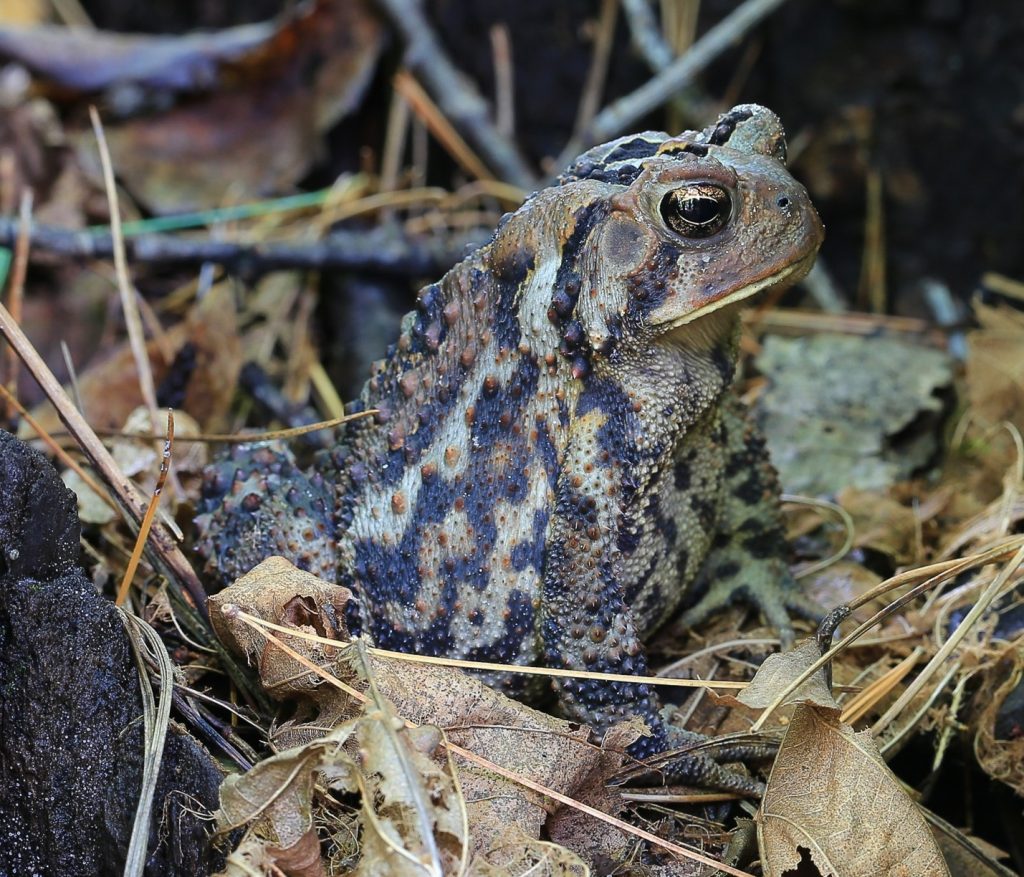
While others eventually move to land, hopping lazily around the campground (like the American Toad) or tucking themselves ever so carefully on a tree or building (like the Grey Tree Frog), they later return to the water to spawn.
Reptiles: the scaly swimmers
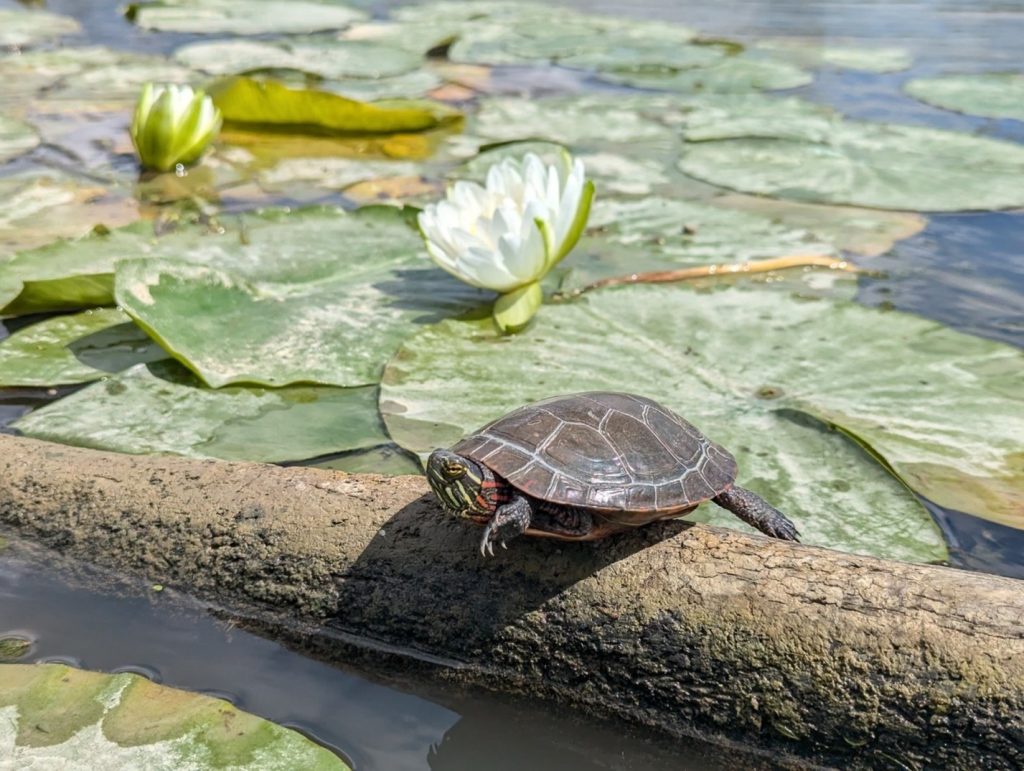
On a warm sunny day, you’ll probably see Painted Turtles lazily sunning themselves on just about any surface around the pond, rocks, logs, you name it!
Our other turtle species, the Snapping Turtle, gets a bad rap (unfairly, if you ask me). Often spotted swimming around looking for food or on the shore sunning themselves, they prefer to be given some space, or they can get snappy (like many of us before our first cup of coffee).
But these aren’t the only reptiles that call ponds home, snakes also spend a lot of their time in and around the water. Blue Lake’s only snake species is the Common Garter Snake.
Surprisingly agile swimmers, these snakes like to snack on insects, leeches, and amphibians, and warm up by basking in the sun, much like our turtle friends.
Birds: the birder’s best friend
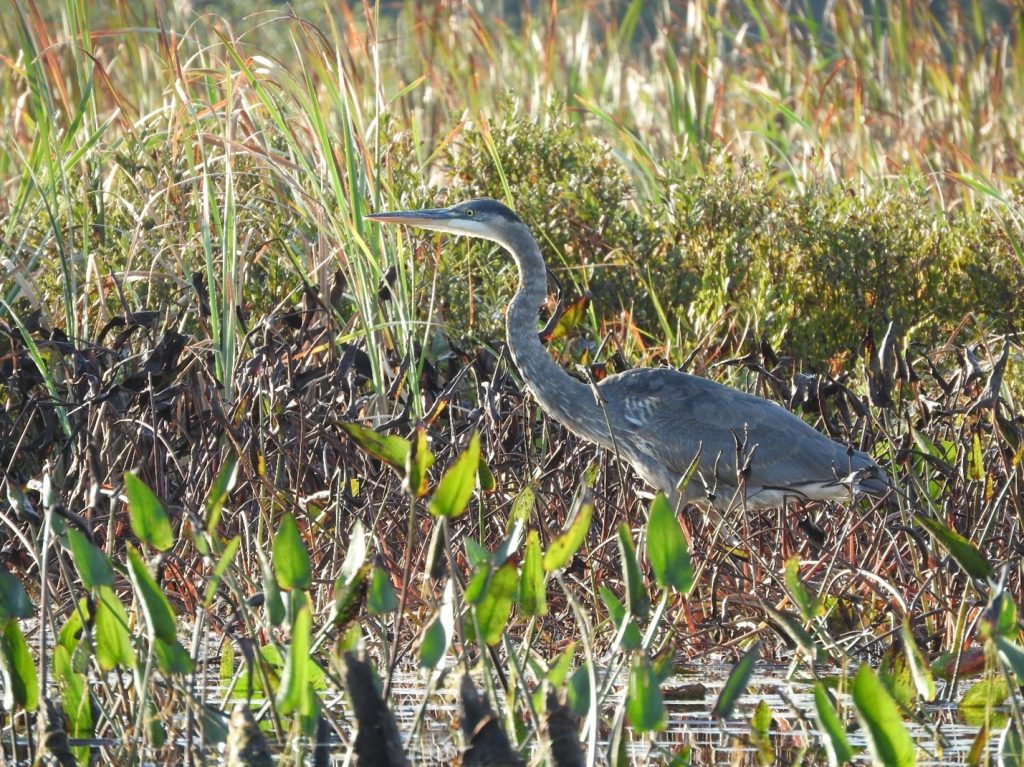
No pond is complete without its feathered residents!
Birds bring grace, drama, energy, and song to the water’s edge.
If you’ve ever been to Blue Lake Provincial Park, you’ve heard the haunting song of the Common Loon as it calls out from the pond or lake.
The Great Blue Heron is another pond resident found here at Blue Lake; majestic and always poised to perfection, it’s featured on our park entrance sign and can be seen fishing for its next meal. While you’re here you may also spot one of our many duck species lazily floating, another bird that’s practically synonymous with ponds. Lots of bird species nest along the shore or in the reeds of ponds. If you’re lucky enough you may catch a glimpse of cheeping feathery fluffballs nestled together or swimming alongside their parent.
Mammals: the furry friends
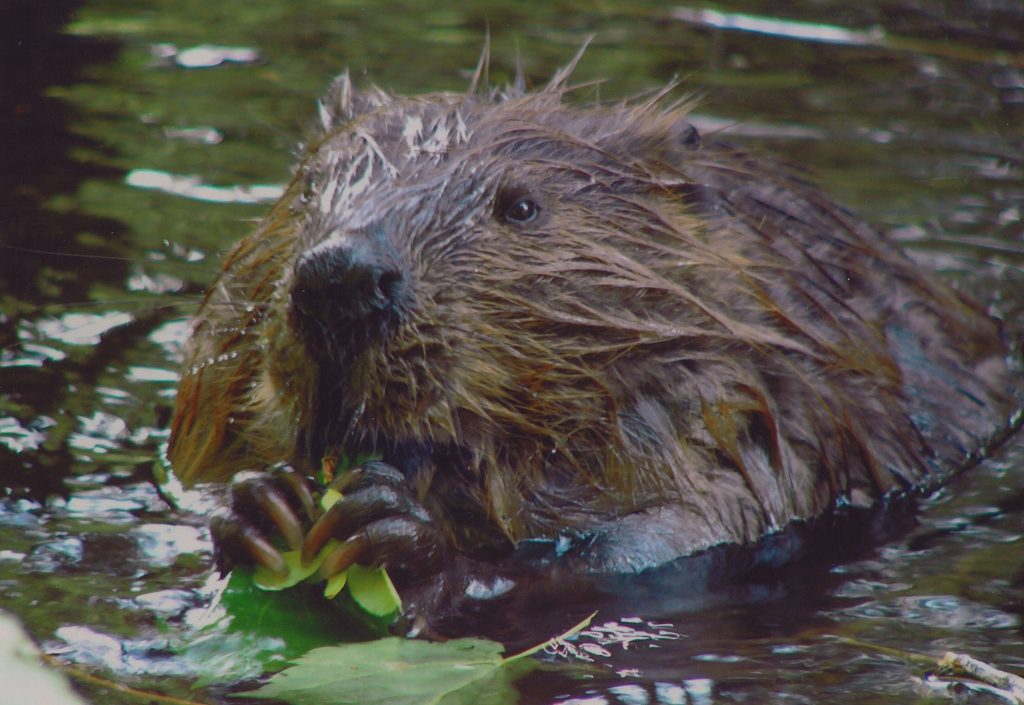
Otters, muskrats, and beavers are common pond residents here at Blue Lake. Furry, adorable, and rambunctious, you may see signs of these critters in and around the pond or be lucky enough to spot them yourself!
It’s common to see crushed up shells (otter poop) at the bridge to the Spruce Fen Trail’s boardwalk, a clear sign they’re present and active, eating all their favourite foods (lots of crayfish, fish, frogs, and more).
Muskrats are another good sighting in Blue Lake’s pond, often gliding through the water, looking like a small beaver propelling themselves with a long goofy rat’s tail.
When they’re not swimming, you may spot them gnawing on a cattail or other aquatic vegetation.
We haven’t had many beavers join us in the Blue Lake pond lately, but there are still remnants of old beaver dams and lodges around the park.
Beavers are wetland engineers, blocking off flowing water to create ponds, and making the perfect environment for all the other pond species.
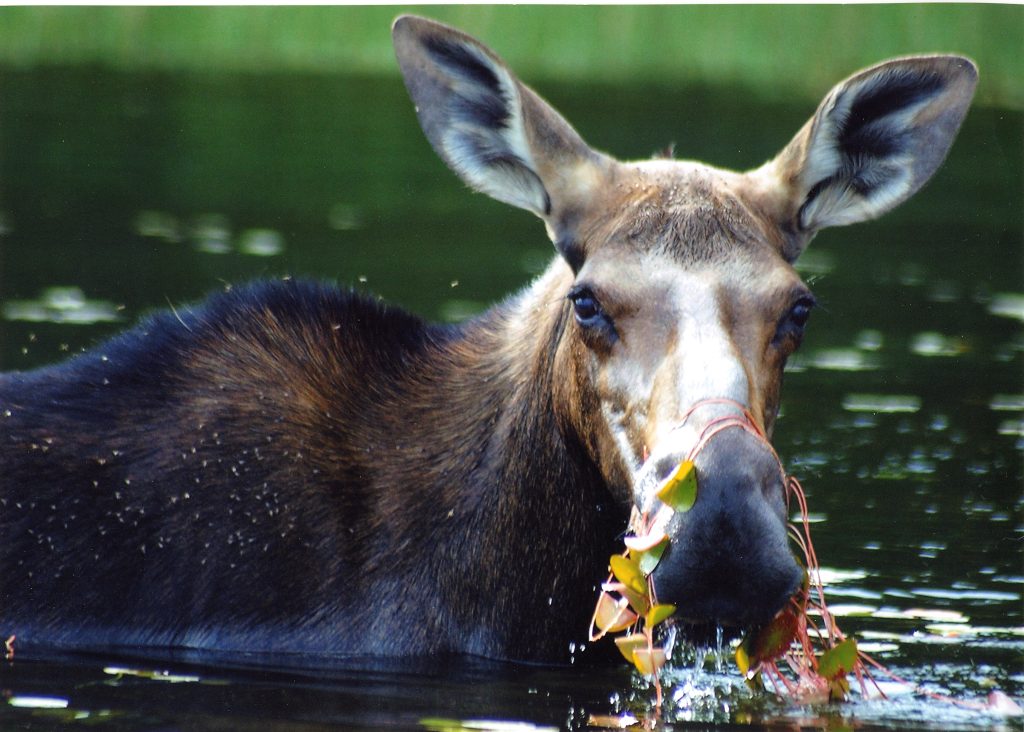
If you spend enough time at the pond and are patient enough, you might spot some surprise mammal guests!
For example, moose!
These gentle giants are known to take dips in ponds and love to munch on pond vegetation, even if that means sticking their heads deep into the murky water.
A pond’s diversity
As you can see, there are a lot of species to observe in Blue Lake’s pond.
Come for a visit and see what kinds of species you can spot.
And remember, the next time you pass by a pond, lean in a little closer. There’s a whole world waiting to be discovered!
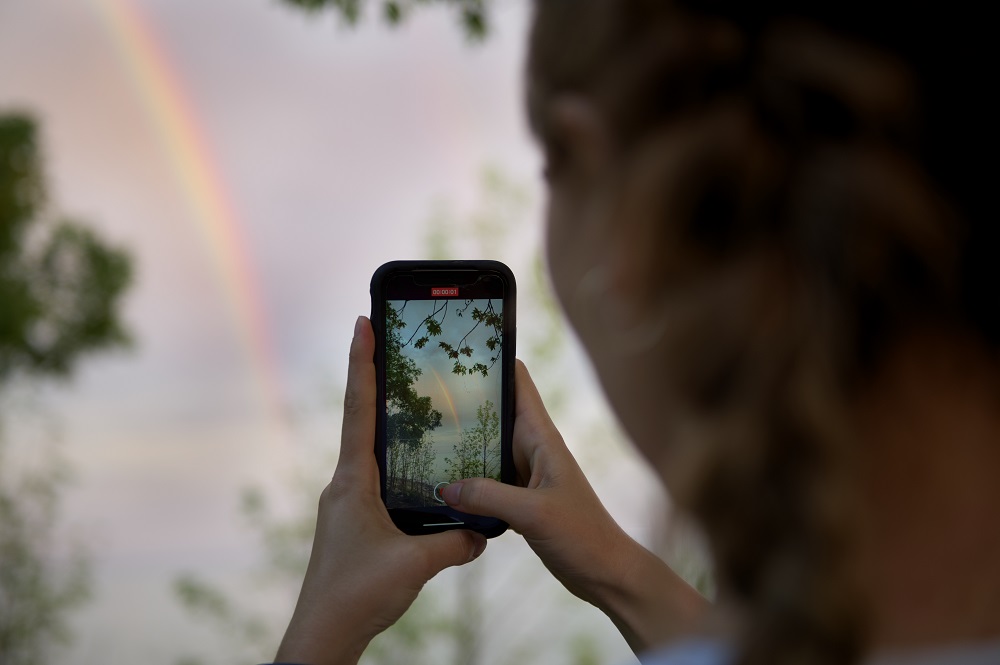
iNaturalist: just snap and go!
Want to learn more about the cool plants, animals, and fungi that call your area home?
Give iNaturalist, the species identifier app, a try!
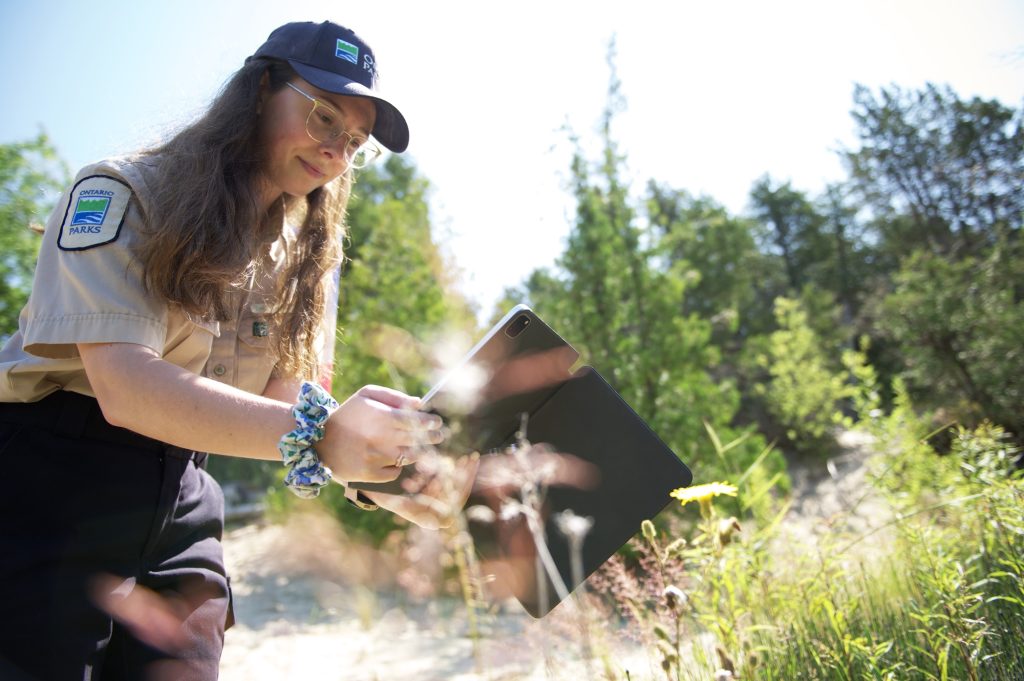
Your observations also help contribute to community science! By uploading sightings of species to iNaturalist, you are adding important information for scientists who can use your observations in their research.
Learn more about iNaturalist here: The cat and the Mudbug: a guide to using iNaturalist.