Today’s post comes from Heather Stern, a Senior Park Clerk who has worked at Samuel de Champlain for seven seasons.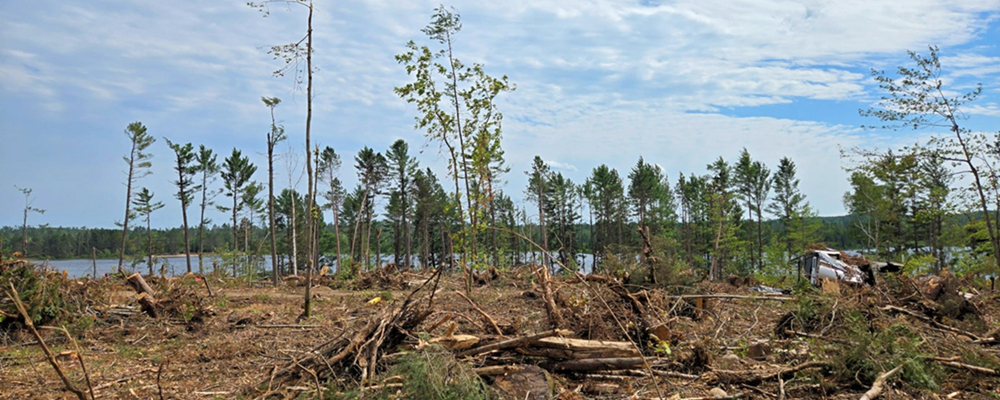
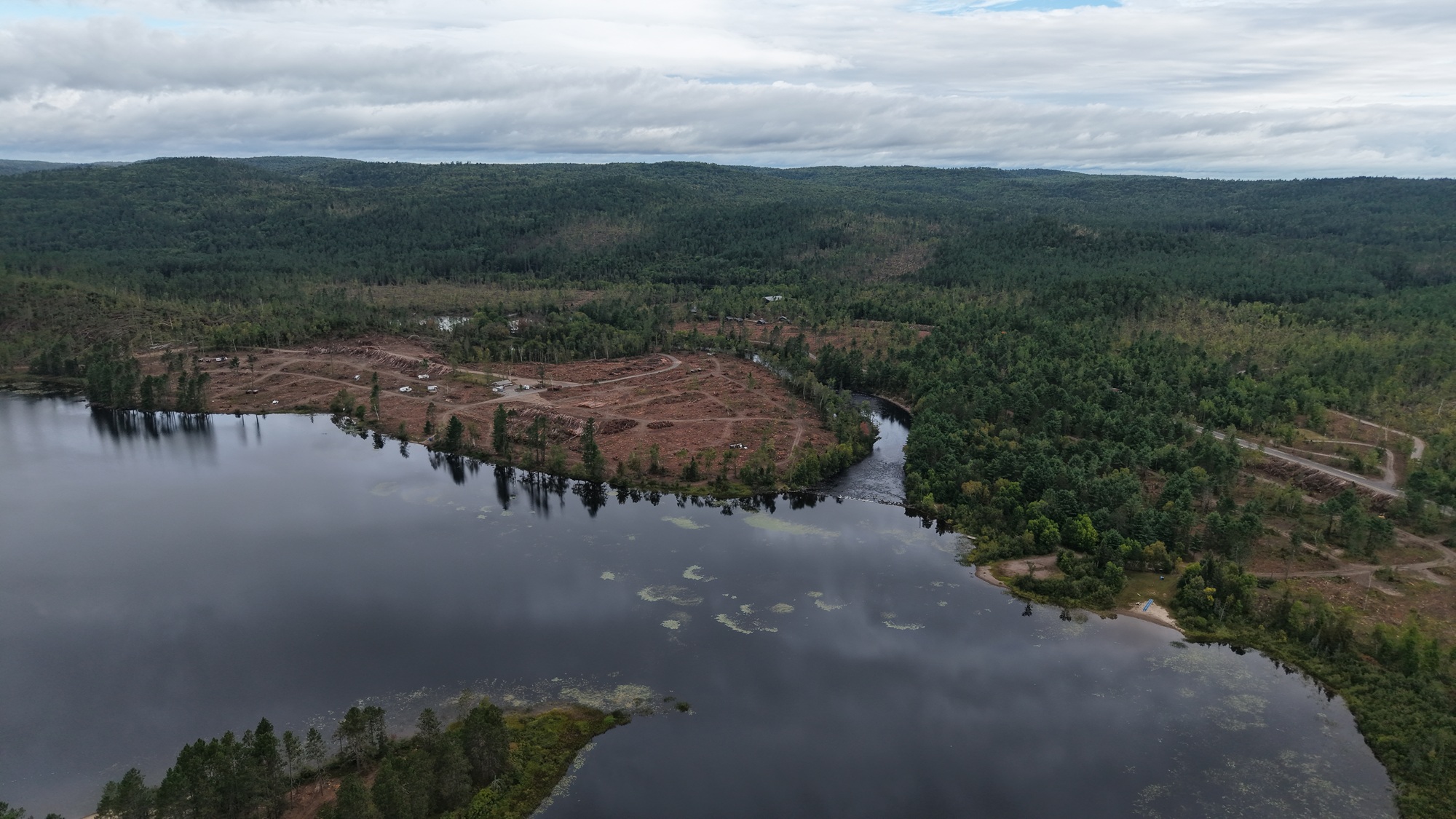
On the evening of June 21, 2025, Samuel de Champlain Provincial Park experienced one of the most destructive weather events in its history.
What began as a typical summer thunderstorm quickly escalated into a violent downburst that flattened forests, crushed vehicles and trailers, and forced the park to close for the remainder of the season.
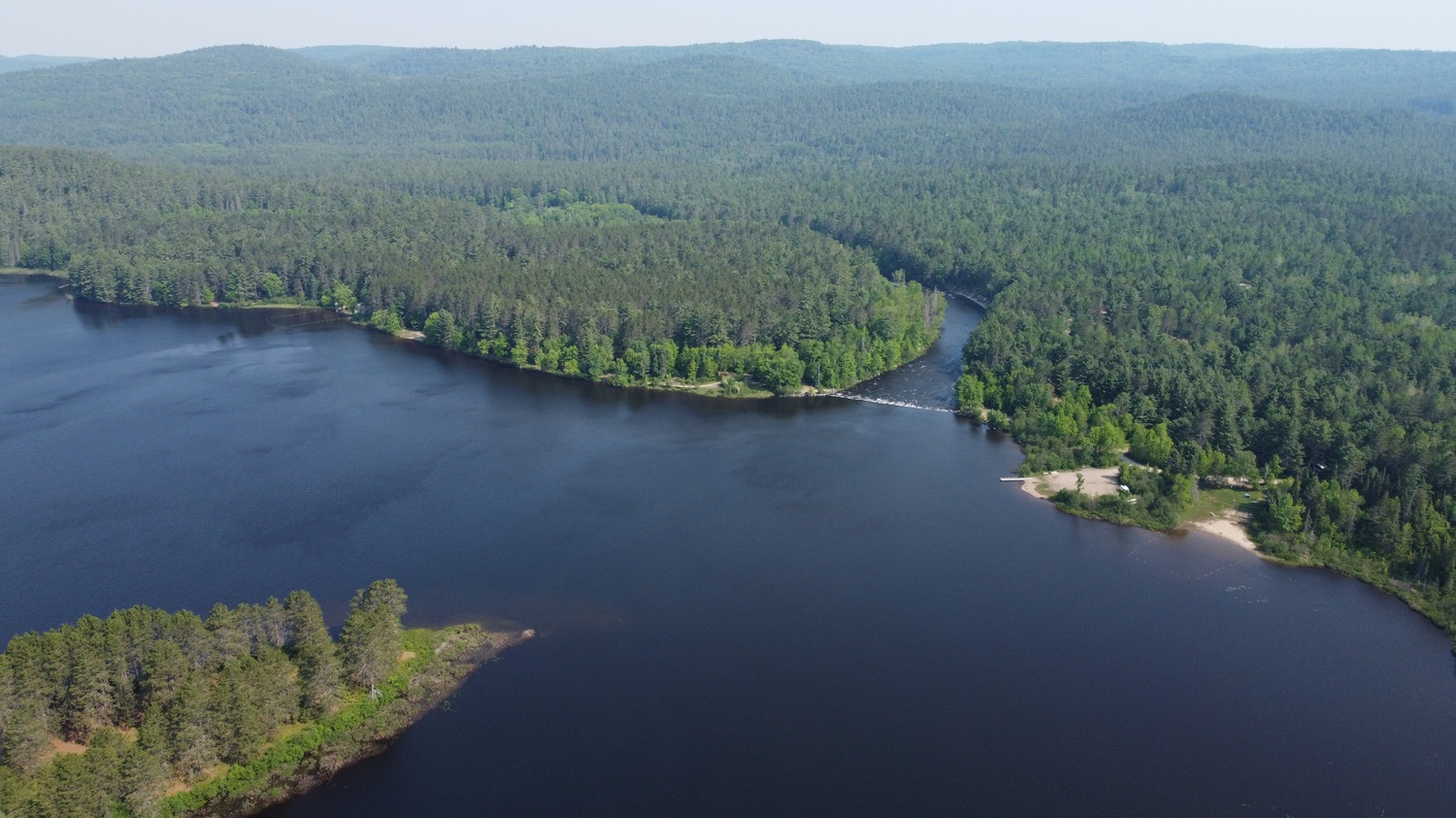
For those who know the park as a sanctuary of towering pines and serene trails, the transformation was unimaginable.
What happened?
Shortly after 9:00 p.m., a severe storm swept across the area, bringing intense lightning, torrential rain, and powerful winds.
The storm unleashed a downburst, a forceful column of air that plunges down from the clouds and spreads outward upon hitting the ground. Unlike a tornado, which rotates, a downburst drives straight down and then fans out, creating widespread destruction in a matter of minutes.
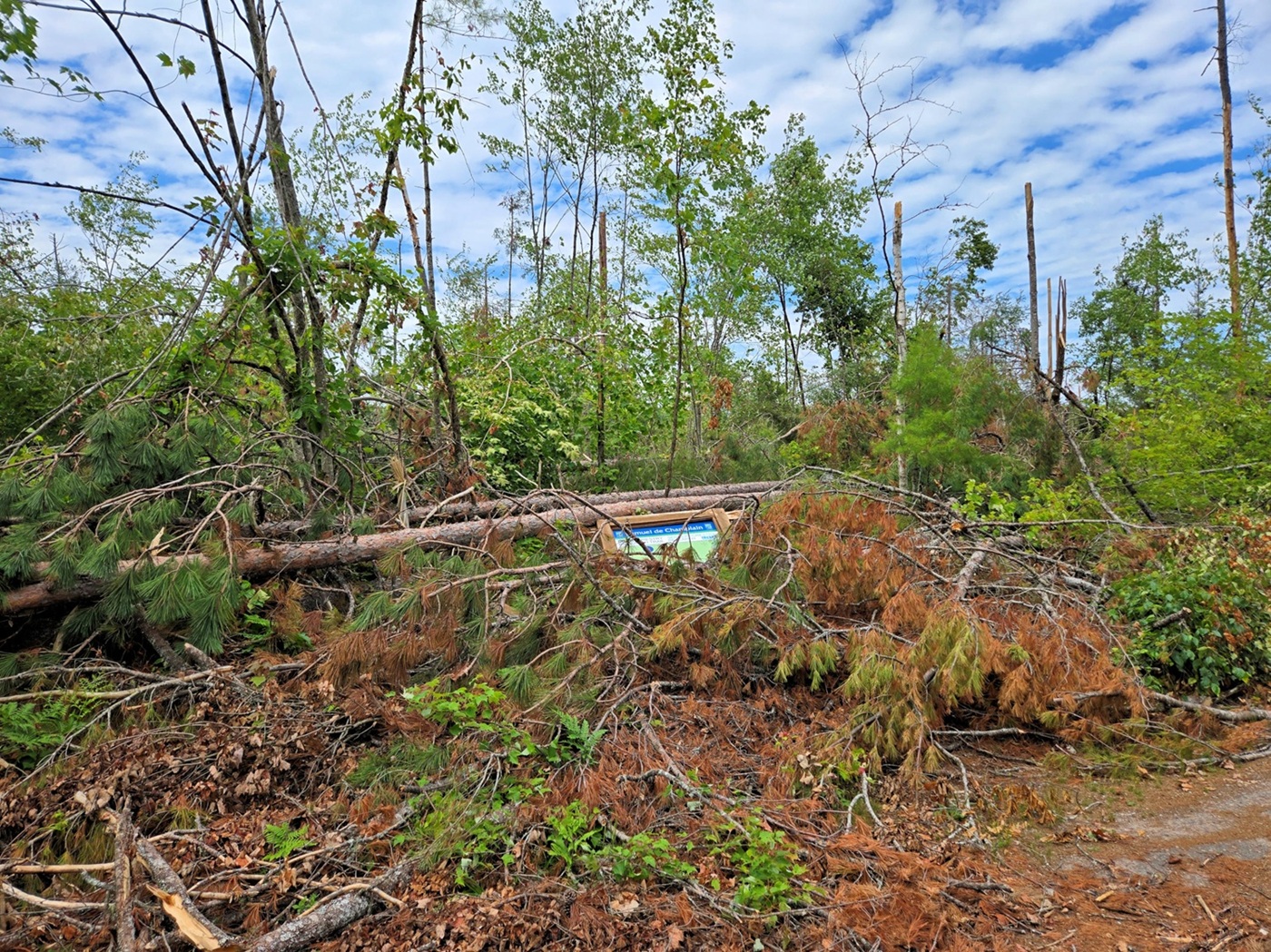
Winds exceeded 100 km/h, snapping century-old pines like toothpicks and toppling tens of thousands of trees across the park’s campgrounds and trails.
Roads were blocked, power lines downed, and campers trapped in tents and trailers.

The hardest-hit areas included the Jingwakoki Campgrounds and the area of the Canadian Ecology Centre, which suffered significant infrastructure damage. Once majestic pine forests where generations of visitors had explored and made memories now resembled a clear-cut logging operation.
The dense, entangled mess of fallen trees and branches made evacuation an overwhelming challenge for everyone who came together to help. Astonishingly, there were no fatalities.
The storm’s impact was so severe that we had no choice but to close the park for the remainder of the 2025 season.
The aftermath: surreal and heartbreaking
For us, the aftermath was surreal.
Safety was our top priority as we worked to clear roads, assess damages, and allow campers to retrieve belongings. But the emotional toll was heavy. Trees continued to fall for days after the storm, their root systems destabilized by the initial blast, which added to our anxiety.
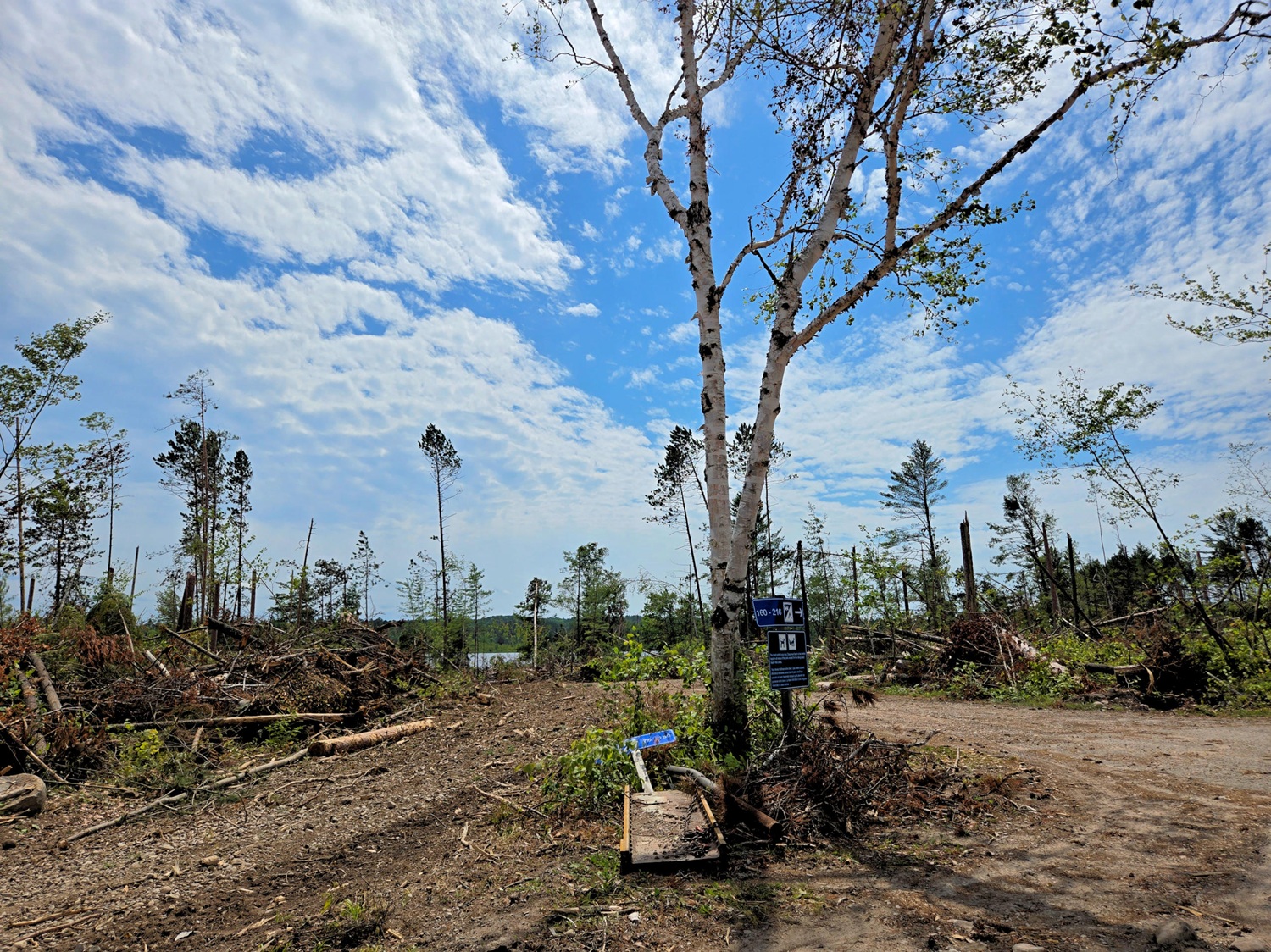
Areas we worked daily and knew like they were our own backyards were suddenly unrecognizable. Familiar landmarks vanished under tangled masses of fallen timber. It was incredibly disorienting to try and navigate with no recognizable landmarks remaining.
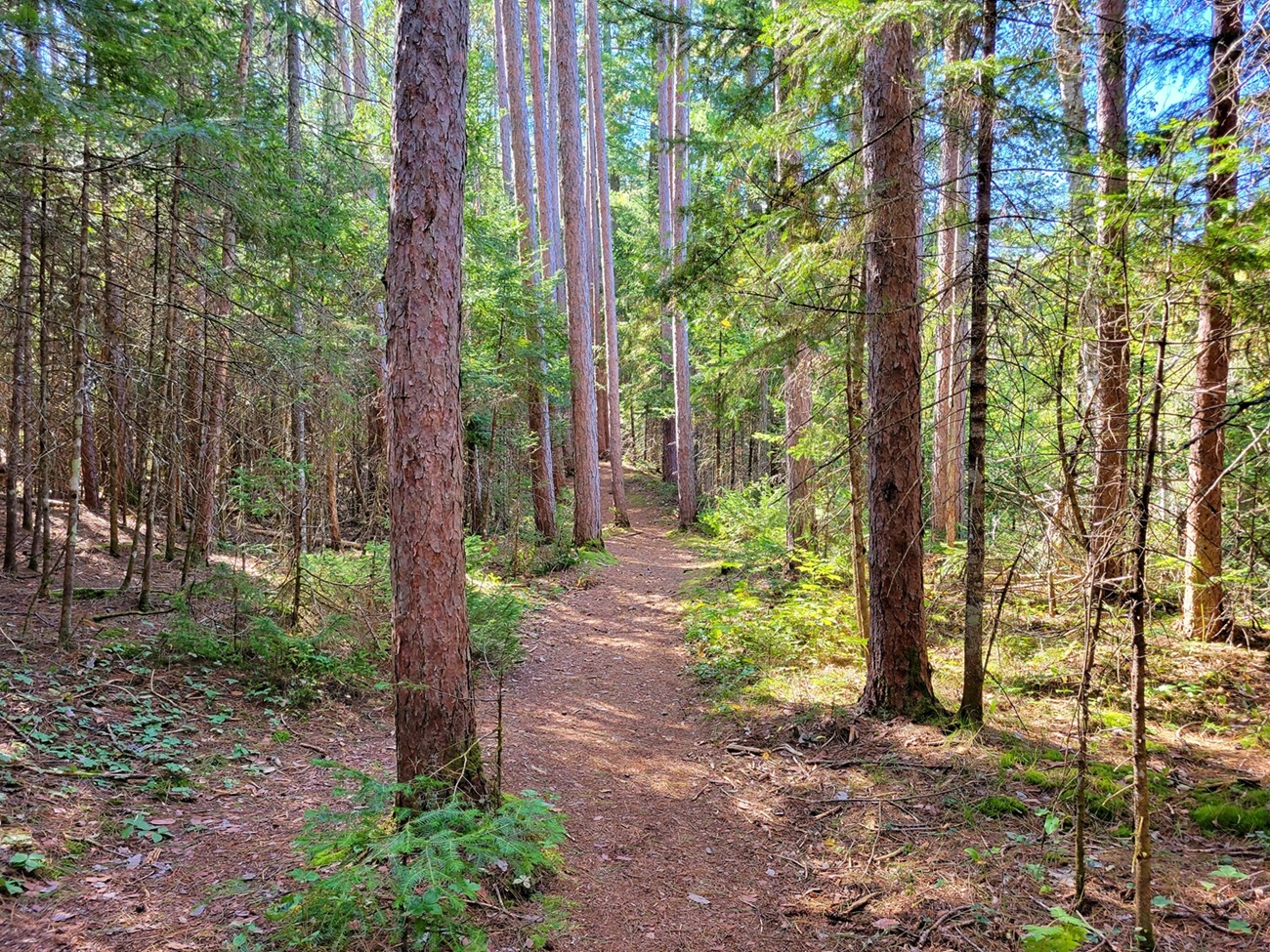
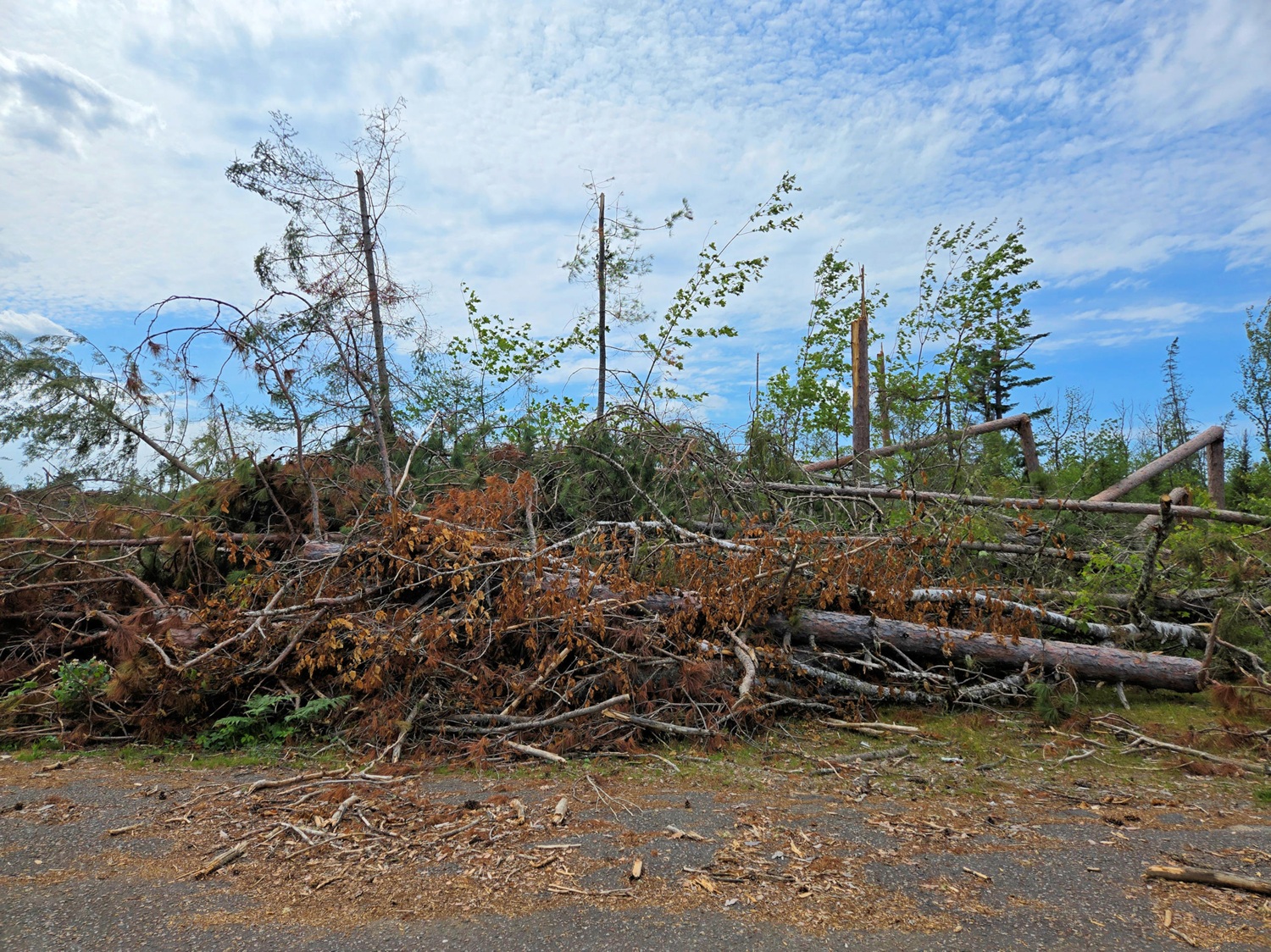
There was, and still is, grief for the loss of the park’s majestic old-growth trees, some which were centuries old. And for the shattered sense of safety in a place where people came to rest and recharge.
There were moments when I paused amid the wreckage of the campground, feeling overwhelmed by the immense silence broken only by the occasional crash of another tree, when in a typical summer I would be hearing people laughing and yelling and birds singing.
Recovery efforts: a monumental task
After clearing the web of debris to provide safe access for campers returning to collect belongings, clean-up began in earnest.
We partnered with logging companies to salvage downed timber. As I write this, piles of logs, some of which stretch over 200 m, still line roadways and areas that were once campsites.
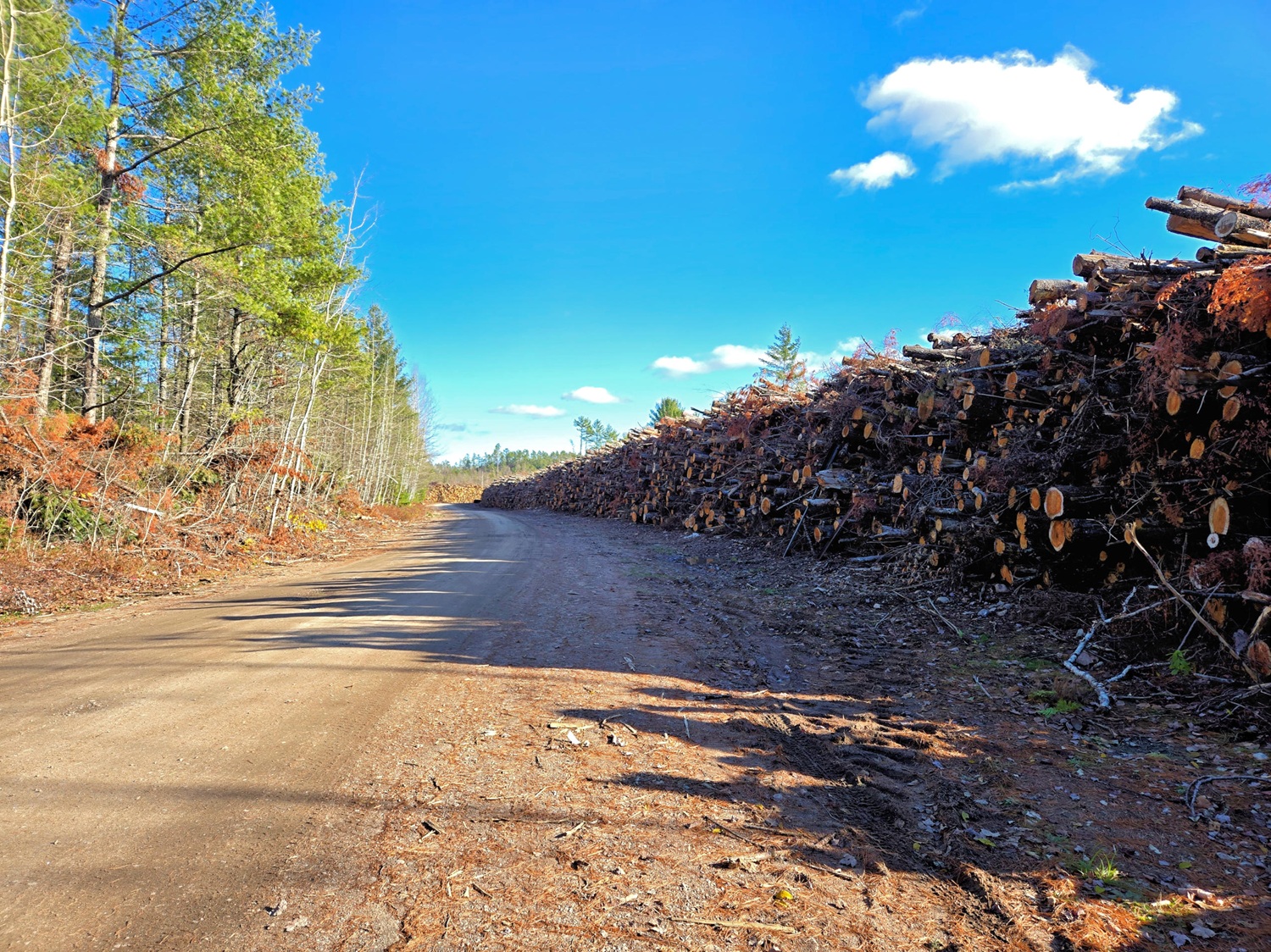
Comfort stations, vault toilets, water taps, electrical pedestals, and the cabins at the Canadian Ecology Centre all require extensive work. Much of that work is underway, but there’s still lots to do.
And no matter how much time, effort, or money is spent, Samuel de Champlain Provincial Park will be forever changed.
Moving forward with hope into a new landscape
We are actively rebuilding, using this cleared slate to improve infrastructure and meet visitors’ needs into the future. The revitalized park will feature a new visitor hub with educational exhibits, a park store, and equipment rentals for all-season activities, plus an extended operating season with winter activities such as skiing and snowshoeing.
As part of our restoration work, we will be planting 500 native trees through the Species Conservation Program in partnership with Forests Canada.
But for decades, what was once a dense pine forest will be a meadow, providing habitat for different species and fostering biodiversity. These open spaces will create new opportunities for exploration and memory-making, even as we mourn what was lost.
This storm was a stark reminder of how quickly the familiar can become foreign. For staff, volunteers, and visitors, the experience was humbling and heartbreaking.
Yet amid the devastation, there is hope: in the tireless work of recovery, in the adaptability of ecosystems, and in the promise that future generations will still find beauty and peace here, even if the landscape looks different.