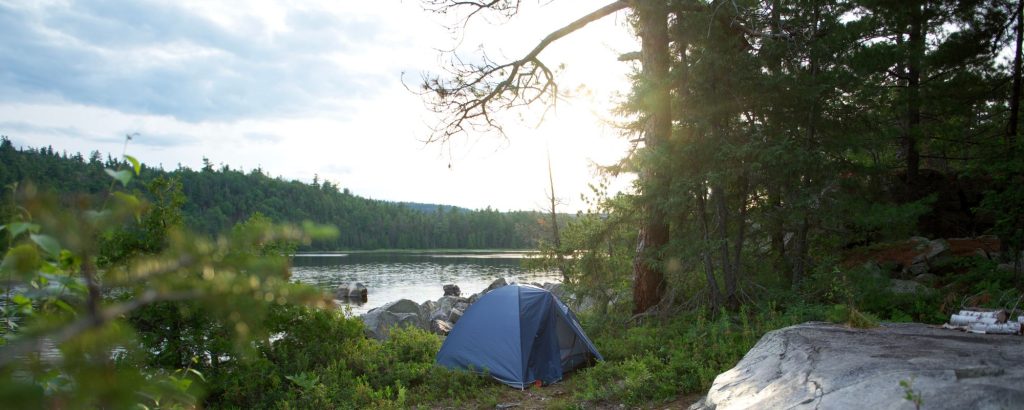
A canoe trip is a great way to really immerse yourself in nature.
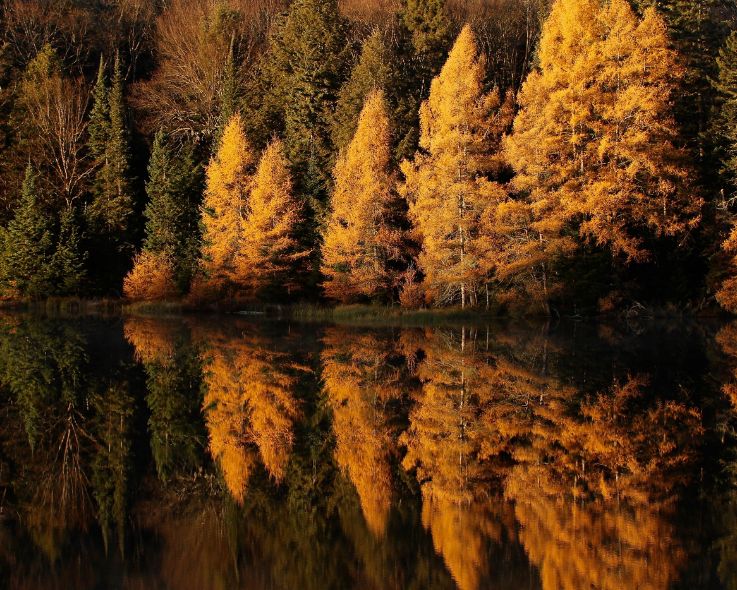
Ancient trees, thousands of crystal-clear lakes, and a rugged landscape are all part of the Temagami region’s identity.
Thousands of lakes and rivers connected by Indigenous trails creates a vast network of canoeable waterways that ties the landscape together. Five backcountry parks lie at the heart of the Temagami canoe route system.
Here are five reasons Temagami’s backcountry parks are worth putting on your “must paddle” list:
1. Canoe for weeks and never recross your route
The expansive network of waterways connected by portages, known in Anishinaabe as Nastawgan, knits Temagami’s landscape together. Travel by canoe is much quicker than on foot in a land of lakes.
Temagami has been “canoe country” for recreational canoeists for well over a hundred years, tracing Indigenous travel routes.
Canoe trippers began to paddle here in the late 1800s. Keewaydin, the world’s oldest canoe-tripping camp for youth, established itself on Lake Temagami in 1898 before roads and rail came to the region.
In the following decades, five more youth canoe-tripping camps established themselves on Lake Temagami.
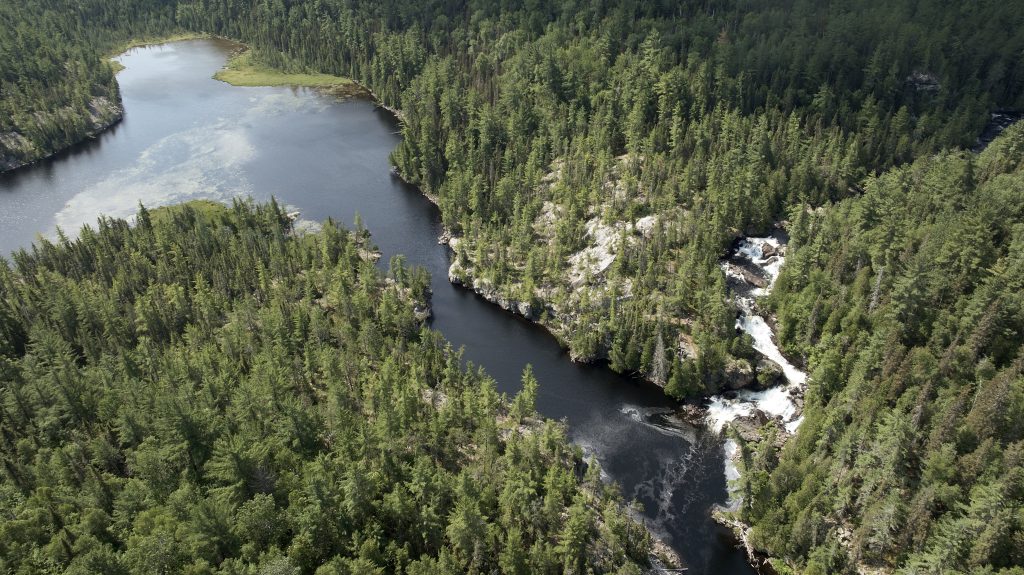
Canoe trippers joined the youth camps in exploring over 2400 km of existing Indigenous canoe routes in what was then known as the Temagami Provincial Forest.
From the 1970s to the late 1990s, five backcountry provincial parks and several conservation reserves were established. Over 600 km of canoe routes are contained within protected areas that are part of the larger Temagami canoe route network, providing endless opportunities to plan out canoe trips that can last from days to weeks in length.
Temagami’s backcountry parks are remote, have little development, and few facilities beyond portages and backcountry campsites.
Lady Evelyn-Smoothwater Provincial Park is a large park centered on the Lady Evelyn River, filled with rapids and waterfalls, and a series of rugged highlands that contain some of the highest points in Ontario.
Four waterway-class parks join with Lady Evelyn-Smoothwater to create a large core area of remote, mostly roadless landscapes and waterways.
Sturgeon River Provincial Park and Makobe-Grays Provincial Park contain rivers with whitewater paddling opportunities for experienced trippers.
Obabika River Provincial Park contains large lakes and the long, winding Obabika River, while Solace Provincial Park holds a very remote chain of lakes reached only by portages from the surrounding parks, or by floatplane.
2. Take your paddling trip to the next level!
Whether you are an experienced flatwater paddler or like the challenge of mastering the whitewater of a lively river, Temagami has something for you.
Trips in Temagami’s backcountry parks require more effort than weekend warrior motivation. Many of the most spectacular routes involve remote travel for several days or more, with portages that can be difficult and long.
The many youth camps based on Lake Temagami often trip for ten to fourteen days, because there are so many routes and variations to take.
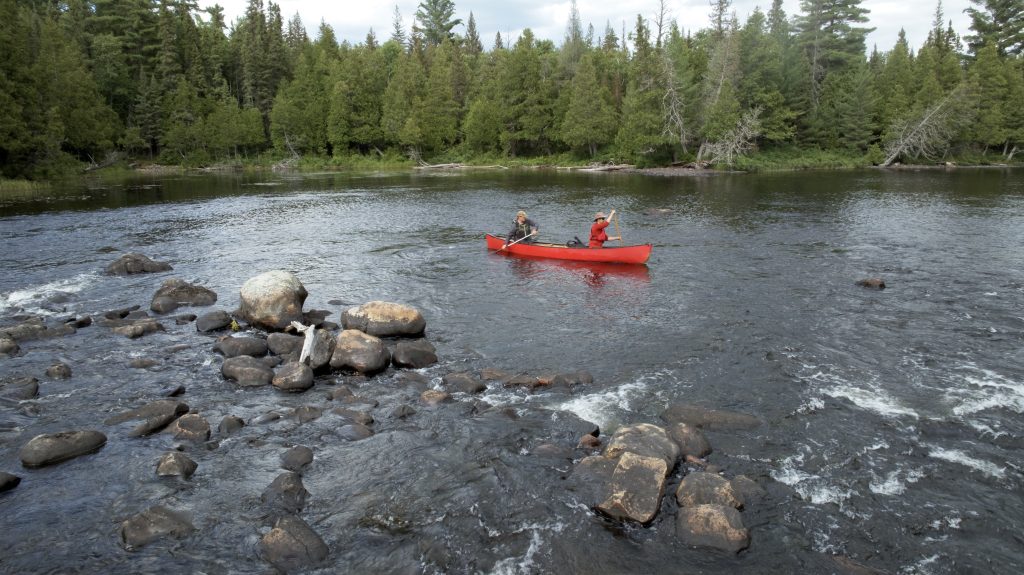
The rugged, fractured Canadian Shield landscape of Temagami is cut by many faults in the bedrock that are tens of kilometres long, crisscrossing each other north to south and east to west. The faults in turn were enhanced by glacial ice, sculpting out places for water to collect as lakes and rivers. This made for a very dense network of canoe routes.
Temagami’s landscape becomes more rugged and remote in the northwest portion of the region — this is where the backcountry parks are located.
Lady Evelyn-Smoothwater, a large wilderness-class park, forms the core of the remote group of parks. The ruggedness of the landscape has kept it mostly roadless, so you’ll have to access the park by canoe or floatplane.
A fly-in canoe trip is a real treat! Remote and quiet, few campers on your route, and you get to see everything you’ll be paddling from the air!
Just remember: navigation using maps is an important skill when traversing these parks. Maps on phones are fine to supplement navigation, but physical maps are a must in remote areas like this without reliable cell service.
Travel on rough logging roads to reach access points is required for some canoe routes, and experience with large lakes and “big water” is useful too.
But isn’t that why we challenge ourselves?
3. Rugged, scenic lake-dotted landscapes and the “roof of Ontario”
The region once called the Temagami Provincial Forest is over 6,000 hectares and contains 2600 lakes.
It’s a rugged and scenic landscape almost as large as Algonquin Park. Like Algonquin, Temagami contains an area of remote highlands which form a “dome” that is higher in elevation than the surrounding landscapes.
Lady Evelyn-Smoothwater contains the headwaters of several rivers that flow into the Ottawa River watershed and the Great Lakes watershed, and has some of Ontario’s highest points of elevation.
The highest point in Ontario is Ishpatina Ridge, which occupies the park’s remote west side. It’s a huge ridge that runs southwest to northeast and contains three of Ontario’s highest points.
On Lady Evelyn-Smoothwater’s east side is Maple Mountain, a popular destination for canoe trippers, with a 1.5 km trail from lakeshore to the top. It’s on some lists as number 17 of the highest Ontario peaks, but it’s “local elevation”, which is the height from its base to the top, is hard to beat! Expansive views await, as the land to the east is all much lower in elevation.
Ishpatina Ridge and Maple Mountain are both home to historic fire towers. These historic towers were part of a network across northern Ontario that allowed fire rangers with the province’s Forest Fire Branch to look for smoke, a sign of a potential forest fire.
These historic fire towers are old, fragile, and dangerous to climb. So if you want to climb a fire tower, visit the Caribou Mountain Lookout and White Bear Forest Conservation Reserve in the town of Temagami
4. Ancient pine forests – Those are some big trees!
The mighty White Pine was designated as the province’s official tree in 1986 due to its importance as timber to Ontario’s economy from the 1860s to the early 1900s and its impressive size and lofty stature.
Some are so massive it can take as many as three people to reach around the trunk near its base. It’s also one of the longest-lived trees in Ontario, with some trees found in Temagami as old as 400 years.
Temagami’s protected areas are home to many old growth pine forests. In 1902, the Government of Ontario made the Temagami area a provincial forest reserve. It was designated a forest reserve to protect timber resources from fire and settlement, and to create a future reserve of timber for the forest industry. Logging only occurred to salvage timber after a forest fire.
This provincial forest protected the pine reserves for over 60 years. When logging companies did gain access into the area, it was still a rugged and roadless forest. Public sentiment in the 1980s turned towards the permanent protection of large old pine, and new parks and conservation reserves were established to protect many of the remaining old growth forests.
A comprehensive land use plan was developed to maintain recreation opportunities by limiting road access to remote areas of the Temagami region.
As a result of the expansion of protected areas, Temagami contains the largest old growth White Pine forest in Ontario, found in Obabika River Provincial Park.
The Obabika old growth forest is remote, and only accessible by water. The area has great hiking trails that wind through the towering giants.
Despite the remoteness, this is a popular spot! The backcountry campsites in the area fill up quickly through the summer with canoe trippers planning to hike the trails.
5. Paddle through the ancestral homeland and traditional territory of the Teme-Augama Anishnabai
In Temagami, the lakes and rivers are connected by portages that are thousands of years old. The Teme-Augama Anishnabai (Deep Water by the Shore People) have been living in their homeland – N’dakimenan – and travelling these routes since the end of the last ice age. They live here still, surrounded by the lakes and forests of this beautiful region.
N’dakimenan is approximately 10,000 sq. kilometres and consists of 14 family territories. The Temagami backcountry provincial parks all lie within its boundaries.
The oral tradition of the Teme-Augama Anishnabai tells that the Creator placed Anishinaabeg on N’dakimenan at Ish-pud-in-ong (Ishpatina Ridge) 8,000 years ago.
Being the highest point of land in Ontario, it would have been one of the first places to emerge from the retreating glacier and its meltwaters. Archaeological research using carbon dating has confirmed the occupation of N’dakimenan going back at least 6,000 years on many well-used sites.
Temagami’s Indigenous place names and traditional portages are well-documented in the “Historical Map of Temagami”, produced from years of research by Craig MacDonald and available for purchase at Finlayson Point Provincial Park.
Planning a visit?
Five backcountry parks are within the Temagami
Lady Evelyn-Smoothwater Provincial Park
Take exciting routes through rapids to fish in the whitewater pools for Brook Trout, or aim for the lakes also chock full of trout.
As you’re paddling through, you’ll be surrounded by old growth White Pine, boreal forest, and many peaks — including the highest elevation in Ontario: Ishpatina Ridge.
Plus, this park features six beautiful waterfalls with campsites adjacent to the falls. At Lady Evelyn-Smoothwater, you’re in for some incredible in- and out-of-boat recreation experiences.
Obabika River Provincial Park
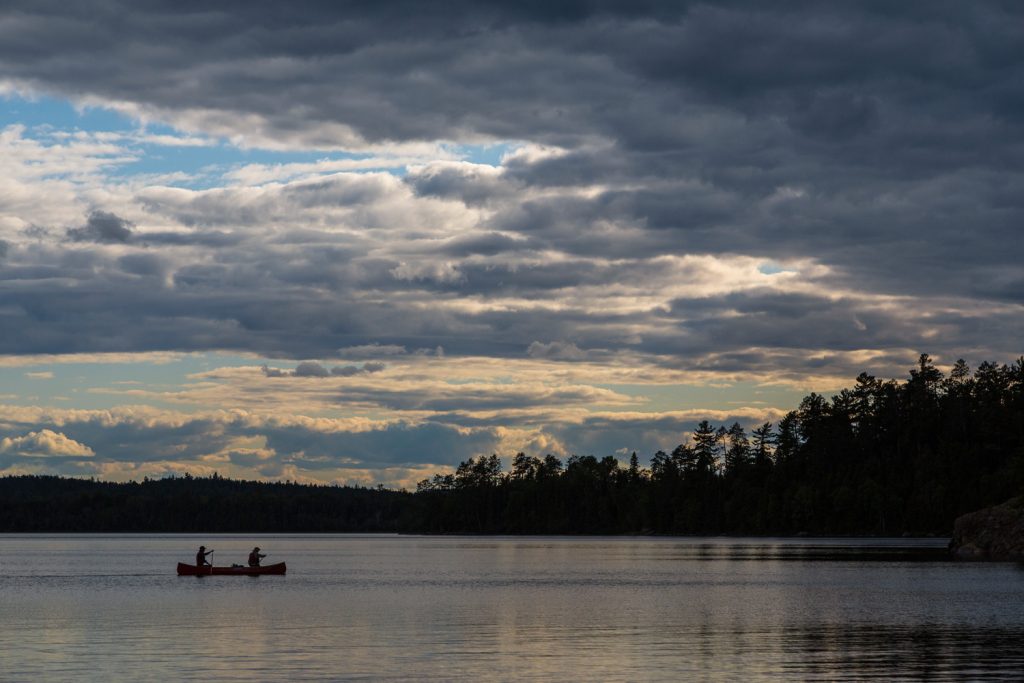
Obabika River and several other lakes make up the core of this rambling waterway-class park. It connects Lady Evelyn-Smoothwater with Lake Temagami and other waterways in Temagami’s canoe route network.
The park’s highlight feature is the Obabika old growth forest, a huge stand of ancient pine that may be the largest in Ontario. Trails wind through groves of towering trees hundreds of years old.
Makobe-Grays River Provincial Park
The Makobe River is a classic Canadian Shield river.
Canoeists run it during the spring to get high water so they can run as many rapids as possible before it gets “boney” in the summer, and portaging becomes a must.
The river is accessible from its headwater lakes in Lady Evelyn-Smoothwater. Many visitors fly in by floatplane and ride it to the take-out at the Town of Elk Lake.
Sturgeon River Provincial Park
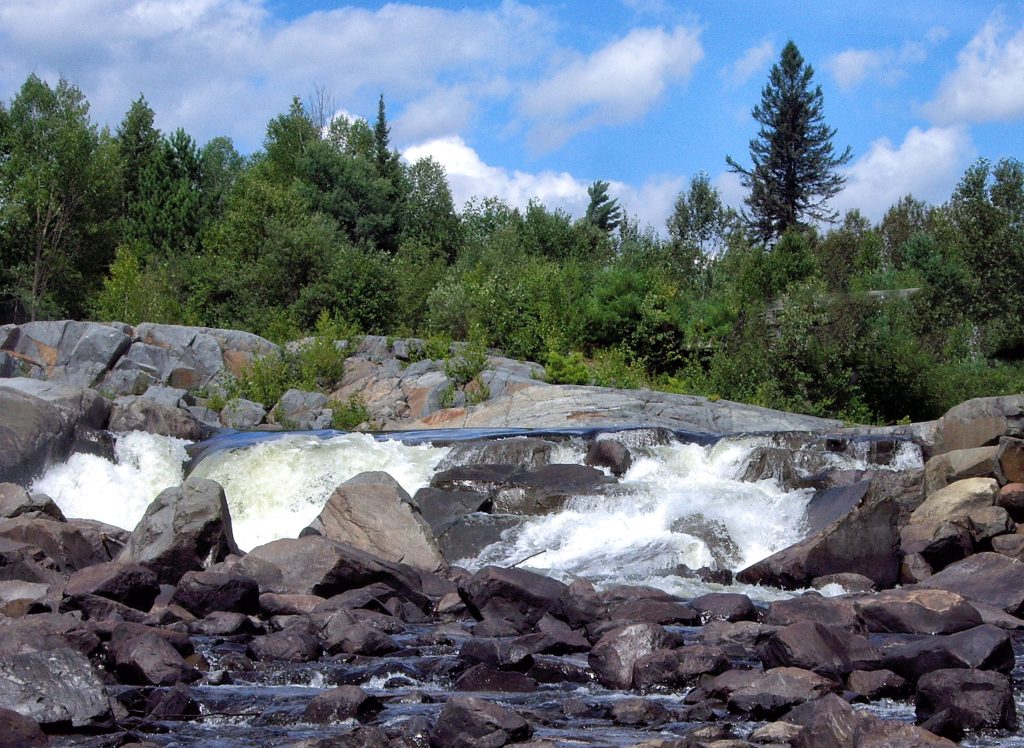
The Sturgeon River forms the western boundary of Temagami Canoe Country, beginning in Lady Evelyn-Smoothwater, flowing south and linking with Solace Provincial Park and Obabika River.
Whitewater enthusiasts enjoy six days of Class I and II rapids with the occasional Class III.
Solace Provincial Park
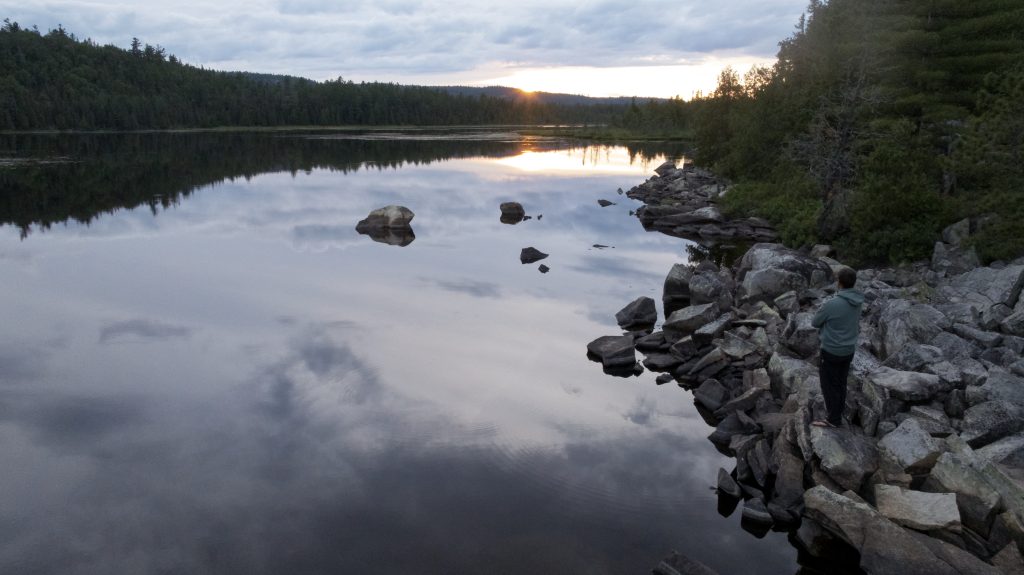
Solace is a beautiful chain of lakes that combine the scenic beauty of Lake Temagami with the remoteness of Lady Evelyn-Smoothwater. Accessed from other parks or by floatplane, Solace is perfect for canoeists seeking solitude.