Happy International Day of Women and Girls in Science!
Scientists are absolutely integral to Ontario Parks, working as researchers, biologists, ecologists, and more!
Take a look at the work of a few of our awesome women and gender-diverse scientists who are completing projects to benefit species at risk through Ontario’s Species Conservation Program.
Annabelle Cloutier Austin, Ecology Resource Steward
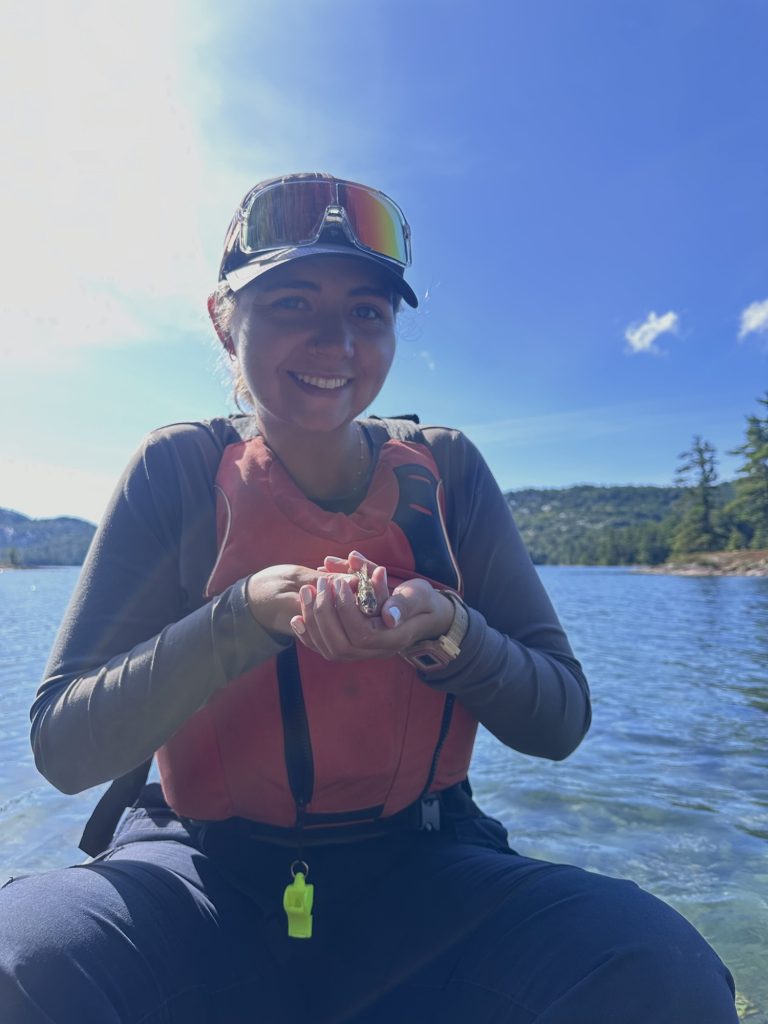
As a resource steward for Ontario Parks’ northeast zone, Annabelle assists with a variety of aquatic projects across Ontario’s protected areas — everything from operating and non-operating parks to conservation reserves.
This includes supporting the ongoing rehabilitation of acidified lakes in Killarney Provincial Park, a key effort in helping these unique ecosystems recover.
Annabelle also takes part in species-at-risk monitoring across the northeast zone, gathering the information needed to guide meaningful conservation action.
Her job also includes leading and supporting invasive species removal projects, working with partners and park staff to help restore native habitats and strengthen the health of Ontario’s wild spaces.
“Working in science allows me to turn curiosity into real-world impact. As a woman in this field, I’m proud to help protect our natural spaces and show that diverse voices make conservation stronger and more innovative.”
Michelle DiLeo, Research Scientist
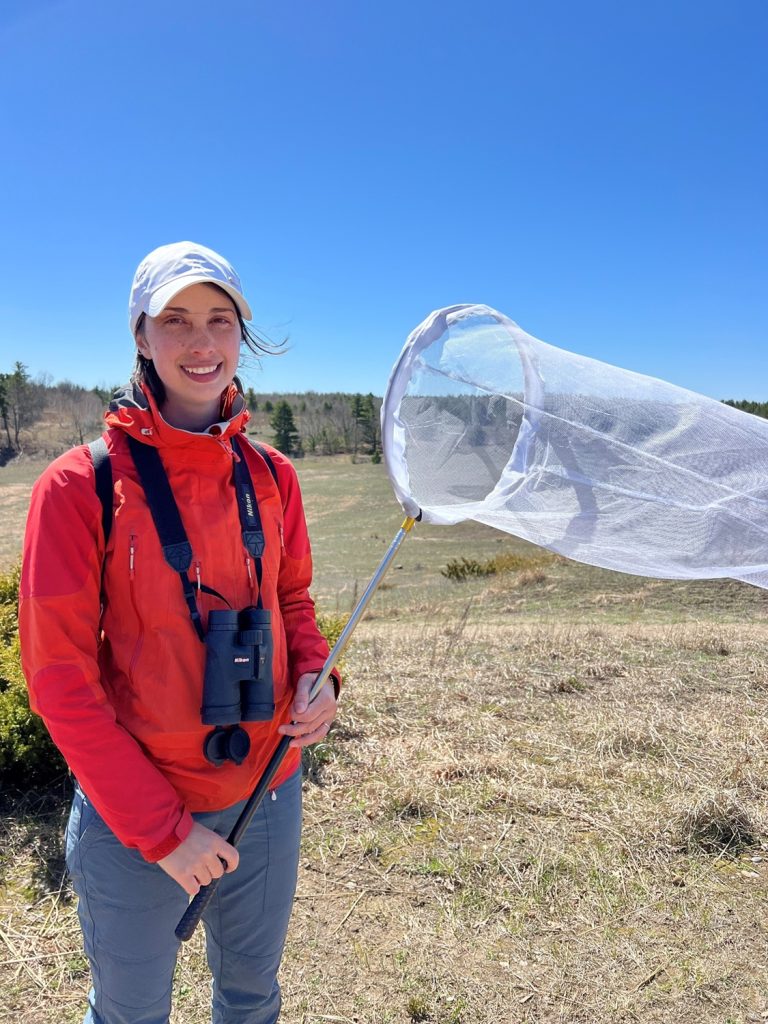
Michelle works within the wildlife research and monitoring section of the Ministry of Natural Resources.
With support from the Species Conservation Program, she is leading a community-science based butterfly monitoring program in Ontario Parks.
The program will track long-term changes in butterfly abundance to help identify species, including species-at-risk like Mottled Duskywing and Monarch, and populations of butterflies that are most vulnerable to environmental stressors such as climate change.
Sarah Fillmore, Senior Operations Technician
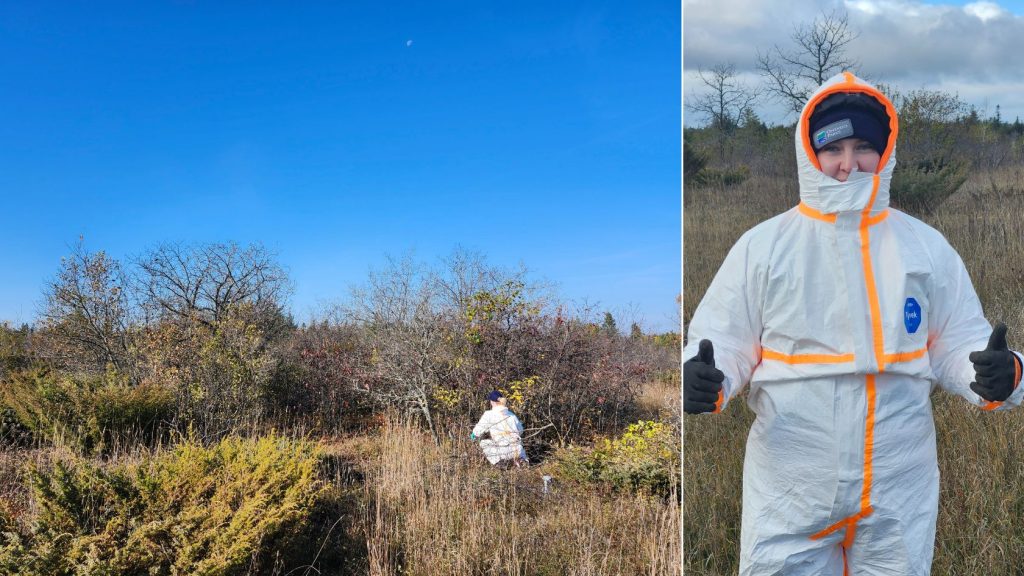
Sarah works as a senior operations technician within Ontario Parks’ Fitzroy cluster.
Burnt Lands Provincial Park is a globally significant alvar (a rare ecological habitat of limestone plains with thin soil), that has long faced challenges from invasive species like European Buckthorn. For the past two years, Sarah has been an essential part of the restoration team, working hands-on to remove invasive species and apply targeted treatments.
Her dedication has left a visible and lasting impression on the health of the landscape. This work is a powerful example of the difference women in science make in protecting our natural heritage.
Janelle Blanchard, Research and Policy Analyst
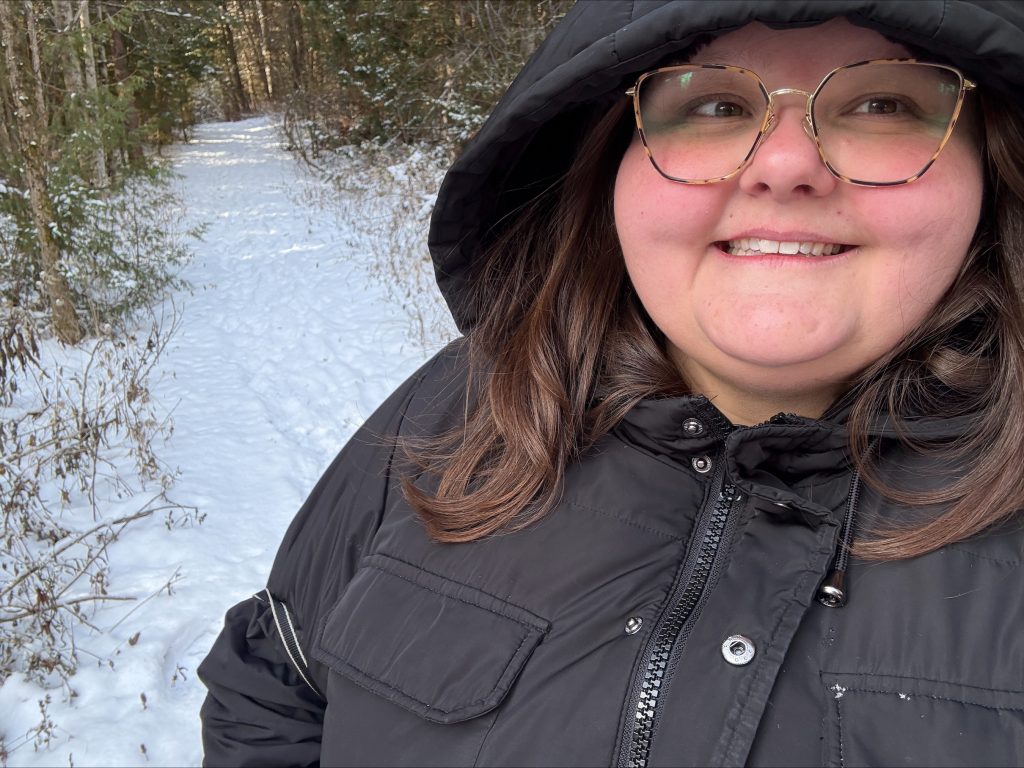
Janelle is currently managing the Research Authorization Program for Ontario Parks, including research across the province on species at risk.
“The best part of my job is working with such diverse and impactful subject matter experts,” she says.
“I not only get to work with researchers and see the results of extensive research ongoing in provincial parks and conservation reserves but I also get to work closely with our provincial zone ecologists and learn from their expertise!”
Claire Gardiner, Park Naturalist
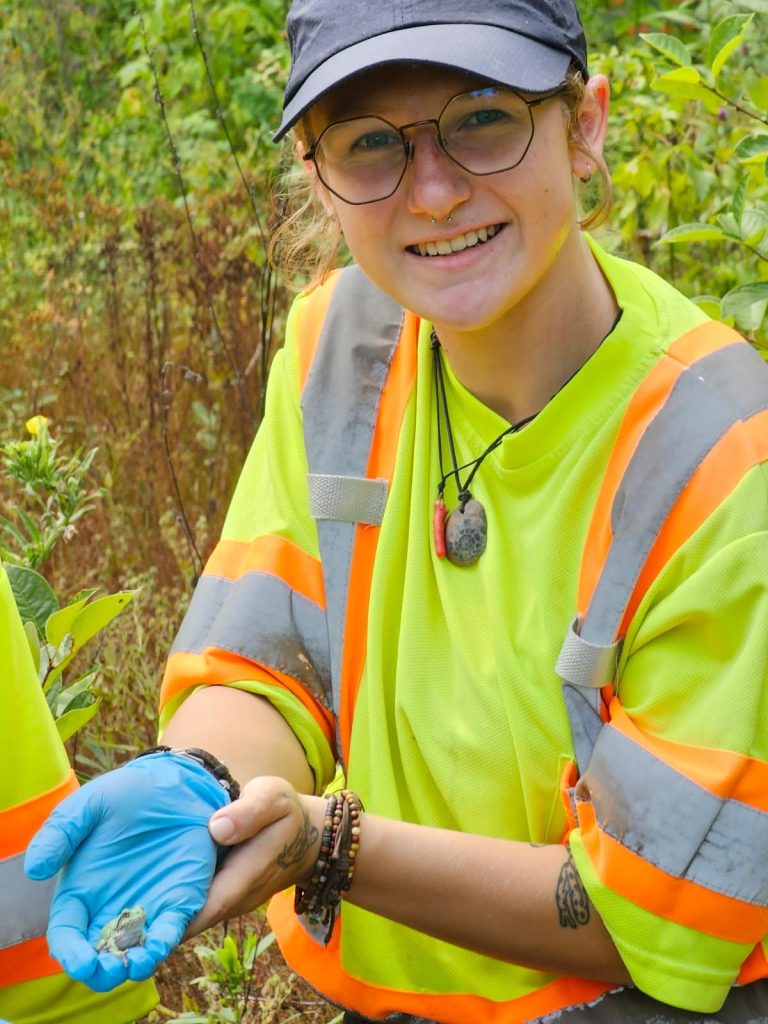
Claire is a passionate naturalist and keen learner of all things science at Sibbald Point Provincial Park.
She has been a member of Ontario Parks southeast zone’s Science Squad program since its inception in 2023.
This program provides contract extensions for summer students, expanding science capacity across several parks while offering hands‑on experience in ecological and scientific fieldwork.
Her work ethic and experience made her a valuable member of both Science Squad and the Discovery team.
In her role, she participated in a number of monitoring activities at Sibbald Point.
Each spring, Claire conducted wetland surveys to document turtle populations. During nesting season, she went looking for laying females and wherever possible, deployed nest covers to ensure the hatching of baby turtles.
Claire has also contributed digital point counts for the Ontario Breeding Bird Atlas, a project committed to the recording of birds during breeding season. Over the course of her contract, Claire uploaded an impressive 1,392 community science observations to iNaturalist, significantly contributing to Ontario Parks’ biodiversity data.
In 2025, Claire played a key role in prairie restoration efforts at Holland Landing Prairie Provincial Park. She assisted with the removal of invasive plant species, helping to restore conditions that allow native tallgrass prairie species to re‑establish and thrive!
Kate Harmon, Operations Technician
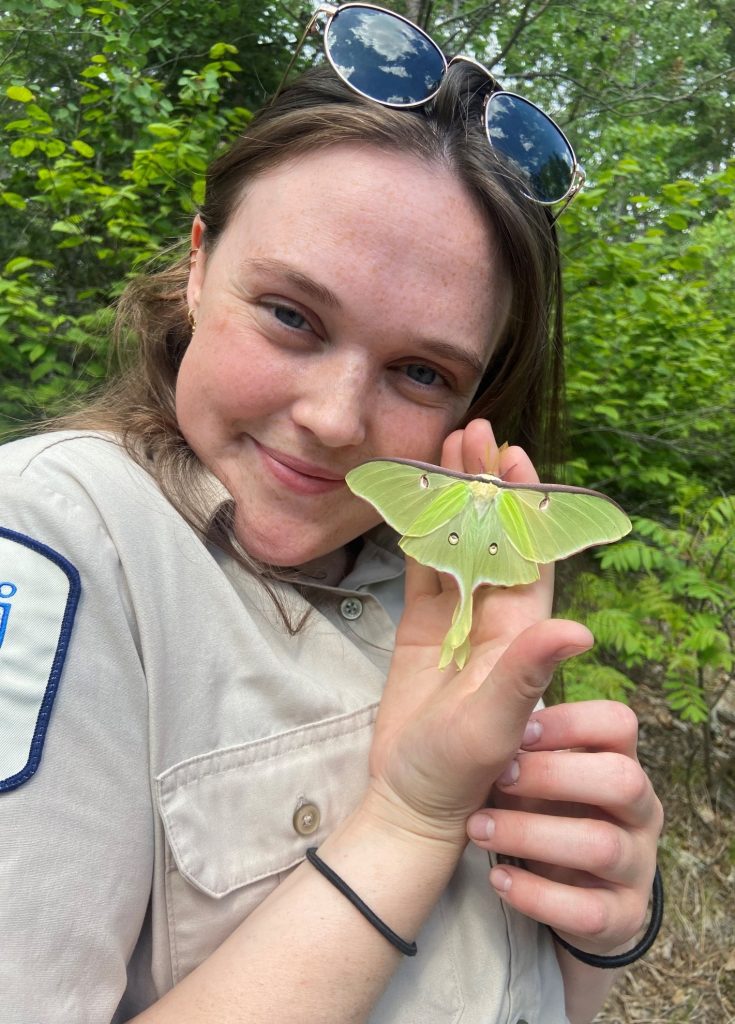
The Moth and Butterfly Atlas of Ontario is a citizen science project created by the Toronto Entomologists Association. It’s designed to track and document Lepidoptera (moth and butterfly) species and distribution to help monitor biodiversity across the province.
The Lepidoptera data in northern Ontario is very limited, so for the last two summers Kate has preformed butterfly counts and moth counts (via backlighting) in parks and conservation reserves across the northern part of the province and contributed her findings to the Ontario Moth and Butterfly Atlas!
The information collected is used by ecologists and scientists to help understand the distribution of moths and butterflies across the province, as well as any trends that can signal to changes in the environment, such as habitat destruction, climate change, and the effects of pollution.
“As a member of the Toronto Entomologists Association, identifying butterflies and moths is one of my favorite hobbies! So being able to contribute to a community science project to help conservation efforts and biodiversity monitoring of Lepidoptera species across Ontario is a dream come true!”
To all amazing women in science working passionately to understand and protect our natural spaces: thank you for your hard work and expertise, and congratulations for all your achievements!
Students: interested in working in parks this summer? Applications for the 2026 season are now open!
Why are your scientists picking up wildlife? Can I pick up snakes and turtles too?
Please do not handle wildlife. The staff members featured here are trained scientists engaged in professional research. These scientists are following a strict animal care protocol approved by the Ministry of Natural Resources. These protocols review the desired outcome of the research, and ensure measures are taken to put the least possible amount of stress on the animal. We ask that you always observe animals from a distance for both the safety of you and the animal.