Picture this: you’re an Eastern Foxsnake.
After spending the warmer months basking in the sun, searching for meals, and laying your eggs, it’s time to find your overwintering site.
But something stands between you and your safe place to spend the winter: countless giant metal beings crossing in front of you, with little desire to slow down or let you get to your destination safely.
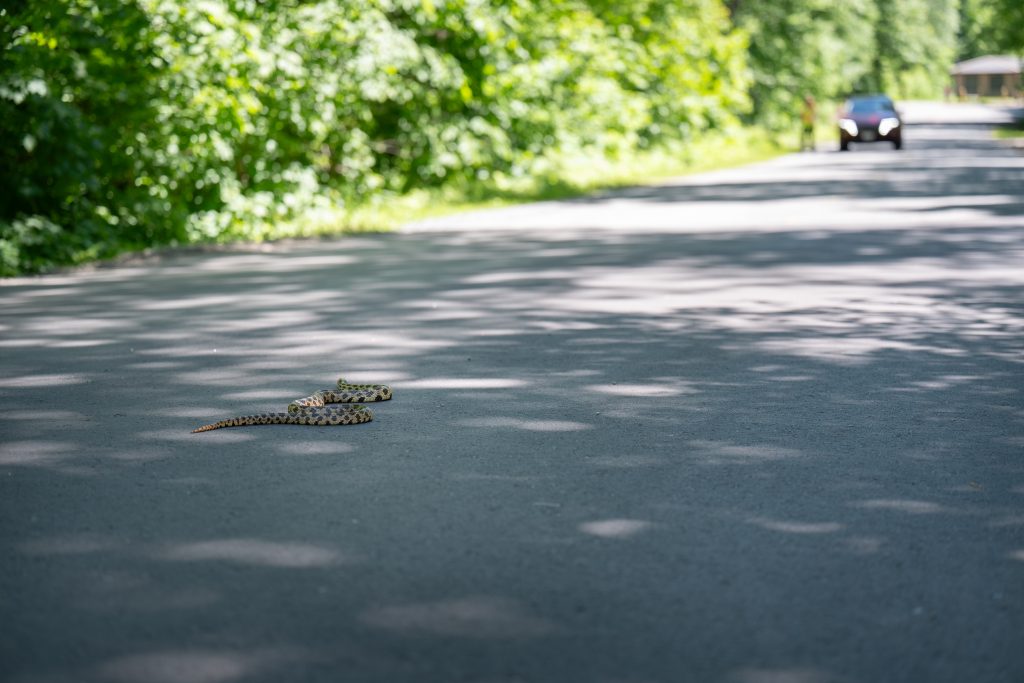
If you try to cross, you risk being hit by one of these beings.
If you don’t reach your overwintering site, you will likely succumb to the elements.
The journey to find a new place for rest has become life or death.
Cars: a major cause of wildlife death
Crossing dangerous roads is an unfortunate reality for much of the small wildlife across the province.
Car and truck strikes pose a significant risk to animal populations, especially species-at-risk.
Larger mammals such as deer and moose are much easier to spot when driving on park roads.
Smaller wildlife, like snakes, turtles, skinks, chipmunks, squirrels, and salamanders, are much more difficult to see from the driver’s seat.
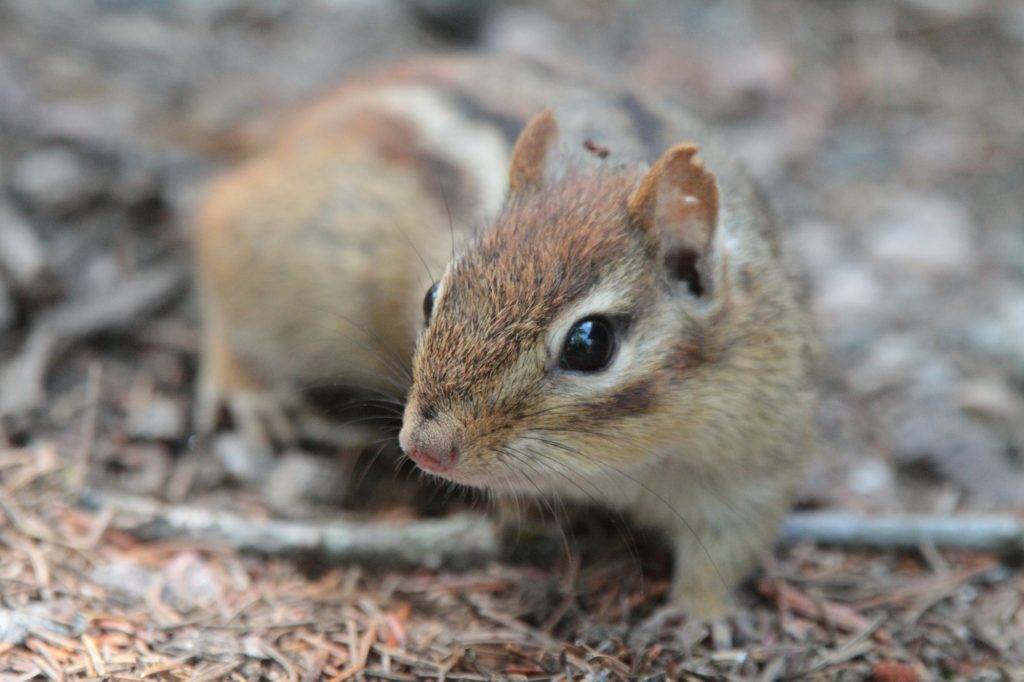
Parks like Killbear Provincial Park have noticed an increase in roadkill, especially in at-risk snake populations.
In a 2025 report, 380 observed road mortalities at Killbear were snakes, including the Eastern Foxsnake, a species that is classified as threatened by the Committee on the Status of Species at Risk in Ontario.
How do we solve this problem?
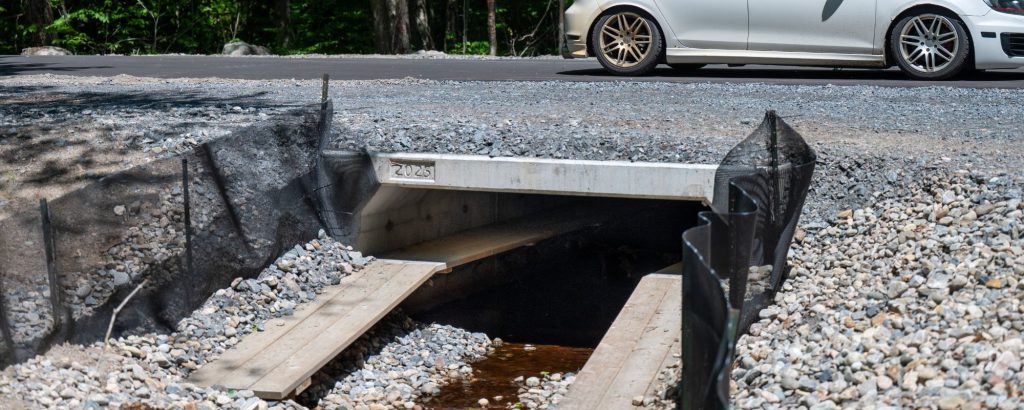
Introducing: the ecopassage.
It’s a specially designed culvert that reduces roadkill by providing species with a safe way to cross the road.
Staff have installed a new ecopassage just this year! This brings the total number of ecopassages at Killbear to five!
Listen to Chief Park Naturalist Hope Freeman and Snake Researcher Alex Heffernan talk more about how these ecopassages are built:
How do ecopassages work?
They act like a tunnel under the road and allow wildlife to cross to the opposite side safely.
Ecopassages are strategically placed at “hot spots” along Killbear’s roads. These are places where the risks of being hit on the road are highest.
These protect park wildlife, especially vulnerable species such as the threatened Massasauga Rattlesnake.
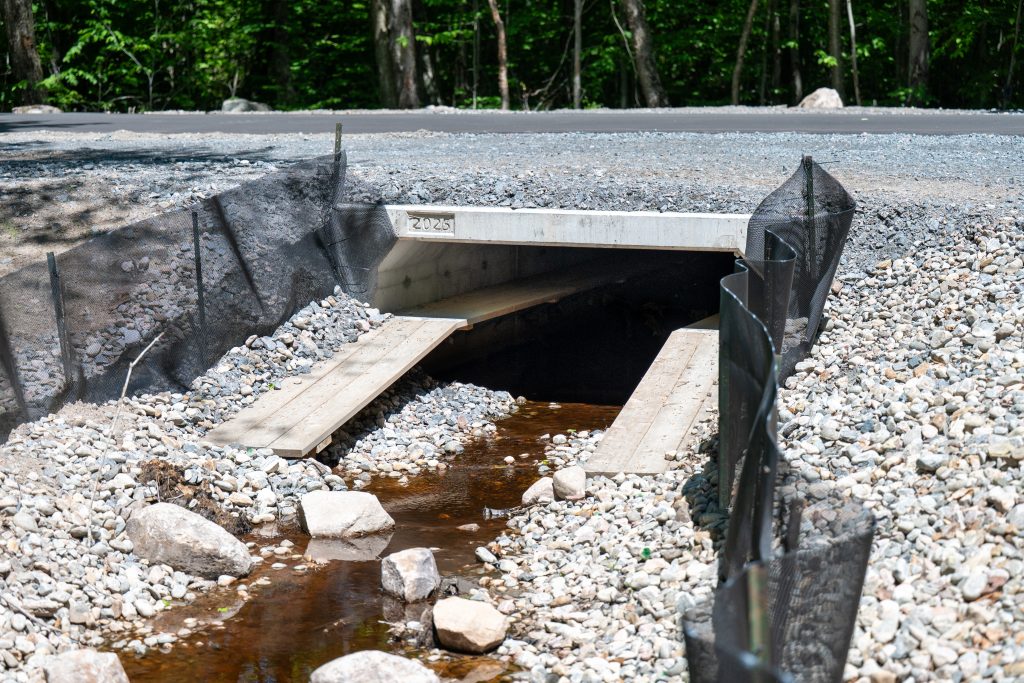
Animals can’t read signs, so Team Killbear also installed fencing that runs along the length of the roads.
Together, the fencing directs wildlife to the ecopassages, and the ecopassages provide a path that wildlife can use to get across without being hit on the road.
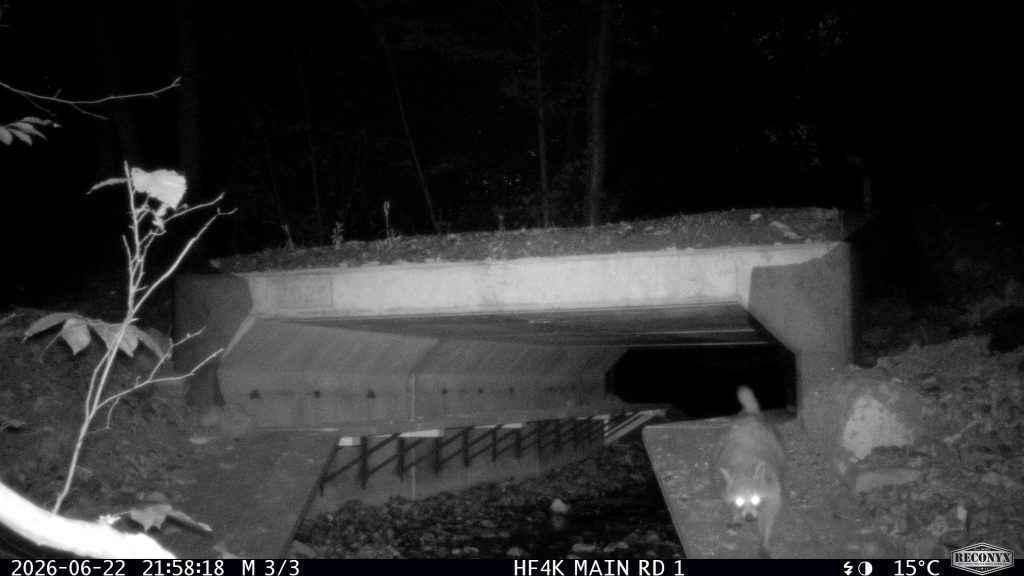
They will continue to keep a keen eye on the ecopassages to see which wildlife are using them.
Protecting wildlife, one passage at a time
Funding for this project (and many others!) is being provided through the Species Conservation Program, which provides $20 million annually for projects that support the protection and conservation of species at risk in Ontario.
The next time you visit the Discovery Centre at Killbear, ask a friendly staff member to tell you more about the wildlife fencing, ecopassages and snake research occurring within the park!
You can even meet some of Killbear’s resident snakes, Noodin the Eastern Foxsnake and Russ the Massasauga Rattlesnake, and learn more about their stories!
Looking to lend a hand? Join protection efforts by:
- driving slowly on park roads
- keeping an eye out for snakes, turtles, and other creatures (especially between April and September)
- reporting your snake and wildlife sightings to park staff and iNaturalist