If you haven’t made the trip to Manitoulin Island, you’re missing out on an unforgettable visit to the world’s largest freshwater island.
And if you’ve spent time on “The Island,” as locals call it, but haven’t explored Misery Bay Provincial Park, then one of the Great Lakes Basin’s most remarkable protected places is still waiting for you!
Here are five reasons Misery Bay is worth the visit:
1. Home to rare, protected habitats
Manitoulin Island’s story starts hundreds of millions of years ago, when this entire region lay under a warm, tropical sea.
Layers of silt, sand, and mud settled on the sea floor, slowly forming the sedimentary bedrock that now shapes the island.
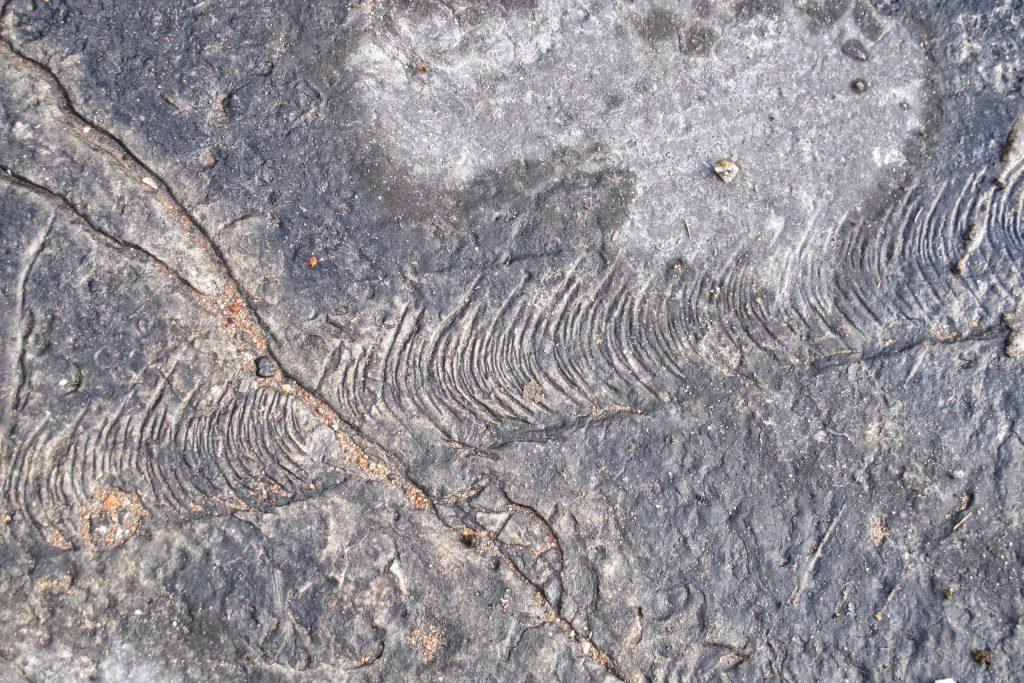
However, that ancient tropical sea was anything but quiet! Armoured fish swam the vast coral reefs, and countless other prehistoric creatures lived and died here. Their remains became part of the rock itself, which sometimes reveal their fossils under your feet.
On Manitoulin, this bedrock rests in broad, flat layers. In places like Misery Bay, the rock is exposed or just under a thin layer of soil.
Many habitats have evolved here, with plants creating a variety of places where animals find food and shelter. These combinations of plants and bedrock are very rare, not just in Ontario but in the world.
At Misery Bay, you’ll find some of the world’s rarest alvar habitats plus the largest wetland on Manitoulin Island.
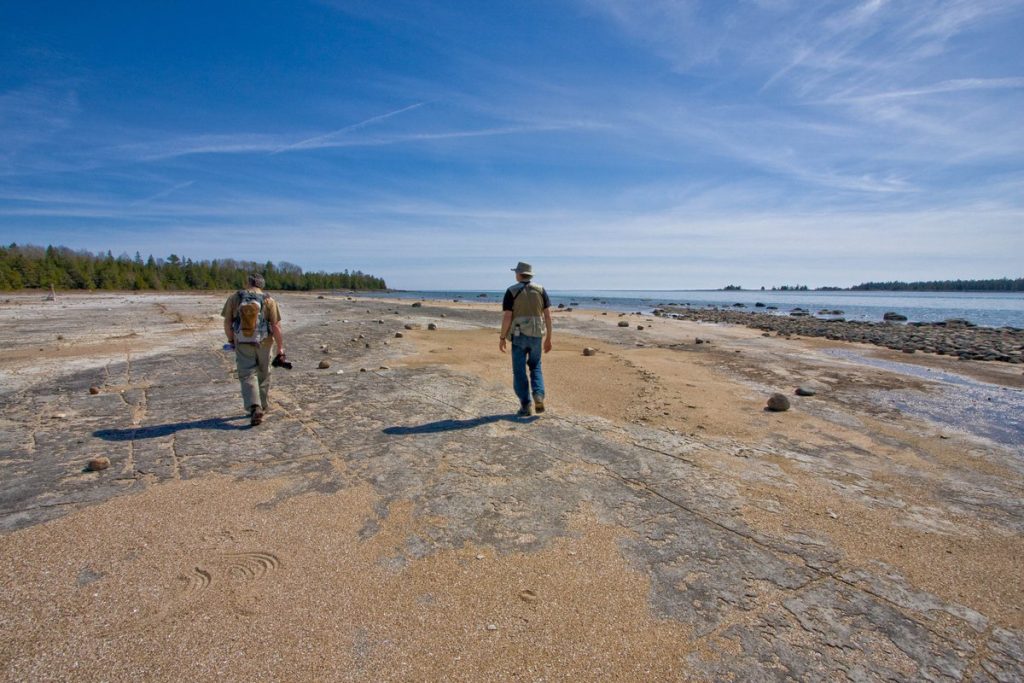
These alvar habitats, areas of calcareous bedrock covered by little to no soil, include:
- treed-alvar: looks like sparse forest where trees root in limestone cracks that are large enough to hold them
- open grassland alvar: looks like a grassy field with occasional shrubs and trees
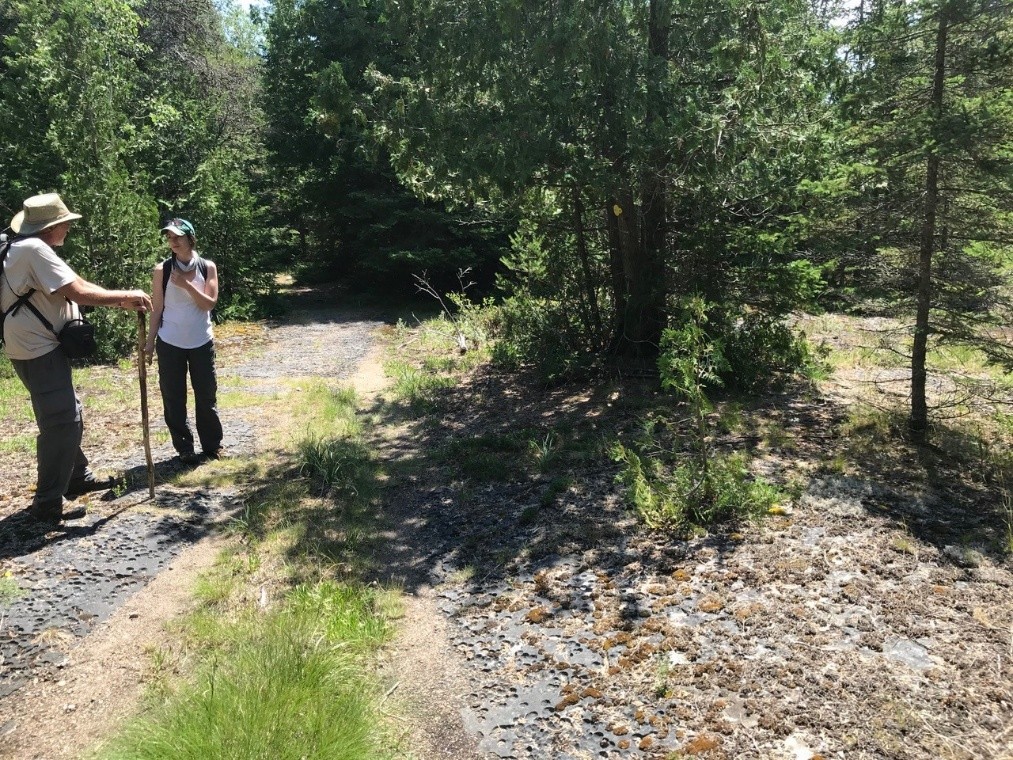
- bedrock pavement: plants grown in the cracks to survive the spring floods, summer heat, and freezing cold winter
Misery Bay also protects the largest wetland on Manitoulin Island. It’s known as a “bayhead wetland” that extends inland from Misery Bay and Lake Huron. The entire wetland sits on top of a large sand deposit that is saturated with water, and contains marsh, fen, and bog communities.
The sandy deposit is drained by a number of small streams, but very slowly. Lake Huron can affect how wet the wetland actually is, too. If lake levels are high, the wetland is very wet, but if the lake is low, wet areas in the wetland can shrink, affecting plants and animals that live there.
Having very different wetland types together means that the wetland as a whole has a very diverse range of plants and plant communities. This supports many animal species, too!
Pack a lunch and some water and hit the trails below to take in these stunning habitats!
2. Trails beside the Bay!
Misery Bay offers more than 15 km of hiking trails and open shoreline to explore, complete with trail‑side benches, covered shelters, and outdoor displays.
It’s the perfect place for anyone who loves exploring at their own pace.
Coastal Alvar Trail
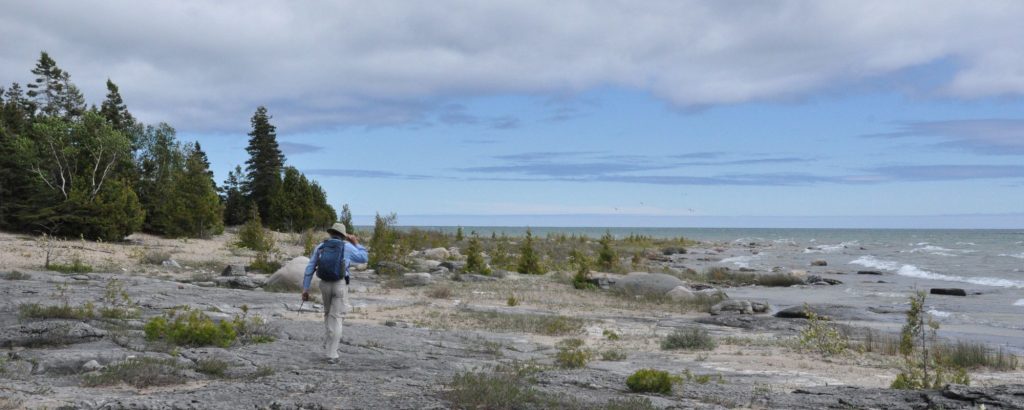
This 8 km loop leads you through quiet forest, across ancient post‑glacial beaches left behind when the Great Lakes stood much higher than they do today, and over broad, flat dolostone pavements.
The trail eventually opens onto Misery Bay and the clear blue waters of Lake Huron.
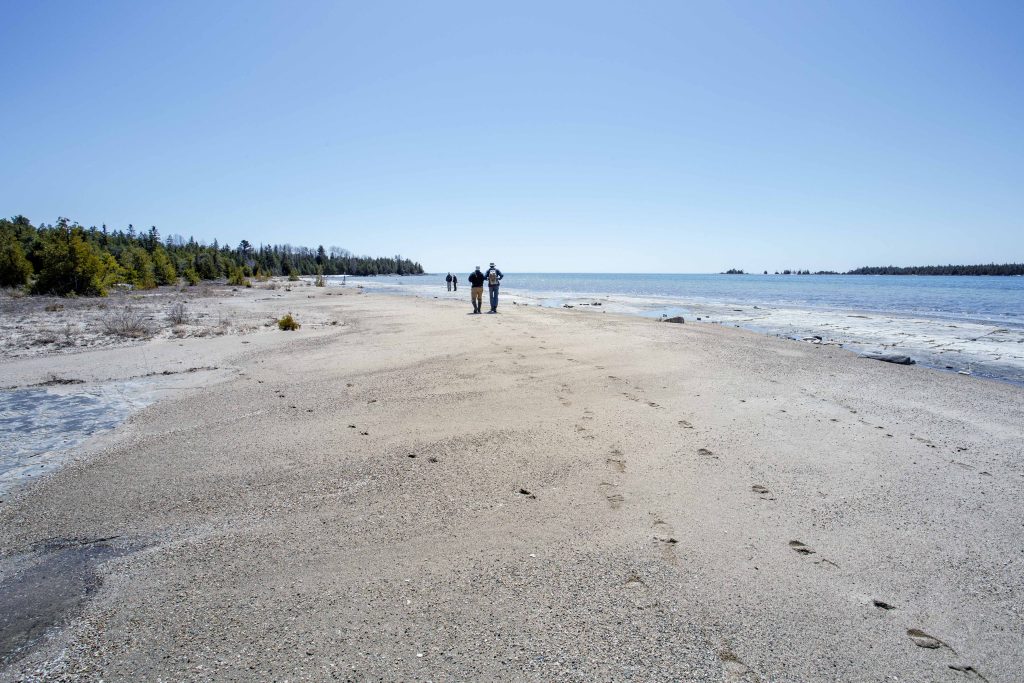
Along the way, you’ll pass cobble beaches and large boulders left behind by ancient glacial ice, and when Lake Huron water levels are low, you’ll even find a long stretch of sandy shoreline.
Inland Alvar Trail
The Inland Alvar Trail is a 5 km loop that takes you through the forested interior of the park.
Explore interpretive segments of the trail, forests where the alvar habitat suddenly open into flat bedrock amongst the trees, old post-glacial beaches, and the home of some of the most rare and threatened plants in the Great Lakes basin.
Keep an eye out for migrating birds as you’re adventuring around the park. The natural migration route for birds crossing the Great Lakes makes this a hotspot for spring birders.
And if you didn’t get your fill of hiking at Misery Bay, you can make your way to some of our other top hikes in northeastern Ontario!
3. There’s always something flowering
There’s often cool things blooming at Misery Bay, including several rare plants!
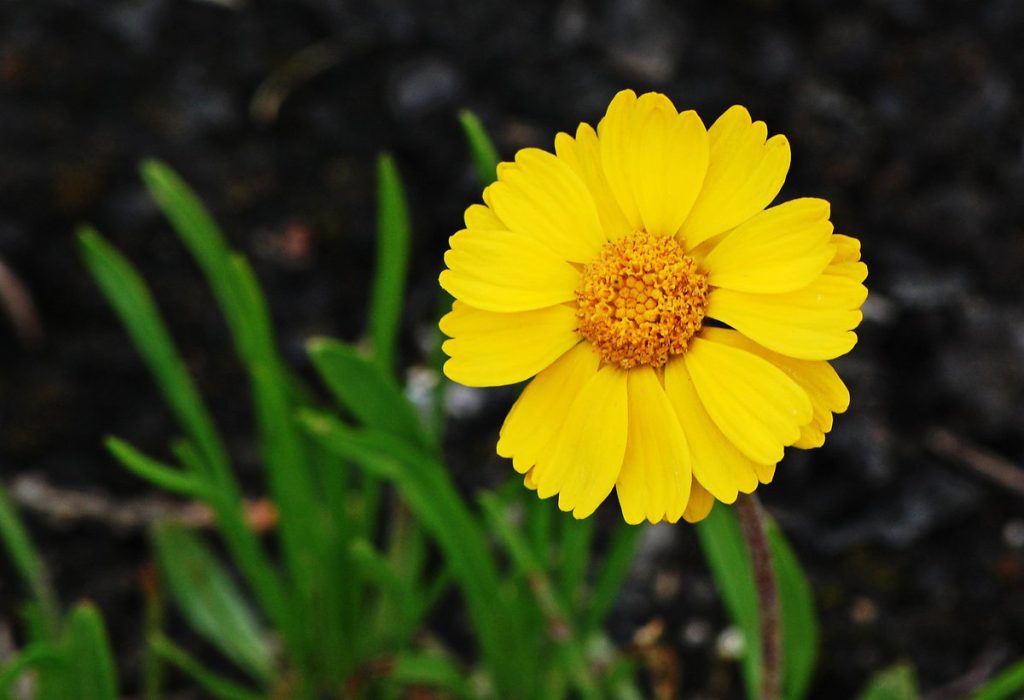
The colourtful show starts in late April and early May with a burst of brilliant gold from the Lakeside Daisy, known locally as “Manitoulin Gold.”
As the season rolls on, you might spot Early Saxifrage, Wild Onion, Paintbrush, Purple Pitcher Plant, Prairie Smoke, lilies, asters, orchids, Blazing Star, Pitcher’s Thistle, Coreopsis, and a mix of flowering shrubs. Not to mention a variety of ferns throughout the park and the butterflies and bees attracted to the flowers.
But Misery Bay’s flowers aren’t just for the eyes — experience distinct aromas like the Wild Calamint and False Pennyroyal.
4. Experience island life
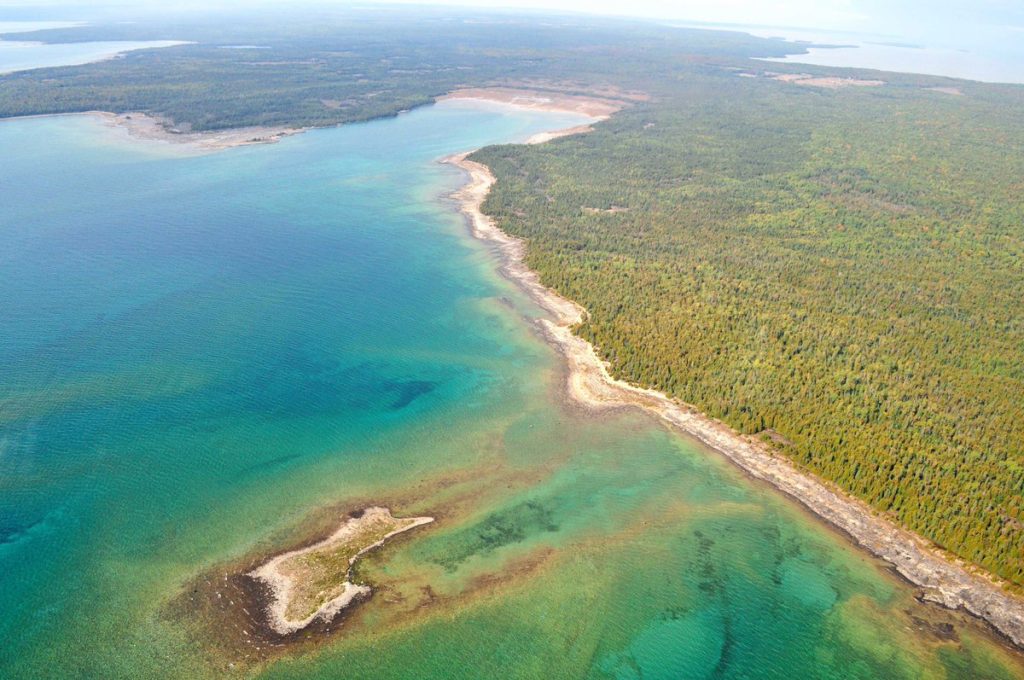
From the beautiful beaches of Lake Huron to the vibrant communities that call this island home, Manitoulin’s heart is even bigger than its borders — and that’s saying something for an island big enough to hold lakes with islands of their own!
Manitoulin Island, or Mnidoo Mnising, meaning “Spirit Island” in Anishinaabemowin, is home to six First Nations communities.
Dive into Indigenous-owned experiences and outdoor adventure, and learn about local Indigenous history and traditions through guided paddles and hikes, festivals, or by going to a powwow.
After taking in some of the island’s rich cultural heritage, hop on a bike and enjoy the scenic views and charming cafés and restaurants in the small towns and villages along the way.
5. Eco-friendly visitor centre
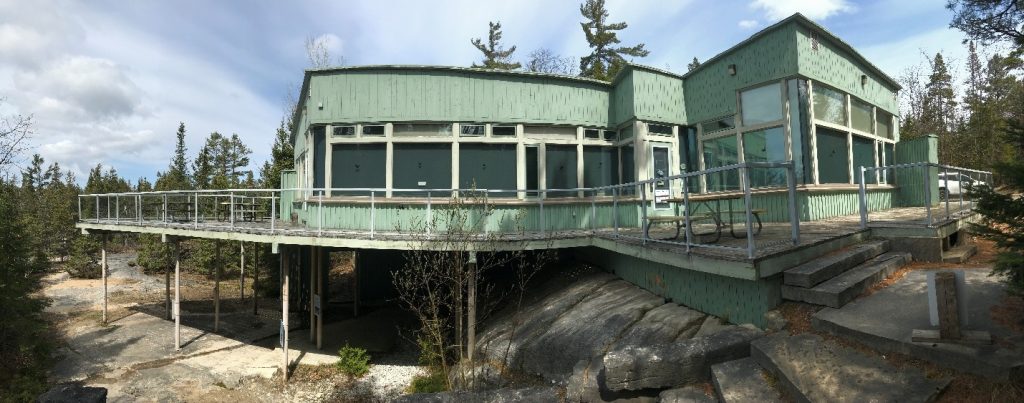
The park’s eco-friendly Visitor Centre operates completely off-grid, generating its own power through solar energy.
Inside, the limestone floor, made from Manitoulin Island bedrock, works like a natural temperature balancer. It soaks up warmth during the day and releases it night, all without the need for hydro!
After exploring their exhibits on alvar ecosystems and the ancient tropical seas whose marine creatures now survive only as fossils, relax with a picnic on the Visitor Centre’s outdoor deck.
Built with the support of the Friends of Misery Bay, the Visitor Centre is open weekends in May and June, and daily throughout July and August.
Planning a visit?
Misery Bay is classified as a provincial nature reserve and is a day-use only park.
You can reserve your daily vehicle permit in advance to guarantee entry to this rare, protected habitat.
Make sure to check out our Alerts page for up-to-date information on park operations.
Book your trip today!