Today’s blog comes from Tiffany Askett, a Discovery Interpreter at Lake Superior Provincial Park.
“The legend lives on from the Chippewa on down,
Of the big lake they call Gitche Gumee,
The lake it is said, never gives up her dead
When the skies of November turn gloomy”
– “The Wreck of The Edmund Fitzgerald” by Gordon Lightfoot
Lake Superior
Anishinaabeg teachings speak of a spirit known as the “Great Lynx,” whose name is not to be spoken outside of winter when the ice cover prevents the spirit from being called.
The spirit is neither good nor bad, but incredibly powerful and can be dangerous if the lake is not respected.
Lake Superior has claimed at least 550 ships since the early 1800s. Unsurprising as it is the largest freshwater lake in the world by surface area.
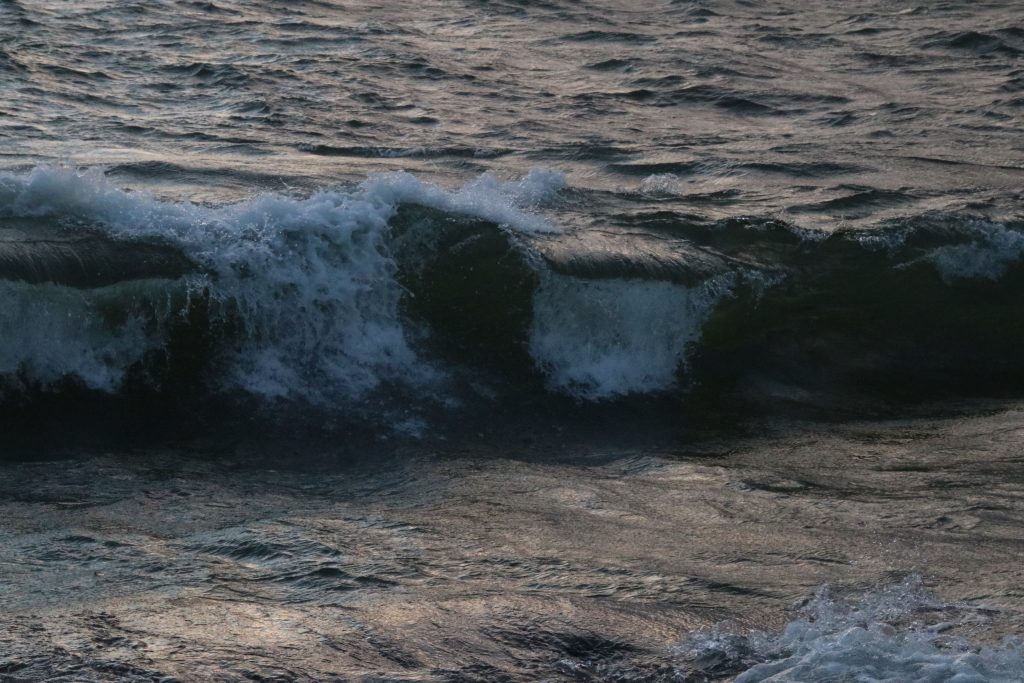
Much about the ships claimed by Lake Superior is still unknown.
With relatively few written accounts, there is little hope of the mysteries surrounding these ships being fully uncovered.
Although it’s hard to say exactly how many shipwrecks have taken place near Lake Superior Provincial Park, we know of at least five, but there are likely many more.
The three sisters
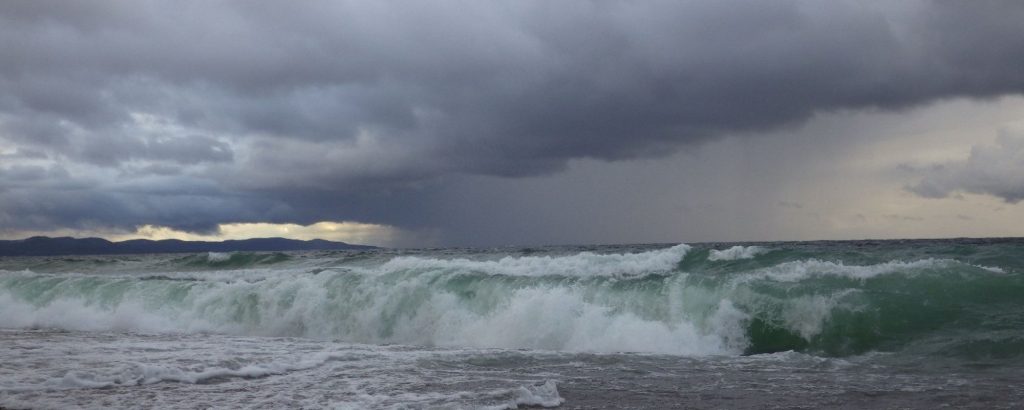
Being caught in a storm on Lake Superior is often deadly, as powerful waves can determine a sailor’s fate and whether they will live, die, or vanish.
In a storm, mariners are wise to fear “the three sisters,” a phenomenon where three rogue waves occur in rapid succession.
The sisters often proved deadly for ships, as the first wave would crash onto the deck, and before it could drain, the second wave would slam against the ship, adding more water and weight to it.
Finally, the third sister would leave few survivors as the front of the boat would be submerged under an immense wall of water before the crew could escape.
Shipwrecks near Lake Superior Provincial Park
You have probably heard of Lake Superior’s most infamous wreck, the Edmund Fitzgerald, but there are many more shipwrecks along the coast of Lake Superior Provincial Park.
Here are the ones we know the most about:
The Acadia (1896)
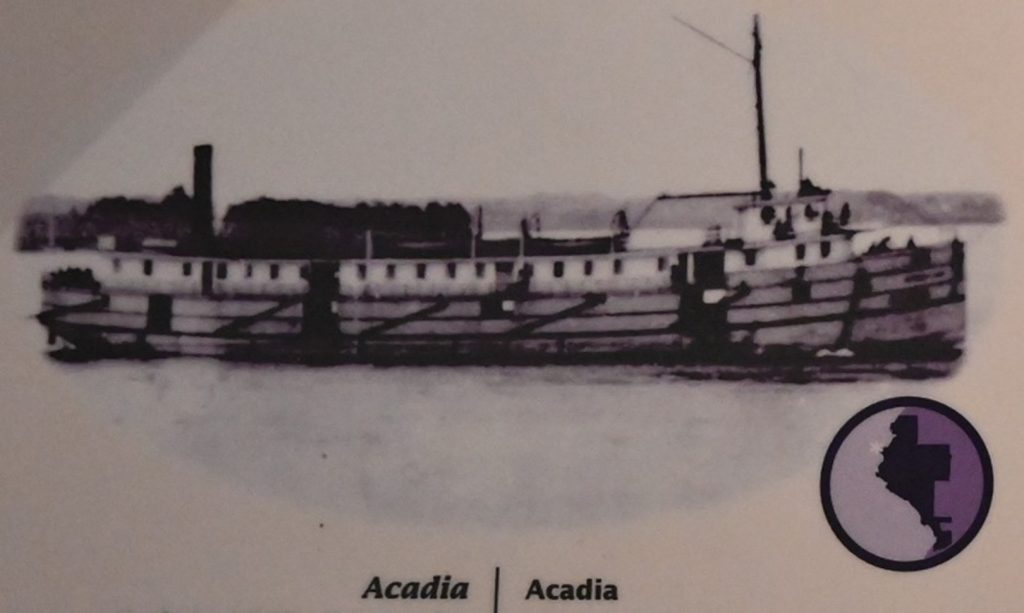
November is one of the most dangerous times of the year to travel on Lake Superior, as life threatening gales are common.
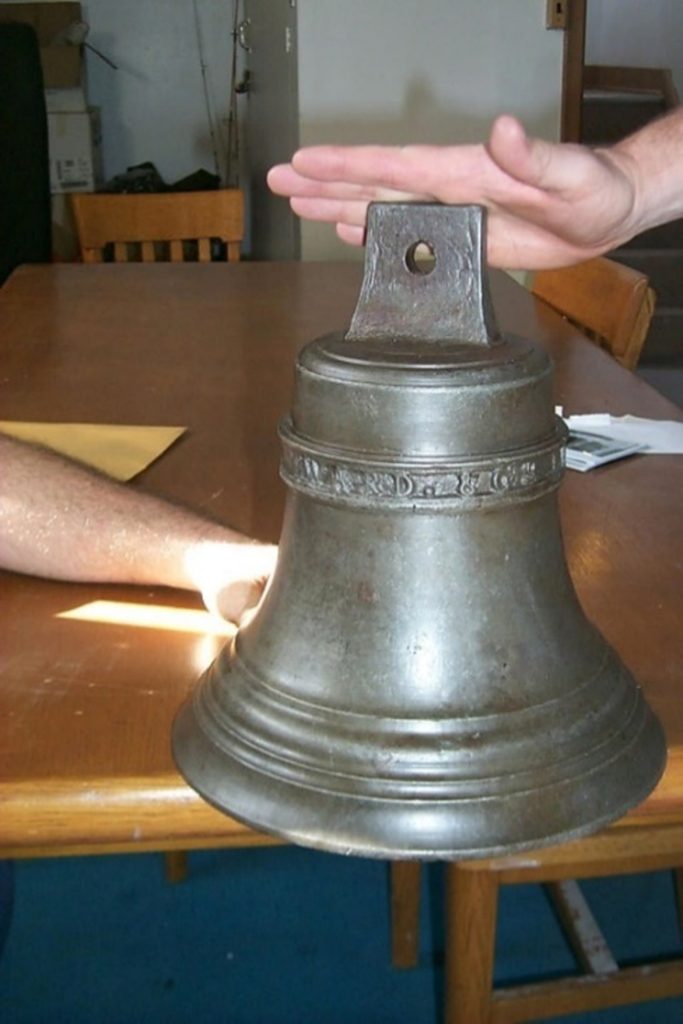
November gales on Lake Superior can cause waves as high as 9 m tall and wind speeds of 100 km/hr.
The Acadia was a 54 m wooden steamer carrying 25,000 bushels of grain. It was traveling from the Canadian Lakehead and likely south towards Sault Ste. Marie.
The November gales proved too powerful for the wooden boat, and the might of Lake Superior hurled it against the rocks near the mouth of the Michipicoten River. The crew members made it to shore, with only the shelter of the forest to keep them protected from the lake while they waited for help.
Captain Clifford and four crew members decided to be proactive. They found some local sailors who lent them a sailboat, and it took them 12 days to reach Sault Ste. Marie.
Years later, divers from Save Ontario Shipwrecks mapped the wreckage and retrieved the bell from the ship.
It now rests in the Visitor Centre at Lake Superior Provincial Park, a symbol to all the ships and crews that have succumbed to the power of Lake Superior.
Allegedly, parts of the ship can sometimes be seen stuck between rocks near Grindstone Point, which is only accessible by boat.
Resting location: near the mouth of Michipicoten River, Lake Superior Provincial Park
The Golspie (1906)
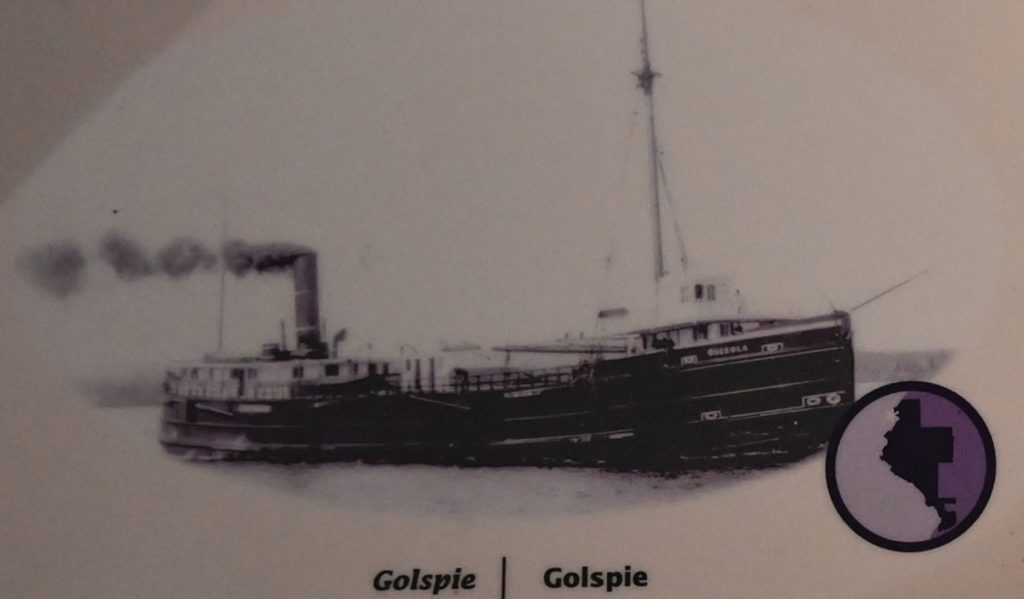
Lake Superior has an average annual temperature of 4 degrees Celsius, making December a very cold month to travel. Conditions are often treacherous, as sailors must deal with icefields and low visibility.
The 56 m Golspie set sail on December 4, heading towards Michipicoten Island from Fort William. The steamer was carrying oats, barley, and general cargo when it was caught in a gale and tried to find refuge in Gargantua Bay from the might of Lake Superior.
Unfortunately for those on board the Golspie, the ship was too damaged to make it to Gargantua Bay and instead had to seek shelter at Old Woman Bay, where it was grounded on the beach.
This left the captain and crew to deal with the harsh winter conditions on land, underdressed for the cold.
Twelve crew members attempted to reach the nearest community, Michipicoten, for help. In the end, only seven of the twelve men survived the frigid walk along the rugged Lake Superior coastline.
Resting location: Old Woman Bay, Lake Superior Provincial Park
The Columbus (1909)
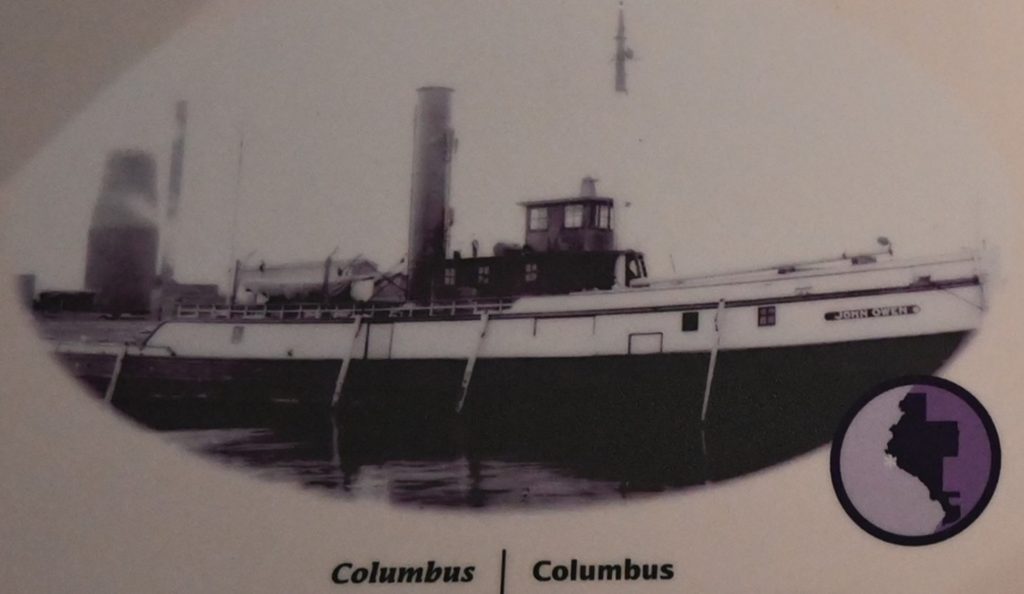
The sinking of the Columbus is a rare incident because no one was hurt.
In September, there were three ship fires at Gargantua Harbour, the first one being the 46 m tugboat Columbus. When the Columbus caught fire tied to the dock, the crew rushed to protect the fishing village in the bay. As a result, the ship was cut free of the dock and drifted into the lake where it sank.
It’s important to note that Gargantua Harbour is known as Nanabozhung to the Anishinaabeg, a deeply sacred area frequently used for ceremonies.
Visitors are encouraged to be considerate of the spiritual nature of Nanabozhung and to avoid disturbing any gatherings or sacred offerings, such as tobacco ties, which may be found in the area.
Resting location: Gargantua Harbour (Nanabozhung), Lake Superior Provincial Park
The Reliance (1922)
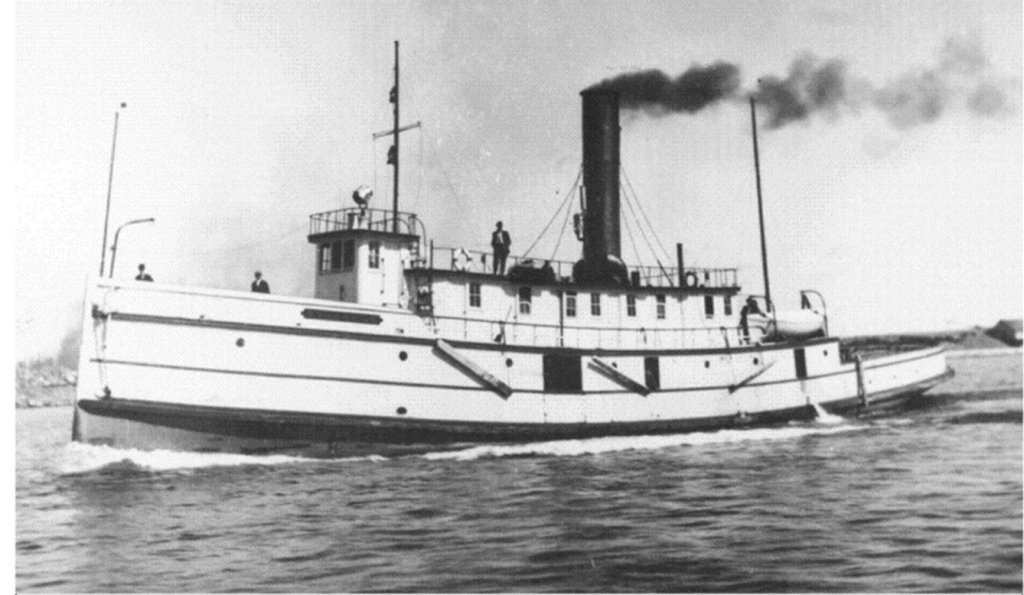
On December 13, the 38 m tugboat the Reliance had 35 people on board: 14 crew members and 20 lumberjacks. They were on their way from logging camps along the eastern shore of Lake Superior to Sault Ste. Marie for vacation.
Despite heavy snow, the Reliance set sail, pushing on through the worsening conditions. Eventually the storm proved too strong, and the ship was thrown onto the rocks surrounding South Lizard Island.
When the captain tried to reverse the boat, its weight against rocks in the shallow created a giant hole in the hull of the ship, bending the propeller and stranding them.
Eight people got onto a lifeboat and made it to shore, but they still had to walk almost 26 km to get to the nearest station to call for help. Not everyone made the journey. One could only imagine how hard that journey would have been, especially in the winter.
The remaining passengers got to the island by rafts and were rescued six days later.
Captain McPherson and three other men, impatient to wait for help, attempted to use a second lifeboat to get to safety. The boat was found smashed against rocks with no sign of the crew. They were declared lost at sea. What happened to them is still unknown.
Later, the Reliance was dragged back to Sault Ste. Marie to be repaired and spent another five seasons on Lake Superior, passing by the Lizard Islands before it was deliberately sunk.
Resting location: unknown
The Lambton (1922)
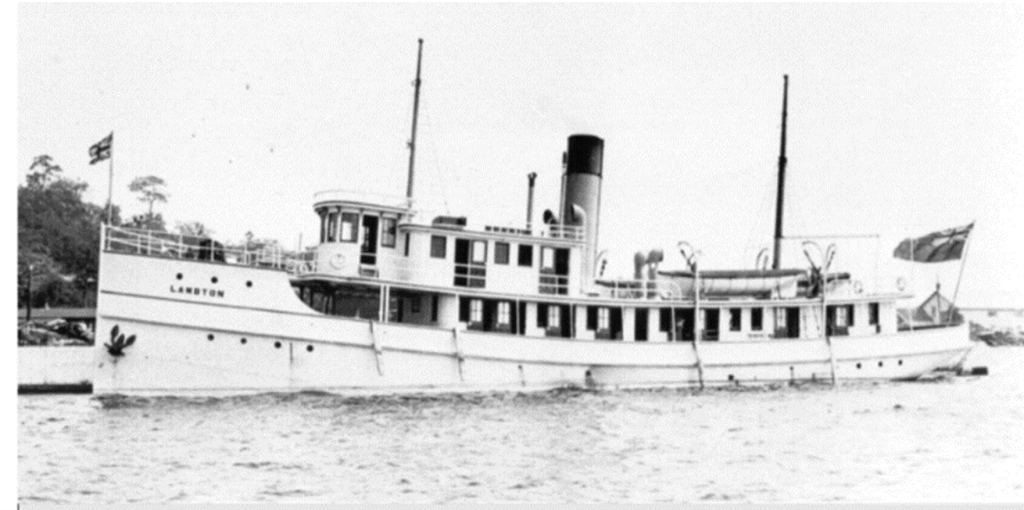
One of the most mysterious shipwrecks on Lake Superior is the Lambton.
The Lambton was a steel 33 m Coast Guard ship, originally built as a tugboat, whose purpose was to deliver keepers to remote lighthouses around eastern Lake Superior.
Lighthouses were extremely important for the navigation of ships at night, warning them of hazards along the rugged coastline of Lake Superior. The Lambton was the first government-appointed mode of transportation for lighthouse keepers.
The ship’s journey began in April from Sault Ste. Marie with about 22 people, five of which were lighthouse keepers. As they headed towards the five eastern lighthouses, the lake was scattered with icefields and the water was rough.
Days after their departure, reports came in that the lighthouses were not lit, although the lighthouse keepers should have already arrived. The Lambton had disappeared.
After a week-long search, all that was found of the ship was some floating wreckage.
The Canadian Lighthouse Service confirmed the bits and pieces to be from the Lambton, but what exactly happened remains a mystery. Without a radio, as they were not required on ships at the time, the Lambton would have been unable to call for help. The full wreck and the 22 people on board have never been found.
The Lambton is rumored to be a ghost ship that sails across Lake Superior looking for the lighthouses it never made it to. There were multiple sightings of it near Gargantua in the fall of 1922, less than six months after it disappeared.
Resting location: only Lake Superior knows
Learning from the past
Stop by the Lake Superior Provincial Park Visitor Centre at Agawa Bay to learn more about shipwrecks in the park area.
We invite you to explore the interactive displays in the exhibit hall and chat with the park’s Discovery staff to learn more about the power of Lake Superior.