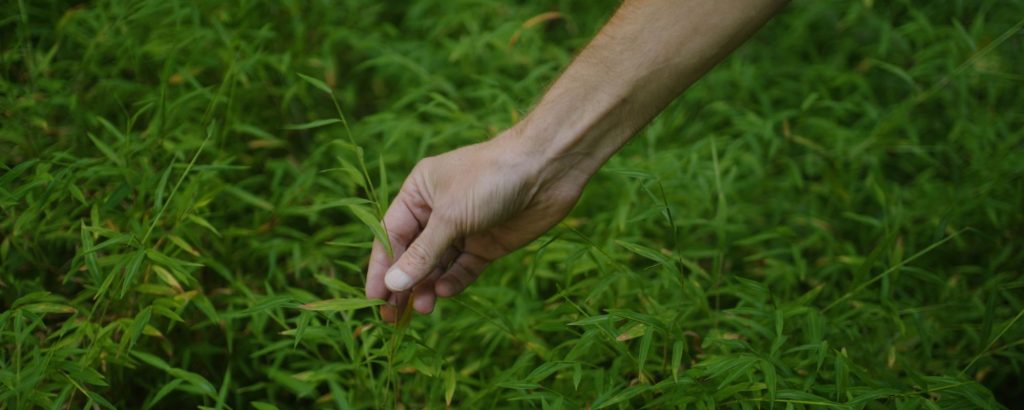
Japanese Stiltgrass (Microstegium vimineum), often known as Nepalese browntop or packing grass, is an annual grass that has unfortunately made its way to natural spaces in Canada.
Short Hills Provincial Park is the first place in Canada to experience the new invasive species. Japanese Stiltgrass likely came from neighboring natural areas in the United States.
How do we recognize it?
Stiltgrass is identifiable by its leaves. It has a thin stalk that stands upright, and small leaves that project off of the stalk.
The leaves are pointed and look similar to a well-cared-for lawn. They are about 1 cm wide by 5 cm long.
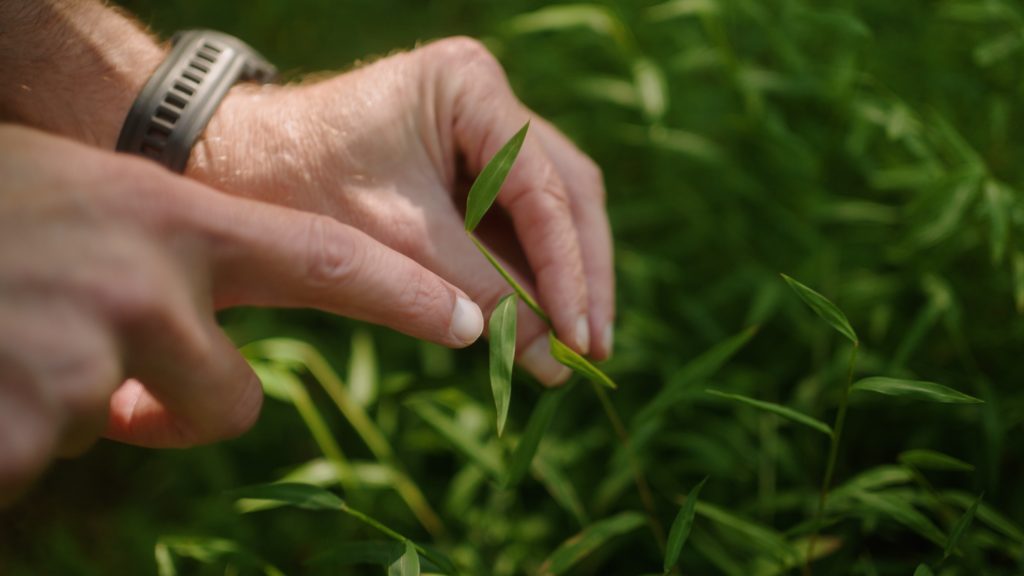
The tell-tale sign of the grass is its silvery midstripe, running from the base of each leaf to the tip.
Japanese Stiltgrass’s impact
Japanese Stiltgrass forms low, dense mats of vegetation, which make it hard for other species to thrive.
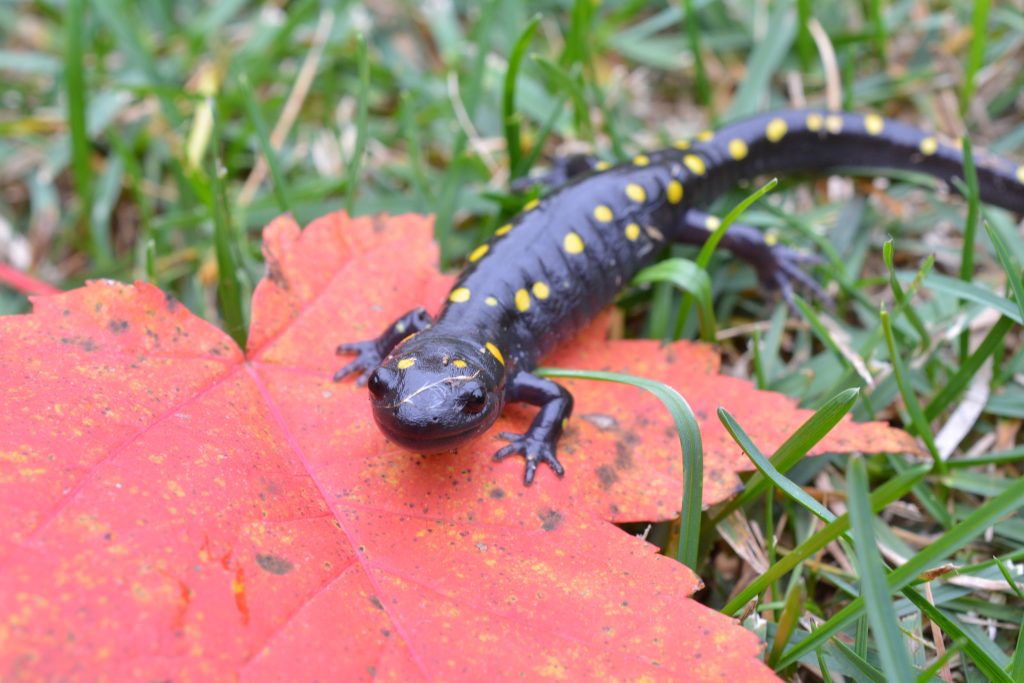
At Short Hills, for example, several salamander species need to travel far distances to find suitable breeding grounds. But the stiltgrass forms such a thick layer, the salamanders can’t always make it through!
This results in a lost breeding year and far fewer new salamanders. If this happens too many years in a row, the salamanders may disappear from the park.
This dense mat also blocks seeds from entering the soil on the forest floor. Think pinecones, maple keys, and acorns.
If all these seeds are physically blocked from reaching the forest floor, they can’t sprout into new trees.
And if any new trees and plants do manage to sprout, the stiltgrass blankets them. This hurts the next generation of our native tree species.
What can I do?
As Japanese Stiltgrass plots (plants can plot, right?) its world domination, there are ways that we can interfere and thwart its plans.
Teams of specialists at Short Hills are taking matters into their own hands by spraying the stiltgrass clusters.
But you can help too! Here’s how:
Brush it off!
Have you spotted this funny looking contraption at the start of a trail? It’s a boot brush!
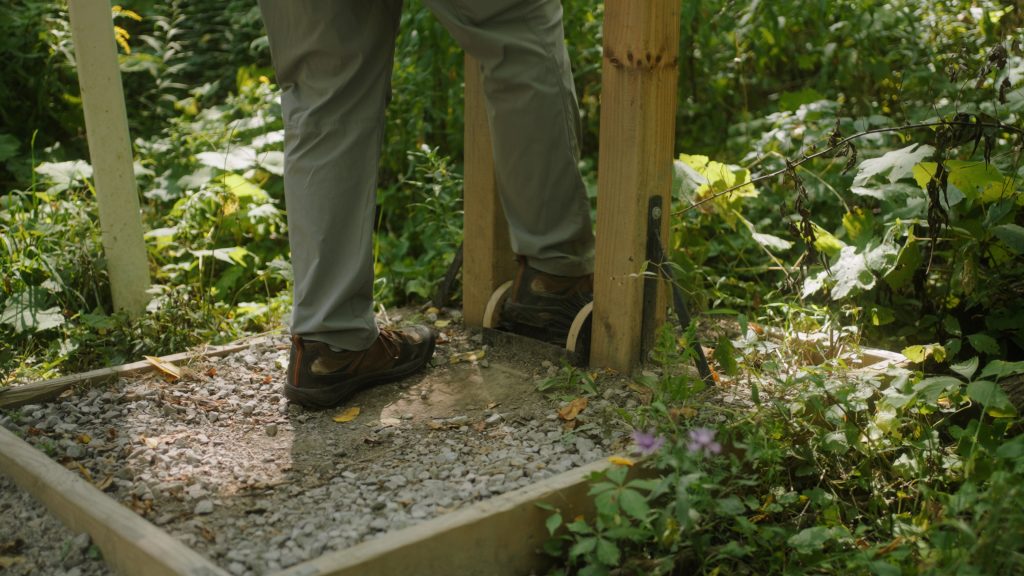
Boot brushes help prevent the spread of invasive species. Simply scrub each boot when you’re entering the park and departing. That way, any invasive species are stopped in their (or should we say, your) tracks!
To prevent even more invasive species from spreading, carry a stiff brush in your vehicle or in your backpack. Use it to brush off your shoes, mountain bike tires, horse hooves, and other equipment.
This practice goes a long way in stopping stiltgrass from spreading.
Report your sightings
Think you’ve spotted a patch of Japanese Stiltgrass? Report your sighting to park staff or snap a photo and upload it to the Early Detection and Distribution Mapping System (EDDMapS).
Once submitted, your report will be verified by the expert at EDDMapS Ontario and added to the provincial database.
Every action to contain Japanese Stiltgrass matters. Thank you for helping keep our parks (and wider province) healthy!