Today’s blog comes from Parks Program Educator Clarissa Duthie.
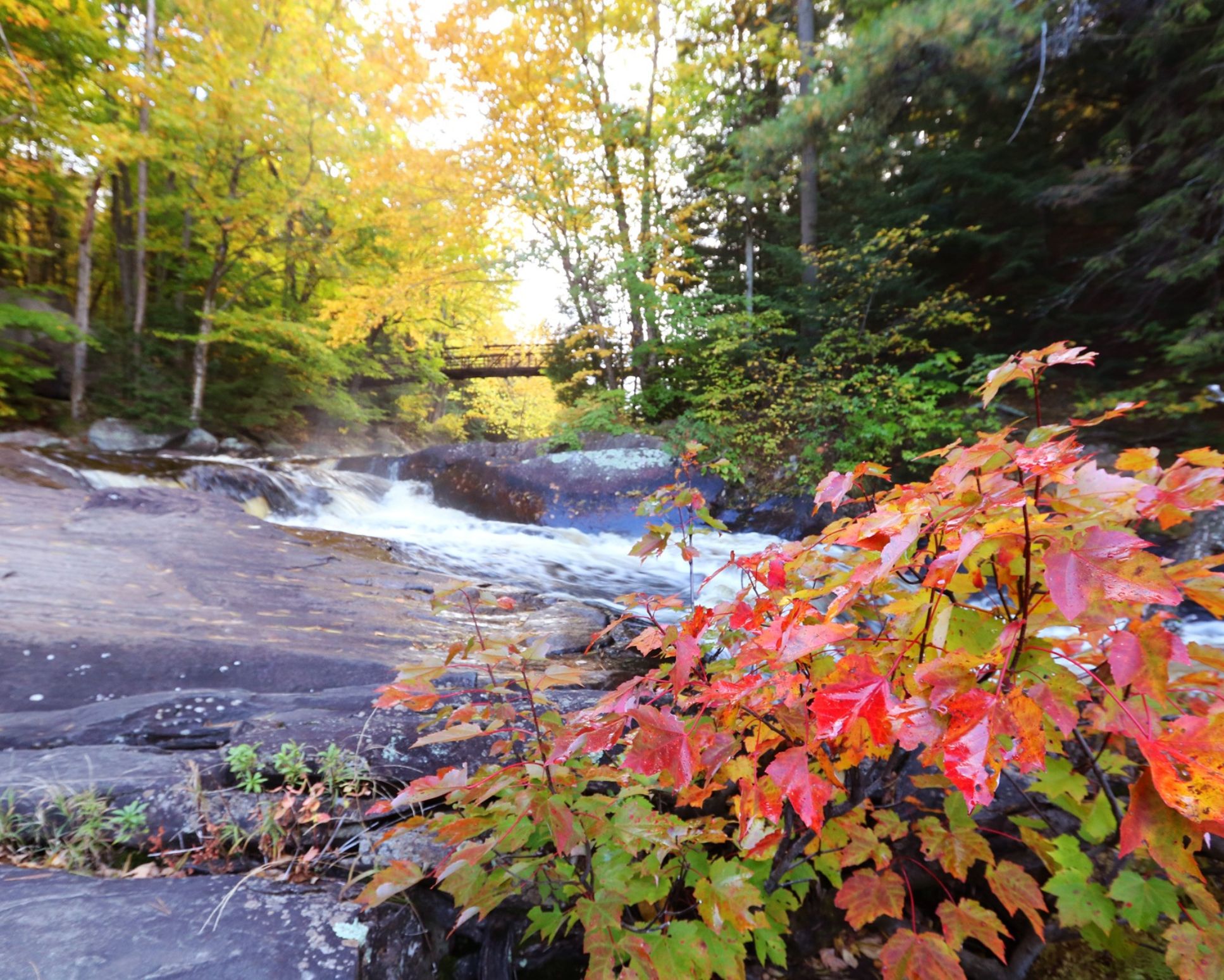
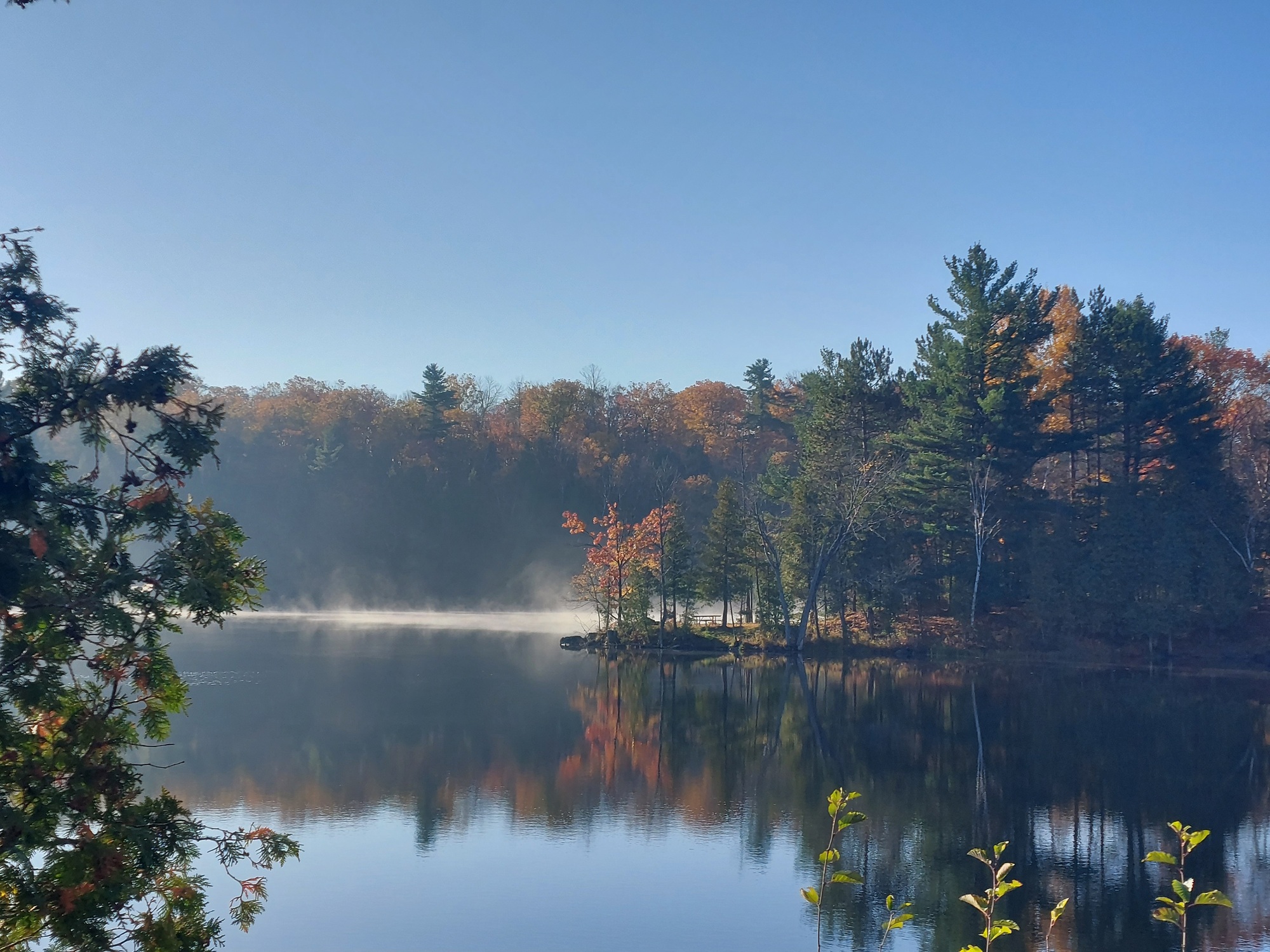
Charleston Lake Provincial Park is a sanctuary for biodiversity. It’s located within the Frontenac Arch, a unique geological formation that connects the Canadian Shield to the Adirondack Mountains.
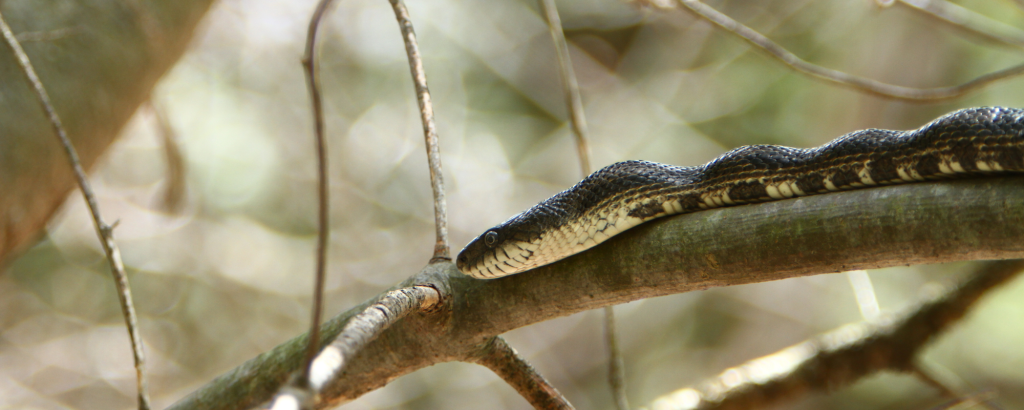
Among the many species that call this area home, one stands out for its size and ecological importance: the Gray Ratsnake (Pantherophis spiloides).
These snakes are often misunderstood, but here at Charleston Lake, we celebrate these gentle giants. They are important members of our forest ecosystem and serve as ambassadors for conservation.
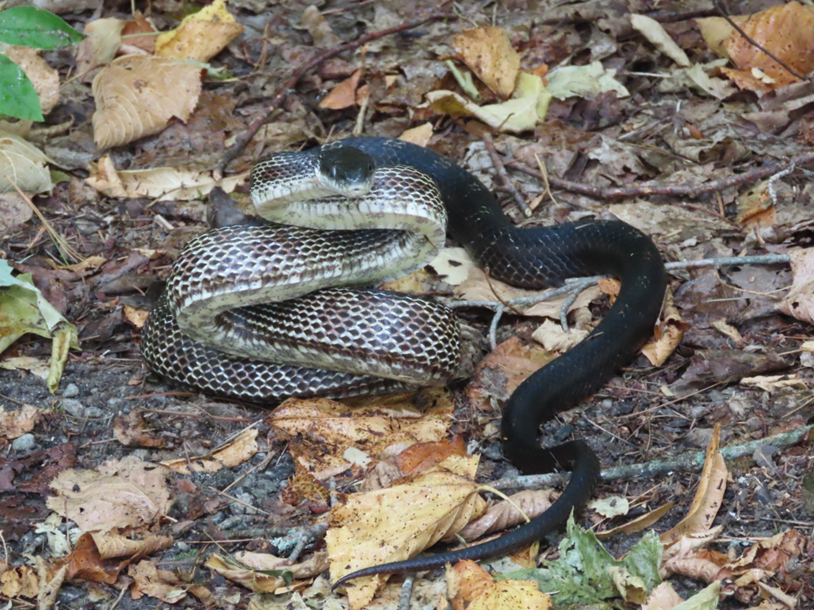
Gray Ratsnakes are Ontario’s largest snake, with adults growing to over two metres in length.
Despite their impressive size, they are non-venomous, typically shy, and harmless to humans. They mostly eat small mammals, birds, nestlings, and bird eggs.
They’re also excellent climbers, frequently found high in trees or tucked into rock crevices. Their ability to climb into tree canopies in search of bird nests is rare among Ontario’s snakes, with the Eastern Foxsnake being the only other species that can sometimes be found up in the trees!
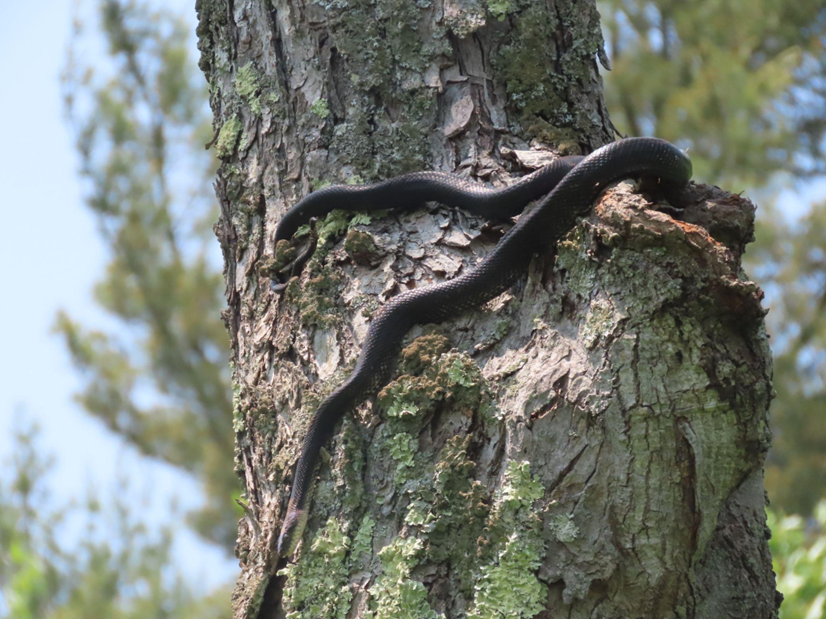
Often visitors to Charleston Lake will ask Discovery staff if the snakes they see swimming are Gray Ratsnakes, and it’s a great opportunity to clarify a common mix-up!
Adult Gray Ratsnakes and Northern Watersnakes can look quite similar at a glance, especially when seen in the water.
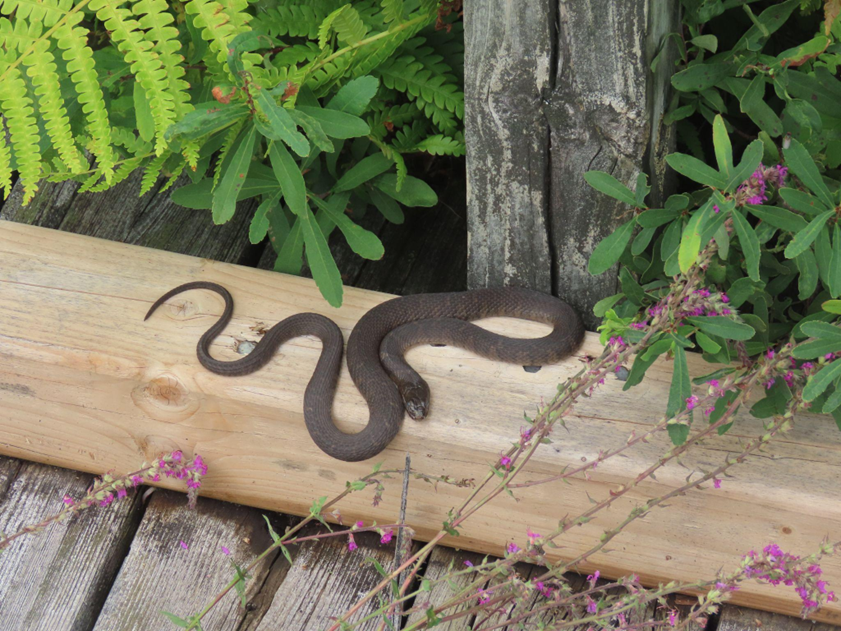
While both species are excellent swimmers, it’s usually the Northern Watersnake that people spot swimming in the lake. These snakes are more aquatic and can be seen hunting fish or amphibians near shorelines.
In comparison, Gray Ratsnakes prefer to be on land and climbing trees, hunting for small mammals, birds and birds eggs, though they can swim if needed.
Why they are at risk
Gray Ratsnakes are at risk in Ontario, mainly because of habitat loss and fragmentation, road mortality, and other human-related pressures.
This species was historically found along the north shore of Lake Erie in southwestern Ontario, and the Frontenac Arch region near the eastern end of Lake Ontario. Over time, their range has declined considerably, especially in the Lake Erie area, because of urban expansion and agricultural development.
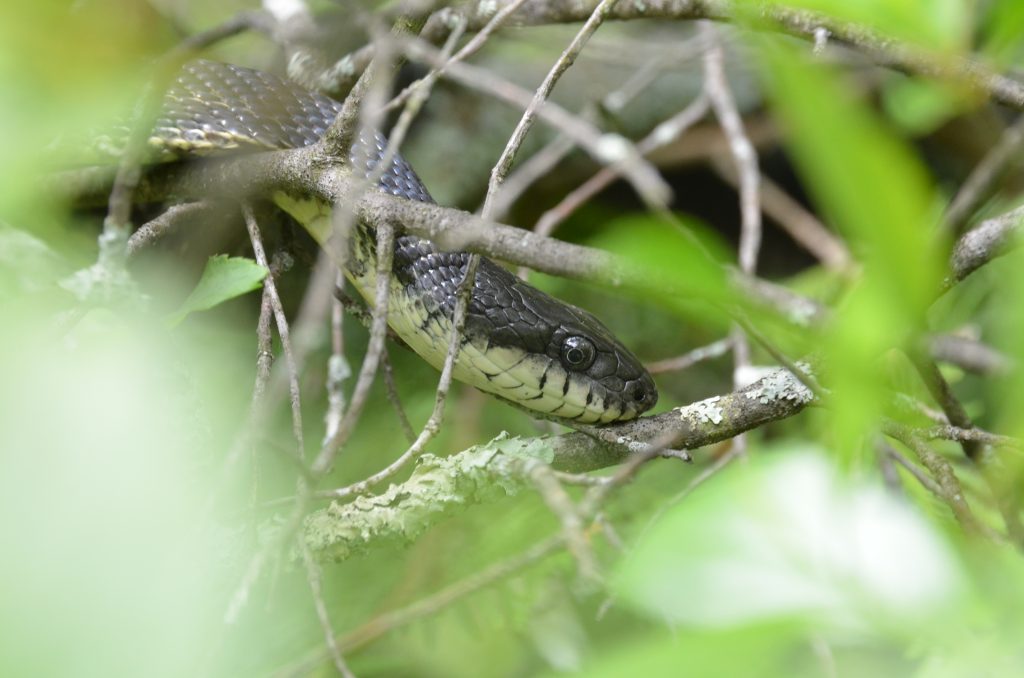
Today, their habitat that remains overlaps with densely populated areas. This exposes Gray Ratsnakes to dangers like road mortality, especially during warm months when they are moving around the landscape and basking on pavement.
Misunderstanding and fear also play a role in their decline. These snakes are non-venomous, yet they are sometimes harmed by people who mistake them for a dangerous species. It is illegal to harm or kill any snake species in Ontario, regardless of whether it is venomous, and continued education efforts are crucial to address these misunderstandings.
In Ontario, the Frontenac Arch population is listed as threatened, making conservation efforts especially important.
Charleston Lake helps protect Gray Ratsnakes by preserving natural habitat and offering educational programs that encourages visitors to appreciate the ecological value of these gentle giants.
Meet Pi: our scaled Discovery member
One of the best ways to learn about Gray Ratsnakes is to meet Pi, our resident Gray Ratsnake at the Discovery Centre, which is open during the summer season.
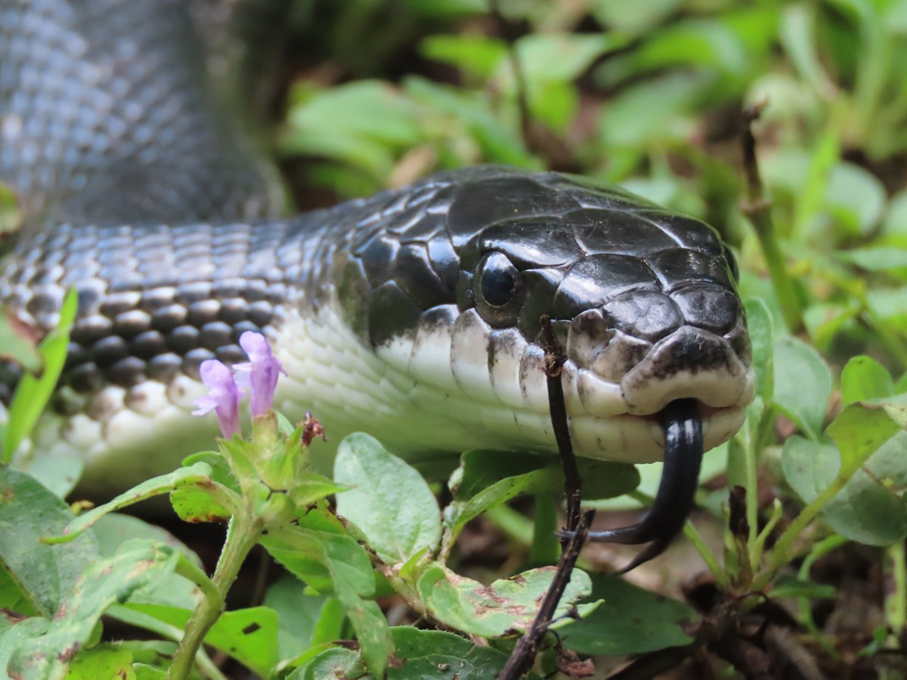
Pi is a live snake who helps visitors connect with nature in a personable and memorable way.
Watching Pi explore his enclosure, climb branches, and interact with visitors is an unforgettable experience, especially for those who have never encountered a large snake, let alone seen one up close.
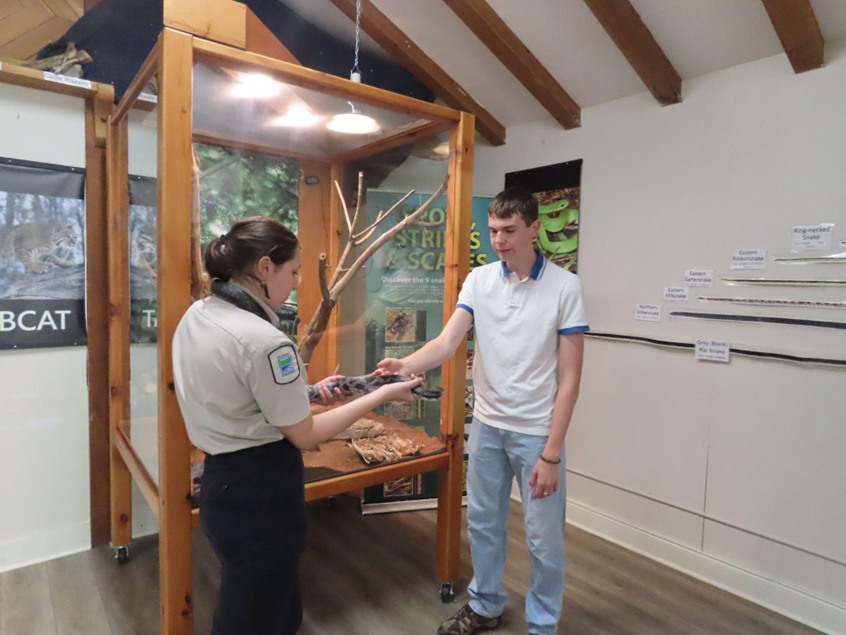
Through Pi, we’re able to talk about common myths and fears, and instead encourage curiosity, respect, and stewardship among visitors of Charleston Lake.
How you can help
Protecting Gray Ratsnakes doesn’t require expert knowledge, just compassion and a feeling of wanting to help protect our “Gentle Giants.”
There are a few ways you can make a difference:
- drive slowly near natural areas, especially in spring and summer when snakes are active
- don’t disturb or handle wild snakes; just observe from a respectful distance
- report sightings to park staff or through community science platforms like iNaturalist
- support protected areas like Charleston Lake that conserve habitats for these animals
- educate others by sharing what you’ve learned about Pi and Gray Ratsnakes with friends and family
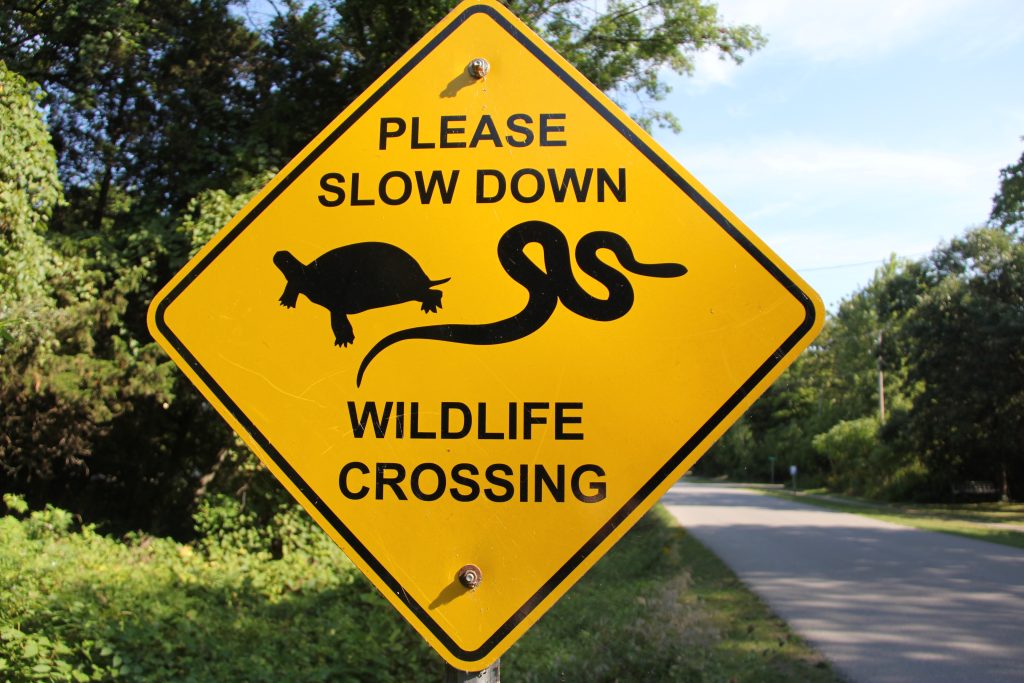
Gray Ratsnakes are more than just a typical snake.
Their presence in the park tells us that our forests are healthy and that conservation efforts are working. By protecting them, we’re also protecting the biodiversity of Charleston Lake.
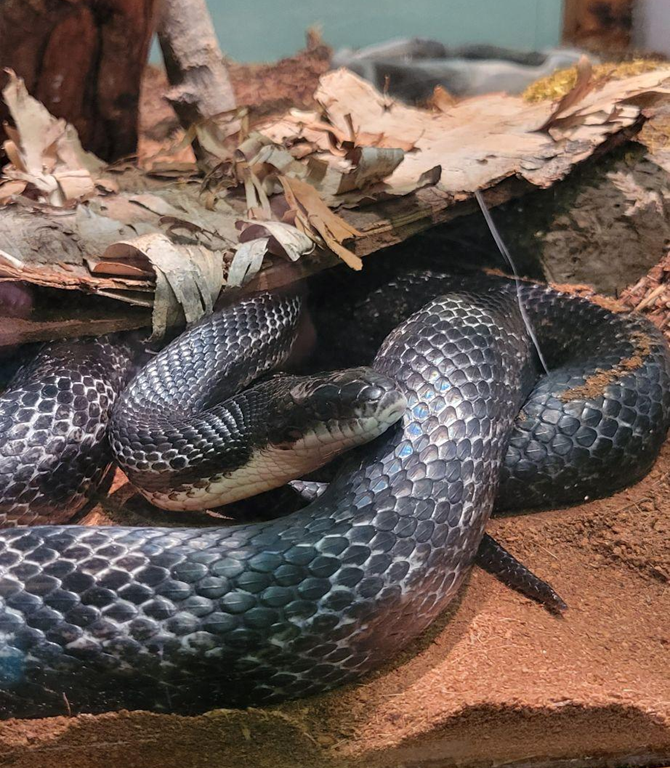
Next time you visit the park, stop by the Discovery Centre to say hello to Pi, and take a moment to appreciate the strength and ecological importance of the Gray Ratsnake.
Why are your scientists picking up wildlife? Can I pick up snakes and turtles too?
Please do not handle birds, mammals, or reptiles unless you are helping to safely move them off the road. The staff members featured here are trained biologists engaged in professional research. These biologists are following a strict animal care protocol approved by the Ministry of Natural Resources. These protocols review the desired outcome of the research, and ensure measures are taken to put the least possible amount of stress on the animal. We ask that you always observe animals from a distance for both the safety of you and the animal.